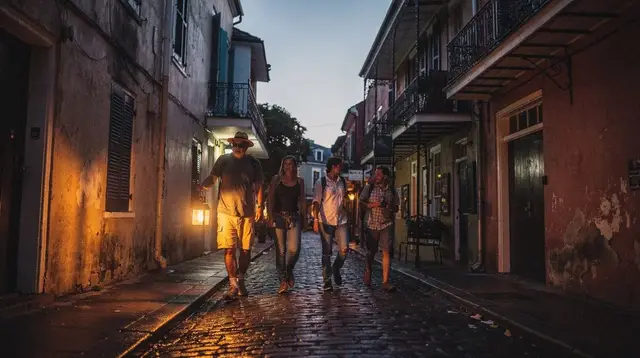
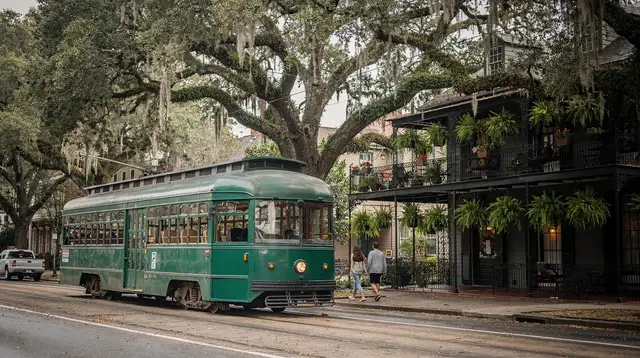
Cajun is not Creole, and Acadiana is not New Orleans
Before anything else, a correction that matters more than any single sight on this page. Cajun and Creole are two different cultures, two different histories and two different cuisines, and New Orleans itself is not really a Cajun city.
Creole culture formed in New Orleans, an urban blend of French, Spanish, African and Caribbean influences that produced its own cooking, often tomato-based, and its own music, language and architecture. Cajun culture is rural. It descends from the Acadians, French settlers expelled from Nova Scotia by the British in the 1750s, who eventually resettled the prairies and bayous west of New Orleans, in the region now called Acadiana, centred on the city of Lafayette.
Cajun cooking is built on a dark roux rather than tomatoes, and Cajun and zydeco music belong to this region, not to the streets of the French Quarter or Frenchmen Street. If a guide, a menu or a tour in New Orleans calls itself “Cajun,” it is borrowing a label from a place about two hours away.
This page treats Cajun Country as what it actually is: a separate day trip, distinct from the River Road plantations and the swamp and bayou tours that lie much closer to the city. Because of the distance involved, this is not a half-day add-on. Plan for a full day, or better, an overnight.
Where Cajun Country sits, and how far it really is
Acadiana radiates out from Lafayette, roughly 2 hours 15 minutes by road west of the French Quarter, well beyond the range of the plantations and swamp tours covered elsewhere on this site. There is no practical public transport option for this trip: it is done by rental car or by joining an organised tour that includes transport from New Orleans. Amtrak’s Sunset Limited technically passes through the region, but its schedule is too infrequent to build a day trip around.
Because the drive alone takes most of half a day round trip, most visitors either commit to a single full day that focuses on Lafayette and one or two nearby towns, or stay overnight in Lafayette and spread the region over two days. Trying to combine Cajun Country with a plantation or swamp stop on the same day usually means seeing all three badly; the distances do not favour it.
| Approach | Time from New Orleans | What you realistically see |
|---|---|---|
| Guided day tour | Pickup before 8am, return by evening | Lafayette highlights plus one stop (often Breaux Bridge or Avery Island) |
| Self-drive day trip | 2h15 each way, about 4h30 total driving | Lafayette center, plus a short detour |
| Overnight in Lafayette | 2h15 out, 2h15 back the next day | Lafayette, Breaux Bridge, St Martinville, New Iberia and Avery Island at a comfortable pace |
Lafayette: the capital of Acadiana
Lafayette is the practical and cultural centre of Cajun Country, a compact city built around its French and Acadian heritage rather than around any single postcard sight. Two living-history sites anchor a first visit: Vermilionville, a recreated Cajun and Creole settlement on the Bayou Vermilion with costumed interpreters, traditional cooking demonstrations and live music performances; and the Acadian Village, a similar assembly of relocated historic buildings that traces the Acadian settlement story specifically.
Lafayette’s downtown is small enough to explore on foot, with a concentration of Cajun and Creole restaurants, dance halls that host live Cajun and zydeco bands on weekends, and a handful of museums on Acadian history. A guided walking tour is a practical way to get real context on the Acadian expulsion and resettlement before wandering on your own; it is also the most efficient way to hear the difference between Cajun and Creole explained by someone who lives it, rather than reading it on a page.
a guided walk through Lafayette covering Cajun history and folkloreFor a hands-on introduction to the cooking itself, a roux-based cooking class is one of the more memorable ways to understand why Cajun food tastes the way it does; several operators run these from New Orleans as a standalone experience even if you are not driving out to Lafayette that day.
a hands-on Cajun cooking class built around building a proper rouxBreaux Bridge: crawfish capital
A short drive east of Lafayette, Breaux Bridge styles itself the crawfish capital of the world, a claim backed by the Breaux Bridge Crawfish Festival held each spring and by the sheer number of restaurants built around the boiled crawfish tradition. Outside festival dates, it is a small, relaxed town worth an hour or two: a walk along Bayou Teche, a stop at one of the local seafood restaurants for a crawfish boil if the season allows, and access to nearby Lake Martin, a cypress-and-Spanish-moss wetland known for its rookeries of egrets and herons, a smaller and quieter alternative to the swamp tours closer to New Orleans.
Crawfish season generally runs roughly from late winter into early summer and tapers off as temperatures rise, so a visit in the depths of summer may find a smaller selection than one in April. As with all wildlife-watching in this region, cooler months bring less alligator activity around Lake Martin than the warmer ones.
If a boat trip through bayou country with a seafood boil built in appeals more than a self-guided stop, an organised option covers both in a single outing from New Orleans.
a bayou boat tour from New Orleans that ends with a Cajun seafood boilSt Martinville and New Iberia
St Martinville, one of the oldest Acadian settlements, sits on Bayou Teche and carries the region’s founding story in monuments and a small museum quarter, including the Evangeline Oak, tied to the Longfellow poem that romanticised the Acadian expulsion for English-language readers. It is a quiet, unhurried stop rather than a headline attraction, best paired with somewhere else on the same drive.
New Iberia, a little further south, is a working town with its own Acadian and sugar-cane heritage, and it serves as the gateway to Avery Island. Both towns reward slow travel by car more than a scheduled tour; if the goal is Avery Island specifically, New Iberia is simply the last town you pass through on the way.
Avery Island and the Tabasco factory
Avery Island is not actually an island in the usual sense but a salt dome rising out of the surrounding marsh, and it is the exclusive home of the Tabasco pepper sauce factory, still run by the McIlhenny family that founded it in the 1860s. The factory tour is short and practical: production line, bottling, a short film on the sauce’s history, and a well-stocked shop selling flavours and merchandise not found elsewhere.
Attached to the factory grounds are the Jungle Gardens, 170 acres of subtropical gardens and wetland created by the same family, home to egrets, alligators and a Buddha statue given as a gift in the 1930s. Combined, the factory and gardens make a half-day stop, and pairing them with New Iberia or St Martinville on the same drive is the efficient way to see this southern corner of Acadiana without doubling back.
Houma and the deeper bayou
South and east of Lafayette, Houma sits deep in bayou country and functions as a base for swamp tours through a different stretch of wetland than the Barataria Preserve or Honey Island Swamp closer to New Orleans. It is generally treated as its own detour rather than part of a Lafayette-focused day, since it pulls in a different direction from Breaux Bridge and Avery Island. Visitors building a longer Louisiana itinerary sometimes route through Houma between New Orleans and Lafayette rather than adding it as a separate trip.
Cajun music: where it actually lives
One of the clearest ways to feel the difference between Cajun culture and New Orleans culture is musically. Jazz, brass bands and the second-line tradition belong to New Orleans; Cajun music, built around fiddle and accordion, and its close cousin zydeco, built around accordion and a metal rubboard called a frottoir, belong to Acadiana.
Lafayette’s dance halls host live Cajun and zydeco bands on weekend nights, often with a house band and a dance floor rather than a stage-and-seats format, and it is common for visitors of all ages and skill levels to be pulled in to try a two-step. This is a genuinely different musical world from what a night on Frenchmen Street offers, and hearing it in Lafayette rather than in a New Orleans restaurant is the more authentic version of the experience.
Food glossary: eating your way through Acadiana
Cajun cooking shares some vocabulary with Creole cooking but uses it differently. A dark roux, cooked slowly until it turns the colour of chocolate, underpins much of the cuisine here rather than the tomato base more common in Creole versions of the same dishes. Expect boudin (a rice-and-pork sausage sold at gas stations and butcher counters as commonly as in restaurants), crawfish prepared a dozen ways from boiled to étouffée, gumbo with a roux-forward character, and cracklins. Boudin especially is worth seeking out from a local meat market rather than a restaurant if the goal is to taste it the way locals do.
| Dish | Where it fits |
|---|---|
| Boudin | Gas stations, butcher counters, casual and everywhere |
| Crawfish boil | Best in season, roughly late winter to early summer |
| Gumbo (Cajun style) | Roux-based rather than tomato-based; found across Acadiana |
| Étouffée | Crawfish or crawfish and shrimp over rice |
| Cracklins | Fried pork skin, a roadside snack |
Planning the day realistically
A single day from New Orleans to Lafayette and back leaves a genuinely full but tight window: roughly four and a half hours of driving out of a day that also needs to include lunch, at least one guided activity, and time to simply walk around. Visitors who want to add Breaux Bridge or Avery Island on top of Lafayette itself are usually better served by an overnight, since trying to fit Lafayette, Breaux Bridge, St Martinville, New Iberia and Avery Island into a single day from New Orleans and back means most of it becomes windshield time.
If timing does not allow the drive at all, several operators run guided experiences that bring elements of Cajun culture, food and history closer to New Orleans, including cooking classes and Cajun-themed evenings on plantation grounds along the River Road.
a Cajun bonfire celebration held on a River Road plantation, closer to New OrleansFor visitors interested in the wetlands that also define this part of Louisiana, a guided kayak trip into the Atchafalaya Basin, the largest wetland and swamp in the United States, gives a different vantage point on the landscape that shapes Acadiana’s culture and cuisine.
Anyone building a longer Louisiana trip around this region should also look at Baton Rouge, the state capital on the way west, and at the Atchafalaya Basin guide and the Cajun country and Lafayette guide for more detail on planning multiple days here.
A dedicated Cajun country day trip itinerary and the broader bayou and wetlands two-day plan both cover how to combine this region with the rest of a Louisiana trip. For the food side specifically, see Creole vs Cajun food explained and beignets, po’boys and gumbo: where to eat.
Cajun Country FAQ: Lafayette, Breaux Bridge and Acadiana
Is Cajun the same as Creole?
No. Creole culture and cooking formed in New Orleans itself, historically urban and often tomato-based. Cajun culture descends from the Acadians expelled from Nova Scotia in the 1750s, who settled the prairies and bayous around present-day Lafayette; Cajun cooking is rural and built on a dark roux. The two words are not interchangeable, and New Orleans is not a Cajun city.
How far is Lafayette from New Orleans?
About 2 hours 15 minutes by road, roughly 210 km. There is no practical public transport option, so the trip is done by rental car or by joining a guided tour that includes transport.
Can Cajun Country be a half-day trip from New Orleans?
Not realistically. With roughly four and a half hours of round-trip driving alone, a half day leaves almost no time in Lafayette itself. Plan for a full day at minimum, and consider an overnight if you want to add Breaux Bridge, St Martinville or Avery Island.
What is Breaux Bridge known for?
Breaux Bridge calls itself the crawfish capital of the world and hosts the Breaux Bridge Crawfish Festival each spring. It also gives access to Lake Martin, a cypress wetland known for egret and heron rookeries.
Is the Tabasco factory on Avery Island worth visiting?
Yes, if you have time for the wider loop through New Iberia. The factory tour is brief but informative, and it is paired with the Jungle Gardens, 170 acres of subtropical gardens with wildlife including alligators and egrets.
Is Cajun music the same as jazz?
No. Jazz and brass-band music belong to New Orleans. Cajun music, built around fiddle and accordion, and zydeco, built around accordion and a metal rubboard, belong to Acadiana and are played in Lafayette’s dance halls, not in New Orleans clubs.
When is the best time to visit Cajun Country?
Roughly March to May and October to November, when heat and humidity ease and outdoor time is more comfortable. Crawfish season generally runs from late winter into early summer, so a spring visit also lines up with the best availability of fresh crawfish.
Should I combine Cajun Country with the swamp tours or plantations near New Orleans?
Not on the same day. The River Road plantations and the swamp and bayou tours south of New Orleans sit much closer to the city than Lafayette does, and combining any of them with a full Cajun Country day usually means rushing all of it. Treat Cajun Country as its own day trip or overnight.