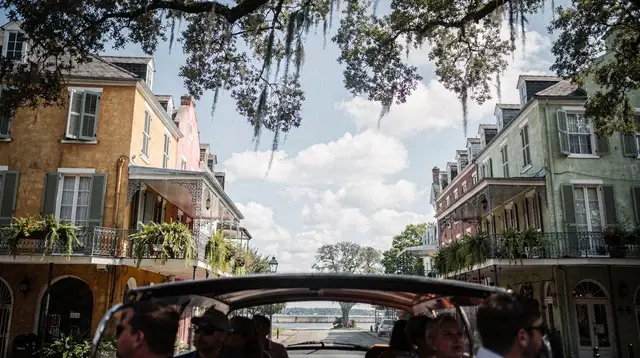
Travel tips for New Orleans
Everything you need to know before visiting New Orleans — money, transport, weather and when to go.
Planning essentials
Visas, budgets, packing, eSIMs and the cultural etiquette worth knowing before you land.

Best Time to Visit New Orleans

Free Things to Do in New Orleans

How Many Days Do You Need in New Orleans?

Hurricane Season: What New Orleans Visitors Should Know

Is New Orleans Safe for Tourists?

LGBTQ New Orleans: A Practical Guide

New Orleans for First-Time Visitors

New Orleans on a Budget: Cash, Cards, Tips and Everyday Costs

New Orleans Sightseeing Passes Compared

New Orleans Travel Mistakes to Avoid

Tipping and Sales Tax in New Orleans: How the Money Actually Works

What to Pack for New Orleans

Where to Stay in New Orleans
Getting around
Louis Armstrong New Orleans International Airport (MSY) as the main gateway, and why the RTA streetcar lines, buses and the Jazzy Pass cover the city without a car — parking in the French Quarter is difficult.


When to go
A subtropical climate with long, hot, humid summers and mild winters that can still turn cold for a few days. Spring and fall are the most comfortable seasons to visit. Hurricane season runs June 1 through November 30, with a peak in late August and September — a risk to plan around, not a certainty. Mardi Gras is a moving date between early February and early March; the French Quarter Festival falls in mid-April and the Jazz Fest in late April or early May, with exact dates changing each year.

Christmas and Winter in New Orleans

Halloween and Voodoo Fest in New Orleans

Jazz Fest Guide for Visitors

Mardi Gras in New Orleans: A Visitor's Guide

New Orleans in Autumn: A Season Between Summer Heat and Winter Crowds

New Orleans in Spring: Is It the Best Season to Visit?

New Orleans in Summer: Is It Worth the Heat?
Good to know about planning a trip to New Orleans
gov. One currency applies here: the US dollar. Getting around is where the real planning sits: the French Quarter and much of downtown are walkable, the RTA operates the St. 25, with a Jazzy Pass at $3 for one day, $9 for three days or $15 for five days through the Le Pass app or on board — no streetcar in New Orleans is free. The historic St. Charles line runs 1923-1924 vintage cars, only three of which are currently wheelchair-accessible with twelve of its 114 stops adapted so far, while the Canal, Riverfront and Rampart lines run fully accessible equipment.
The one realistic way in is Louis Armstrong International Airport (MSY), about thirty minutes from downtown by the 202 Airport Express bus, shuttle, flat-rate taxi ($36 to the CBD or French Quarter for one or two passengers, $15 per person for three or more, curbside pickup at door 7 on level 1) or rideshare — there's no train or metro link to the airport. Weather shapes the trip more than in milder destinations: the climate is subtropical, with heavy, humid summers around 33°C and afternoon storms, mild winters around 8-17°C, and spring and fall as the most comfortable seasons; hurricane season runs June 1 through November 30, peaking from August to mid-October.
The emergency number is 911, and the legal drinking age is 21 with identification checked regardless of appearance. Tap water is safe to drink. Driving is on the right. Tipping is expected everywhere and is the customer's responsibility, not included automatically except for large groups: 18-20% at restaurants and bars, $1-2 per drink at the bar, 15-20% for rideshare and taxi drivers. Bargaining isn't expected anywhere — prices in shops, restaurants and markets are fixed.
One city rule stands out: municipal code allows plastic cups of alcohol on the street in the French Quarter and its immediate surroundings — Rampart, Canal, Esplanade, the riverfront — but glass and metal containers are banned on public streets, the tolerance never extends to a vehicle, and it doesn't apply citywide or statewide.
Frequently asked questions about planning a trip to New Orleans
Do I need a visa to visit New Orleans?
Most visitors from visa-waiver countries don't need a visa, but they do need an ESTA approved before departure, requested only at esta.cbp.dhs.gov and checked against passport validity for the whole trip. Requirements and exemptions can change, so confirm the current rule for your own passport well ahead of booking.
What currency should I bring, and do I need cash?
The US dollar is the only currency used. Cards are accepted almost everywhere, but keeping a little cash on hand helps for tips, streetcar fares and smaller vendors in the French Quarter.
How do I get around New Orleans without a rental car?
The French Quarter, Garden District, Tremé and the Marigny are walkable, and the RTA streetcar network — St. Charles, Canal, Riverfront and Rampart — covers longer hops within the city for $1.25 a ride or a Jazzy Pass. For River Road, Bayou Country or the further day trips, you'll need a rental car or an organized excursion.
When is hurricane season, and will it affect my trip?
Hurricane season runs from June 1 through November 30, with the highest risk from August to mid-October, and it can bring travel disruptions with only a day or two of warning. Outside that window, spring and fall offer the most comfortable weather, while summer is hot and humid and winter is mild.
Can I drink on the street in the French Quarter?
Yes, but only from a plastic cup — glass and metal containers are banned on public streets — and only within the French Quarter and its immediate surroundings, never in a vehicle and never statewide. The legal drinking age is 21 with identification checked routinely.
Tours for a first visit on GetYourGuide
Verified deep-linked GetYourGuide tours. Book through these links and we earn a small commission at no cost to you.
GetYourGuide does not provide a product photo for this activity — the image shows the meeting point, photographed by us.