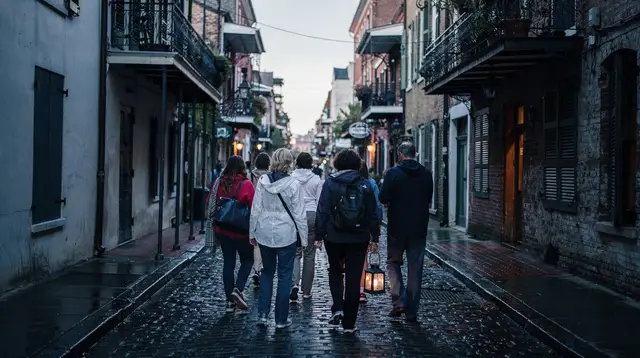
Frenchmen Street vs Bourbon Street: Which One Is Right for You
What is the difference between Frenchmen Street and Bourbon Street?
Frenchmen Street, in the Faubourg Marigny, is where locals send visitors for live jazz and brass bands in small clubs. Bourbon Street, in the French Quarter, is a louder strip of bars and nightlife built for tourists. Both allow street drinking in a plastic go-cup, and both check ID for the 21-and-over drinking age.
Two streets, two very different nights
Visitors often assume Frenchmen Street and Bourbon Street are variations on the same theme: a strip of bars in New Orleans. They are not. They sit in different neighbourhoods, draw different crowds, and exist for different reasons. Knowing which one matches the evening you actually want saves you from ending up on the wrong street entirely.
Bourbon Street runs through the heart of the French Quarter, the Vieux Carre, and has been built for well over a century around bars, drinking and tourist nightlife. It is loud, lit up, and busy from mid-afternoon until the early hours, with balconies, open-front bars pouring hand grenades and hurricanes, and amplified cover bands competing for attention from doorway to doorway.
Frenchmen Street sits a short walk away in the Faubourg Marigny, just across Esplanade Avenue from the Quarter’s eastern edge. It is a few blocks of small clubs where working musicians play jazz, blues, funk and brass-band sets, and it is the street New Orleans locals themselves point visitors toward when they want to actually listen to music rather than walk past it.
Neither street is “the real New Orleans” and the other a fake version. Both are real, both are popular for good reasons, and most visitors are better served by understanding what each one is actually for.
Frenchmen Street: live music first
Frenchmen Street runs for a few compact blocks off Esplanade Avenue, lined with small clubs, bars and a handful of late-night food stalls. The clubs here book working bands, often several sets a night, covering jazz, blues, funk, soul and brass. Cover charges are usually modest, and many clubs have no cover at all before a certain hour. The atmosphere favours actually listening: crowds gather close to the stage, and conversation tends to drop when a band is playing.
The street draws a mixed crowd of visitors and locals, including musicians who play elsewhere in the city and come to hear their peers after their own gigs end. It is walkable from most of the French Quarter in a few minutes, which makes it an easy add-on to an evening that starts with dinner in the Quarter.
A guided pub crawl along Frenchmen Street is a straightforward way to see several clubs in one night without guessing which door has the better band on a given evening; the Frenchmen Street VIP live music pub crawl moves a small group between venues with a local guide handling the choices.
This guide covers the choice between the two streets, not the specific clubs or nightly line-ups on Frenchmen Street; for that level of detail, see the dedicated nightly guide to live jazz in New Orleans and the comparison of Frenchmen Street and Bourbon Street’s music scenes.
Bourbon Street: bars and nightlife
Bourbon Street runs roughly thirteen blocks through the French Quarter, and its identity is built around bars, not stages. Open-fronted clubs pour large drinks to go, balconies overlook the street, and the crowd is overwhelmingly visitors rather than locals. Music plays from many doorways, usually amplified cover bands aimed at a passing, drinking crowd rather than a seated audience listening closely.
The street is genuinely a spectacle, especially after dark, and it is worth experiencing at least once even for visitors who prefer quieter evenings elsewhere. Large bachelor and bachelorette groups, big-drink specials, and a steady flow of foot traffic define the mood more than any single bar does.
A structured bar crawl removes the guesswork of where to start; the guided Bourbon Street bar crawl with shots takes a group through several bars with a guide setting the pace, which suits visitors who want the Bourbon Street experience without wandering it alone. For a broader night out that also touches other venues around the Quarter, the VIP party tour is built around a fuller night of nightlife stops.
Side by side
| Frenchmen Street | Bourbon Street | |
|---|---|---|
| Neighbourhood | Faubourg Marigny | French Quarter (Vieux Carre) |
| Main draw | Live jazz, blues, brass bands | Bars and nightlife |
| Crowd | Mixed visitors and locals | Mostly visitors |
| Noise level | Loud inside clubs, calmer outside | Loud throughout the street |
| Typical spend | Cover charges, drink prices, tips for bands | Drink prices, often large-format cocktails |
| Best for | Listening to music, quieter conversation between sets | Bars, people-watching, a big night out |
| Distance from the other | 15–25 minute walk, or a short ride | 15–25 minute walk, or a short ride |
Getting from one street to the other
Because Frenchmen Street and Bourbon Street sit so close together, most visitors treat the choice between them as a question of order, not an either-or. The walk runs along the eastern edge of the French Quarter, past Esplanade Avenue, and it is flat, well lit for most of the way, and easy to follow even for a first-time visitor who has not memorised the Quarter’s grid. Rideshare and taxis also run the route quickly given the short distance, which is the better option late at night or if the weather has turned.
Neither street sits on the streetcar network, so the walk or a short ride is the practical choice rather than public transit for this particular hop. Visitors who are driving and parking themselves around the city generally leave the car at the hotel for this kind of evening; neither street has convenient parking, and a car is one more thing to keep track of once you are moving between bars and clubs.
The rules that apply to both streets
Two rules apply equally on Frenchmen Street and Bourbon Street, and visitors from countries without an equivalent often get them wrong.
Go-cups, not glass. Louisiana allows drinking in the street within the French Quarter and the adjoining entertainment areas, including Frenchmen Street, but only from a plastic to-go cup, never from a glass or a bottle. If you are leaving a bar with a drink, ask for it in a go-cup; most bars pour it for you automatically once they see you are heading out the door. Carrying an open glass container outside a bar is not permitted, on either street.
The drinking age is 21, and it is checked. Louisiana’s legal drinking age is 21, and bars and clubs on both streets check identification at the door, not just at the bar. A passport is the safest form of ID to carry if you are travelling from outside the United States; some venues will not accept a photocopy or a photo of your ID on a phone.
Both rules are enforced consistently enough that it is worth planning around them rather than finding out at the door of a club you were looking forward to.
Safety: ordinary caution, not alarm
Both streets are busy and well-policed for most of the evening, and neither requires special alarm to enjoy. The practical advice is the same ordinary caution that applies to any big-city nightlife district after dark, and it matters slightly more on Bourbon Street given the density of drinking and the later hours some visitors keep.
Stick to the lit, crowded blocks. Keep your phone and wallet somewhere you can feel them, especially in a dense crowd. If the night is winding down and you are heading back to a hotel some distance away, a short ride is a better choice than a long walk on quieter streets once the crowds have thinned, particularly toward the edges of Bourbon Street later at night. None of this is specific to New Orleans; it is the same advice that applies on comparable streets in any large city, and it should not be a reason to skip either street. For a fuller picture of safety in the city beyond nightlife, see is New Orleans safe for tourists.
Which one should you pick tonight
If you want to hear real musicians play to a crowd that is listening, start on Frenchmen Street. If you want the loud, drink-forward spectacle that New Orleans nightlife is famous for internationally, Bourbon Street delivers exactly that. Many visitors do not have to choose at all: an early set on Frenchmen Street followed by a later stop on Bourbon Street, or the reverse, is an easy combination given how close the two streets sit to each other.
A few practical points help either plan go more smoothly:
- Eat before you go. Neither street is the place for a sit-down dinner once the evening gets going; pair your night out with dinner elsewhere in the French Quarter or nearby first.
- Bring a card and some cash. Cards are widely accepted, but cash still matters for tipping bands on Frenchmen Street and for a handful of Bourbon Street bars.
- Expect cover charges on Frenchmen Street. Most clubs charge a modest cover, sometimes waived earlier in the evening; tipping the band is customary and often collected directly.
- Plan your route home before you start drinking. Decide in advance whether you are walking, and how far, so the decision is not made later in the night.
- If you only have one evening, do not try to see everything. A single guided crawl on either street, such as the Frenchmen Street pub crawl or the Bourbon Street bar crawl, covers more ground than wandering alone and trying to guess which door to walk through.
For a broader first-night plan that places either street within a full itinerary, see New Orleans for first-time visitors and one day of New Orleans essentials. If your interest is specifically jazz and brass-band culture rather than nightlife in general, the guide to Treme and the birth of jazz and the second lines and brass bands explained guide go further into the music’s roots than this comparison does.
Fitting either street into a longer trip
For visitors staying more than one night, the choice rarely stays a one-time decision. A common approach is to treat Bourbon Street as the “see it once” stop early in a trip, while returning to Frenchmen Street on a second or third evening once the rest of the day’s sightseeing is done and a slower, seated night of music is more appealing. Anyone building a trip specifically around live music start to finish will find a fuller framework in the music lovers’ three-day itinerary, which sequences Frenchmen Street alongside other venues around the city rather than treating it as a single stop.
Visitors travelling during Jazz Fest should expect both streets to be busier than usual, since the festival draws musicians and audiences into the city’s regular clubs in the evenings once the festival grounds close for the day. Where you choose to stay also shapes how easy this is to manage: hotels in or near the French Quarter put both streets within walking distance, while accommodation further out makes a late-night switch between them less convenient. The guide to where to stay in New Orleans covers that trade-off in more detail, and the guide to common New Orleans travel mistakes is worth a look before your first night out, since several of the mistakes it covers involve exactly this pair of streets.
Frenchmen Street and Bourbon Street: common questions
Is Frenchmen Street better than Bourbon Street?
Neither is objectively better; they serve different evenings. Frenchmen Street suits visitors who want to listen to live jazz, blues or brass bands in a small club with a mostly local crowd. Bourbon Street suits visitors who want bars, big drinks and a loud, high-energy strip built around tourism.
Can you drink alcohol in the street in New Orleans?
Yes, within the French Quarter and the adjoining entertainment areas, but only from a plastic go-cup, never from a glass or a bottle. Bars will pour a drink into a to-go cup on request when you leave. This does not apply everywhere in the city, only in the permitted zone.
Do you need ID for Bourbon Street or Frenchmen Street?
Yes. The legal drinking age in Louisiana is 21, and it is enforced at the door of bars and clubs on both streets. Carry a passport or another accepted photo ID if you plan to drink.
Is Frenchmen Street walkable from the French Quarter?
Yes. Frenchmen Street sits just across Esplanade Avenue from the French Quarter, in the Faubourg Marigny, and it is an easy walk of a few minutes from the Quarter’s eastern edge in the early evening.
Is Bourbon Street safe at night?
The street itself is busy and heavily policed for most of the evening. The ordinary caution of any big-city nightlife strip applies later at night: stay on the lit, crowded blocks, keep an eye on your drink and your belongings, and take a short ride rather than walk a long distance alone once things quiet down.
Which street has better live music, Frenchmen Street or Bourbon Street?
Frenchmen Street is where working jazz, blues and brass-band musicians play for a listening crowd, and it is the street locals themselves recommend for this. Bourbon Street has music too, mostly amplified cover bands spilling out of open-fronted bars, aimed at a walking, drinking crowd rather than a seated audience.
Can you do both Frenchmen Street and Bourbon Street in one night?
Yes, and many visitors do, since the two are only a short ride or a 20 to 25 minute walk apart. A common pattern is an earlier set on Frenchmen Street followed by a later stop on Bourbon Street, or the reverse.
Do you need a car to get between Frenchmen Street and Bourbon Street?
No. Both streets sit within or right beside the French Quarter, and the walk between them is short. A car is not useful for moving between the two, and parking near either street is limited and not worth arranging just to cover this distance.
Tours worth comparing on GetYourGuide
Verified deep-linked GetYourGuide tours. Book through these links and we earn a small commission at no cost to you.
GetYourGuide does not provide a product photo for this activity — the image shows the meeting point, photographed by us.