Six Days: New Orleans, the River Road and Cajun Country
Why go this far west
The city itself and the plantation country of the River Road sit within an hour and a half of the French Quarter, close enough for the five-day itinerary to reach them and come back to a New Orleans hotel each night. Lafayette and the heart of Acadiana are a different order of distance: roughly two hours fifteen minutes on the interstate, and once you count fuel stops and the pull to linger, it is not a realistic there-and-back day.
Six days is the shortest version of this trip that treats that distance honestly, by changing base rather than trying to outrun it. The order matters too: city, then River Road, then Acadiana, moving progressively further from New Orleans rather than zig-zagging back and forth.
This is also where the trip earns its second half by naming a distinction the region takes seriously. Creole and Cajun are not interchangeable words. Creole culture and cooking formed in New Orleans itself, an urban blend of French, Spanish, African and Caribbean influences, often built on tomatoes.
Cajun culture belongs to the descendants of the Acadians expelled from Nova Scotia in the 1750s, who settled the prairies and bayous around what is now Lafayette, a rural, roux-based cooking tradition with its own music, its own French dialect and its own festivals. New Orleans is not a Cajun city, and nothing on this itinerary calls it one. For the full explanation, see the site’s Creole vs Cajun food guide.
A car is close to mandatory for this version of the trip. Public transport does not reach the River Road or Lafayette in any practical way; see do you need a car in Louisiana if you are weighing a rental against an organised tour for parts of it.
Day 1: French Quarter and Faubourg Marigny
Fly into MSY, roughly 18 km west of downtown with no rail link, and take a taxi, ride-hail or the RTA airport bus into the French Quarter. Spend the afternoon on foot: Jackson Square, St Louis Cathedral, the Cabildo and Presbytere, then Royal Street for galleries and Decatur Street toward the French Market. Beignets and chicory coffee at Cafe du Monde are the obvious first stop, queue or not.
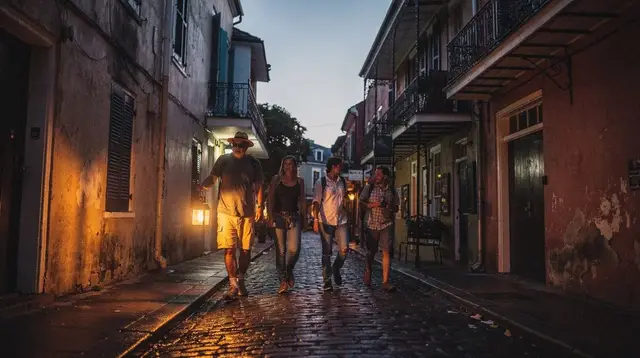
In the evening, walk or ride down to Frenchmen Street in the Faubourg Marigny, the strip locals actually recommend for live jazz, rather than staying on Bourbon Street all night. If ghost stories and Voodoo history appeal, a guided haunted pub crawl through the Quarter’s older bars is an easy first-night orientation to the neighbourhood’s layout.
a guided haunted pub crawl through the French Quarter’s oldest barsDay 2: Cemeteries, Voodoo and the birth of jazz
St Louis Cemetery No. 1 can only be visited with an authorised guide, and it is worth the structure: above-ground tombs, the story of Marie Laveau, the historical Voodoo Queen buried there, and a serious rather than sensational account of Louisiana Voodoo as a real syncretic religion. Pair it with a proper voodoo tour if the subject interests you.
a guided Voodoo history tour that treats the religion seriously rather than as spectacleIn the afternoon, head north of the Quarter into Treme, one of the oldest African American neighbourhoods in the country and the setting for Louis Armstrong Park and Congo Square, the historic root of the city’s music. Finish the day back in the Quarter or at Preservation Hall for a set of traditional jazz.
Day 3: Garden District and streetcar
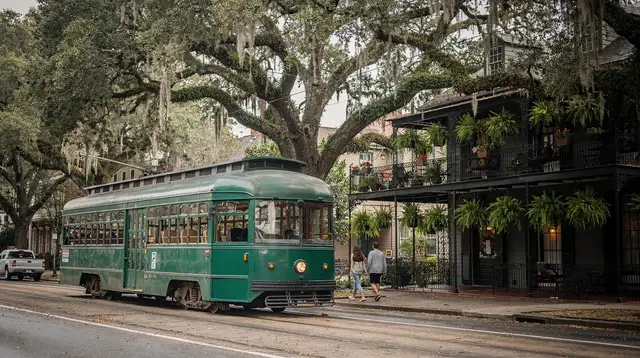
Ride the St Charles streetcar line, the oldest continuously operating street railway in the world, uptown into the Garden District for antebellum mansions and Lafayette Cemetery No. 1, freely walkable unlike St Louis No. 1. Continue on to City Park and the Sculpture Garden in Mid-City, or the National WWII Museum in the Warehouse Arts District, depending on your interests; both are a full half-day on their own.
Reserve the evening for food: gumbo, jambalaya, a po’boy or a muffuletta, and one of the city’s claimed cocktails, the Sazerac or the Ramos Gin Fizz.
Day 4: The River Road plantations
Leave New Orleans mid-morning for the River Road, roughly 45 minutes to an hour and a half upriver on either bank of the Mississippi. This is a single, focused day, not a full loop of every plantation: choose two, at most three.
| Plantation | Focus | Typical visit |
|---|---|---|
| Oak Alley | Quarter-mile alley of live oaks, Greek Revival house | 1–1.5 hours |
| Whitney Plantation | First US museum built entirely around the history of slavery | 2 hours |
| Laura Plantation | Creole plantation told from the family’s own written records | 1.5 hours |
| St Joseph Plantation | Working sugar plantation, guided house and grounds tour | 1 hour |
These sites are where enslaved people were held and worked; none of them are a garden outing, and the better museums, especially Whitney, are built to make sure you do not leave thinking otherwise. A guided St Joseph Plantation tour pairs well with an afternoon stop at the River Road African American Museum for a fuller regional account.
a guided tour of St Joseph Plantation’s house and working grounds an entry ticket to the River Road African American Museum
For more on how the sites differ in what they choose to tell, read Whitney Plantation and the history of slavery and the broader plantations along the River Road compared. Overnight back in New Orleans, or push on toward Lafayette if you prefer an early start the next morning; a hotel near the River Road shortens Day 5’s drive but leaves you further from the airport at trip’s end.
Day 5: Into Acadiana
This is the day the itinerary breaks from the shorter guides on this site: instead of returning to New Orleans, drive roughly two hours fifteen minutes west on I-10 to Lafayette, the centre of Acadiana and of Cajun Country. Check into Lafayette for two nights.
Spend the afternoon at Vermilionville or the Acadian Village, living-history sites built around Cajun settlement and craft, then walk the historic downtown with a guide who can explain how Acadian exile in the 1750s became the culture you’re standing in.
a walking tour through Lafayette’s Cajun history and folkloreIn the evening, look for a dance hall with live Cajun or zydeco music, a tradition that belongs to this region and not to New Orleans. For a fuller regional picture before you arrive, see the Cajun Country and Lafayette guide.
Day 6: Atchafalaya, Avery Island and the road back
Morning in Breaux Bridge, the self-styled crawfish capital, or on Lake Martin near it, then a swamp tour into the Atchafalaya Basin, the largest wetland and swamp in the United States. Alligators are far less active in the cold months, so expect a quieter, birdier tour outside spring and summer. Background on how the different boat tours compare is in swamp tours compared: airboat vs boat and, on the wetland itself, the Atchafalaya Basin guide.
In the afternoon, detour to Avery Island near New Iberia for the Tabasco factory tour and its Jungle Gardens — see the Avery Island and Tabasco visit guide for opening hours, which change seasonally. From there it’s the drive back to New Orleans, roughly two and a half hours depending on your route, in time for a last dinner in the city or a morning flight out of MSY the next day.
Planning notes
- Car required. Rentals are easiest picked up at MSY or downtown; return it wherever your flight departs from.
- Distances are real. Budget the full two hours plus for Lafayette each way, and do not try to compress this into a day trip from New Orleans; that is what the five-day itinerary is for, and it stops at the River Road.
- Want more time on the coast or in Baton Rouge? Both are deliberately left out here and covered instead by the seven-day Louisiana grand tour.
- Language and terms. Expect Cajun French phrases on menus and radio in Acadiana; it is a living dialect, not a tourist affectation.
- Weather. Hurricane season runs 1 June to 30 November; check forecasts before a late-summer trip, especially for the swamp and coastal legs.
FAQ: six days between New Orleans and Cajun Country
Is six days enough to see New Orleans, the River Road and Lafayette properly?
It is enough for a real first look at each, not an exhaustive one: roughly two and a half days in the city, one day on the River Road, and two and a half days in and around Lafayette, with one plantation visit and one swamp tour rather than several of each.
Do I need a car for this itinerary?
Yes. New Orleans itself is walkable and served by streetcars, but the River Road, Lafayette and the Atchafalaya Basin have no practical public transport connection to the city.
Is New Orleans a Cajun city?
No. Cajun culture belongs to the descendants of Acadian exiles who settled the prairies and bayous around Lafayette. New Orleans developed its own, separate Creole culture and cuisine, urban and distinct from Cajun traditions.
How far is Lafayette from New Orleans?
Roughly two hours fifteen minutes by interstate, which is why this itinerary treats it as a base change rather than a day trip, unlike the River Road plantations closer to the city.
Should I visit the plantations before or after Lafayette?
Before. The River Road sits between New Orleans and the turn west toward Lafayette, so visiting it on Day 4 keeps the route moving in one direction instead of backtracking.
Are alligators guaranteed on the Atchafalaya swamp tour?
No. Sightings depend on season and weather, and alligators are much less active in the cold months, so a winter tour may focus more on birdlife and the cypress swamp itself.
Can I skip Lafayette and just add a second River Road day instead?
You can, but it changes what the trip is for. The five-day city, swamp and River Road itinerary already covers that shorter version well; this six-day plan exists specifically to reach Acadiana.
Does this itinerary include Baton Rouge or the Gulf Coast?
No, both are left out deliberately to keep the six days focused on New Orleans, the River Road and Acadiana. The seven-day Louisiana grand tour adds both.
tours.6 days
Verified deep-linked GetYourGuide tours. Book through these links and we earn a small commission at no cost to you.
GetYourGuide does not provide a product photo for this activity — the image shows the meeting point, photographed by us.