A Gulf Coast Day Trip from New Orleans: Bay St Louis to Biloxi
Is the Gulf Coast day trip from New Orleans in Louisiana?
No. Bay St Louis, Pass Christian, Gulfport and Biloxi sit on the Mississippi Gulf Coast, in the neighbouring state of Mississippi, roughly one to one and a half hours east of New Orleans by road. It is the one day trip on this site built around beaches and casinos rather than swamps or plantations.
Where the Gulf Coast day trip actually goes
Every other day trip from New Orleans described on this site points inland or into the wetlands: the River Road plantations upriver, the Barataria swamps to the south. This one points the other way, and it also crosses a state line. Bay St Louis, Pass Christian, Gulfport and Biloxi sit on the Mississippi Sound, in the neighbouring state of Mississippi, not on any Louisiana shoreline.
Louisiana’s own Gulf coast, further south and west of New Orleans, is mostly marsh, mudflats and barrier islands rather than the kind of sand beach people picture when they hear “Gulf Coast.” If you want a beach afternoon or an evening at a casino table near New Orleans, this stretch of Mississippi, not Louisiana, is where it happens.
The distance is honest but not dramatic: allow roughly one hour to Bay St Louis, closer to an hour and a half if you are continuing on to Gulfport or Biloxi, mostly along Interstate 10 with a short stretch of coastal road at the end. Traffic through the New Orleans metro area at the start of the drive is the main variable, more than anything on the Mississippi side. This is not a trip to time to the minute; give yourself a buffer and treat the exact drive time as an estimate rather than a schedule.
What makes this day different from the rest of the site’s day trips is the register. The swamp tours and plantation visits are built around nature and history, often heavy history at that. The Gulf Coast is built around a change of rhythm: open water, wide beaches, seafood on a porch, and, in Biloxi especially, casino floors that run around the clock. It suits a traveller who has already spent a day or two in the French Quarter and in the wetlands and wants a lighter, more coastal day before heading back to the city.
The four towns, not one coastline
It is tempting to describe the Mississippi Gulf Coast as a single strip of beach, but the four main towns along it have distinct characters, and treating them as interchangeable is the easiest way to have a disappointing day.
| Town | Distance from New Orleans (approx.) | Character | What it suits |
|---|---|---|---|
| Bay St Louis | ~1 hour | Small, walkable, arts-and-galleries town, historic downtown | A relaxed half-day, browsing and a slow lunch |
| Pass Christian | ~1 hour | Quiet, residential, live oaks and antebellum homes | A short stop, not a full day on its own |
| Gulfport | ~1 h 15 | Working port city, modern waterfront, some casinos | A stopover between Bay St Louis and Biloxi |
| Biloxi | ~1 h 20–1 h 30 | The coast’s casino and resort hub, largest beachfront | Casinos, resort dining, a beach walk |
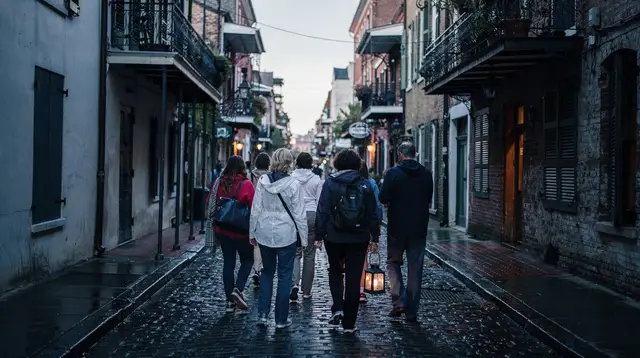
Bay St Louis is the town most day-trippers from New Orleans settle on, and it is also the one most geared toward a single-day visit: a compact historic downtown a few blocks from the water, galleries, a working harbour, and a beachfront that is easy to walk without a plan. It rewards wandering more than it rewards a checklist. A guided walk through the town is a straightforward way to get your bearings quickly, and a coastal stroll built around the town’s history and waterfront makes a reasonable first stop; the walking tour along the Bay St Louis waterfront covers that ground in a couple of hours.
Bay St Louis also has a quieter, stranger side after dark, with a local tradition of ghost stories tied to its older buildings and cemeteries; travellers curious about that angle can take a ghost-focused walking tour of the town’s historic streets rather than treating it purely as a beach stop.
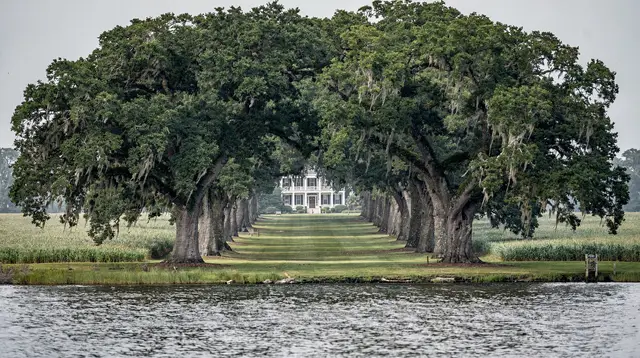
Pass Christian, just along the coast, is worth a slow drive-through or a short stop rather than a destination in its own right on a single day trip. It is known locally for its avenue of old live oaks and a run of antebellum houses that survived the hurricanes that have repeatedly hit this coast, and it has none of the resort infrastructure of Biloxi.
Gulfport sits between the two halves of the coast, more working city than resort town, with a modern waterfront and a couple of casino properties of its own. Most day-trippers pass through rather than stop, unless a specific casino or event is the reason for the drive.
Biloxi is the coast’s centre of gravity for a reason: it has the largest concentration of casino resorts on the Mississippi Gulf Coast, several with beachfront towers, buffets and entertainment, plus the widest public beach along the whole stretch. If the point of the day is a casino floor and a resort lunch, Biloxi is where that happens; if the point is a quieter walk and a browse through galleries, Bay St Louis suits better. Deciding which register you want before you leave New Orleans saves an afternoon of driving between towns trying to find it.
What actually fills a day here
Because this coast trades on beach and casino time rather than a list of sights, the practical question is less “what do I see” and more “how do I spend the hours.” A few patterns work well from New Orleans:
- A Bay St Louis half-day: drive out in the morning, walk the historic downtown and harbour, have seafood on the water, and either head back to New Orleans by late afternoon or continue on to Biloxi for the evening.
- A Biloxi casino evening: leave New Orleans in the early afternoon, arrive on the coast by mid-afternoon, spend a few hours on the beach, then move into a casino resort for dinner and the evening before driving back, or staying over if the night runs late.
- A full coastal loop: Bay St Louis in the morning, a stop in Pass Christian, and Biloxi in the afternoon and evening. This is a long day, closer to twelve hours door to door once driving is included, and works better as an overnight than a single push back to New Orleans.
The beaches themselves are worth setting expectations for. They are wide and largely engineered, sitting along a busy coastal highway rather than a wild shoreline, and they are better suited to a walk, a sunset and a paddle than to the clear-water swimming some visitors expect from a “Gulf Coast” trip. The water is often shallow and can be murky, particularly after rain upriver. Treat the beach as a backdrop to the towns rather than the single reason for the drive, and the day tends to land better.
Seafood is the other constant along this coast, in the same broad family as New Orleans cooking but with its own local specialities built around Gulf shrimp, oysters and the coast’s own smoked mullet and gumbo traditions. A porch lunch overlooking the water is one of the simplest, most reliable ways to spend an hour here, in any of the four towns.
Why this day trip stands apart from the rest of the site
Every other excursion covered on this site — the plantations along River Road, the swamp tours south and west of the city, Cajun Louisiana around Lafayette — asks something of the traveller: attention to history, patience with wildlife, or a taste for rural back roads. The Gulf Coast day is the deliberate exception. There is no plantation history to sit with here, no ecosystem to interpret, no need to time an alligator sighting to the season.
It is a beach-and-casino day, full stop, and it works precisely because it does not try to be anything more serious. For a traveller who has spent a day walking Jackson Square and the French Quarter and another out in the Barataria Preserve or on the River Road, a day of open water and a casino floor in Mississippi is less a sightseeing stop than a deliberate change of pace before the drive back into New Orleans.
It is also worth being clear about what this trip is not. It is not a way to see “the Louisiana coast,” because Louisiana’s own Gulf shoreline lies in a different direction and looks nothing like this: fewer beaches, far more marsh, and none of the resort infrastructure. It is not a stand-in for a proper beach holiday either — the sand here is a pleasant afternoon, not a week’s destination.
And it does not combine well in the same day with the swamp tours or the plantations; the driving alone would eat most of the daylight. Treated on its own terms, as a short, unhistoric, coastal breather roughly an hour to an hour and a half from the French Quarter, it fills a real gap in an itinerary that has otherwise been all history, music and wetlands.
For travellers building a longer trip rather than a single day, this coast fits naturally at the tail end of a wider loop through southern Louisiana. Anyone weighing whether to spend that extra day here versus further inland can look at how it compares with a stop in Cajun Country around Lafayette or a visit to Baton Rouge, both of which sit in the opposite direction and offer a very different kind of day.
Those weighing up the River Road plantations as a day trip or the Honey Island Swamp as a day trip will notice the contrast immediately: those days are slower, more reflective, and firmly land-and-water focused, while the coast trades all of that for beach chairs and slot machines. Multi-day travellers with a full week to work with can also look at a Gulf Coast and beaches itinerary or the wider seven-day Louisiana grand tour, which folds a coast stop into a longer loop through the plantations and Cajun country.
One more contrast worth naming plainly: this is a food culture shift as much as a scenery shift. The difference between Creole and Cajun cooking that shapes most of this site’s food guides barely applies on the Mississippi coast, where the seafood traditions run closer to the wider Gulf South than to either New Orleans Creole kitchens or the Acadiana prairie.
If comparing how a coastal day here stacks up against a day in Baton Rouge or against the swamp tour operators compared elsewhere on the site helps with planning, those pages sit alongside this one in the day trips section and the wider Gulf Coast destination overview.
Planning notes before you go
A few practical points are worth settling before leaving New Orleans rather than discovering on the road. There is no meaningful public transit connection from New Orleans to the Mississippi Gulf Coast, so this is a drive-it-yourself or organised-tour day; renting a car or booking a tour with hotel pick-up are the two realistic options, and a rental car gives far more flexibility to move between towns as the day develops.
Interstate 10 carries most of the route, and traffic through the New Orleans metro area, not anything on the Mississippi side, is the most likely source of delay, so build in a margin rather than timing the drive to the minute. Because the towns differ so much in character, deciding in advance whether the day is about a quiet coastal walk in Bay St Louis or a casino evening in Biloxi will do more to shape a good day than any single attraction on this coast.
Finally, remember this is a genuine day trip in its own right, not an add-on to the swamps or the River Road. Anyone weighing a longer eastward push, or curious how a coastal day compares to the region’s other day trips before committing, will find the fuller comparison, along with the site’s other options such as the Baton Rouge day trip, gathered on the things to do near New Orleans hub.
River Road day trips on GetYourGuide
Verified deep-linked GetYourGuide tours. Book through these links and we earn a small commission at no cost to you.
GetYourGuide does not provide a product photo for this activity — the image shows the meeting point, photographed by us.