The Cities of the Dead, Explained
Why New Orleans Buries Its Dead Above the Ground
The first time I stood at the gate of St Louis Cemetery No. 1, just north of the French Quarter, I remember being genuinely confused. I’d read about New Orleans cemeteries for weeks, seen the photographs of white marble stacked in rows like a miniature city, and I still assumed I could just push open the gate and walk in. I couldn’t. A guide was waiting with a small group, checked names against a booking list, and only then did the gate open. That confusion is common enough that it’s worth untangling properly, because the two most talked-about cemeteries in the city work in almost opposite ways.
Start with the obvious question: why are the tombs above ground at all? The practical answer is water. New Orleans lies mostly at or below sea level, wedged between the Mississippi River and Lake Pontchartrain, and the water table sits just below the surface almost everywhere in the city. Early colonists who buried their dead in the ground found, more than once, that heavy rain floated the coffins back up.
French and Spanish colonial custom already favoured above-ground vaults, and the combination of tradition and hydrology produced the dense, whitewashed rows of tombs that people now call the “cities of the dead.” Many of these are family vaults reused generation after generation — a body is placed inside, and after a year and a day the heat has done its work, the remains are pushed to the back or into a lower chamber, and the vault is ready for the next burial. It’s a practical system dressed as something eerie, which is part of why it photographs so well and gets misunderstood so often.
St Louis No. 1: History You Can Only See With a Guide
St Louis Cemetery No. 1 opened in 1789, making it the oldest surviving cemetery in the city, and it holds some of New Orleans’ most significant dead: free people of colour, Creole families, victims of yellow fever epidemics, and Marie Laveau, the nineteenth-century Voodoo Queen whose tomb draws more visitors than almost anything else inside the walls. Marie Laveau was a real person, not a legend invented for tourists — a free woman of colour who practised as a healer and religious leader, and whose life is documented in city records as well as folklore. Her tomb has been damaged often enough by people leaving marks or offerings that the practice is now firmly discouraged, and a guide will explain why on the spot.
Since 2015, the archdiocese that owns St Louis No. 1 has closed it to unaccompanied visitors. You cannot buy a ticket at a booth and walk in alone the way you might at a European cemetery. The only way in, unless you have documented family buried there, is as part of an authorised guided tour booked ahead of time.
This isn’t red tape for its own sake — vandalism and theft had become a real problem when the cemetery was open to anyone, and restricting entry to guided groups has protected tombs that are two centuries old and, in places, structurally fragile. If a walking tour or a self-guided app claims you can pop into St Louis No. 1 whenever you like, that claim is out of date or simply wrong, and it’s worth checking with whoever is running your visit before you show up expecting to walk straight in.
Lafayette No. 1: The One You Can Actually Walk Into
This is where people mix the two up, and I understand why — both have above-ground tombs, both look like a miniature city, and both get called “the cemetery” by locals giving directions. But Lafayette Cemetery No. 1, in the Garden District along St Charles Avenue, is a separate place with a separate history. It opened in the 1830s to serve the then-independent city of Lafayette, mostly German and Irish immigrant families rather than the Creole and free-Black community buried at St Louis No. 1.
Crucially, Lafayette No. 1 is open to independent visitors during its posted daytime hours — no guide required, no booking, just the usual courtesy of staying on the paths and not touching the tombs. If you want to wander at your own pace, read inscriptions, and take your time with a cup of coffee in hand, this is the cemetery that lets you do it. If you specifically want St Louis No. 1 and Marie Laveau’s tomb, you need to build a guide into your plan from the start.
Taking Voodoo Seriously
It’s tempting, standing among these tombs, to treat the whole subject as spooky set dressing, and a fair number of tours sell exactly that. But Louisiana Voodoo is a genuine syncretic religion, blending West African spiritual traditions brought by enslaved people with Catholic saints and ritual, and it is still practised in the city today, not just performed for visitors. Marie Laveau’s continuing draw isn’t only about legend; for practitioners, she remains a significant religious and historical figure.
I’d rather book with a guide who treats that seriously than one who leans entirely on jump-scares, and the gap between the two is usually obvious within the first five minutes of a tour description. This page isn’t the place to compare those tours in detail — that’s covered elsewhere — but it’s worth knowing, before you book anything, that the subject deserves a bit more respect than a Halloween prop.
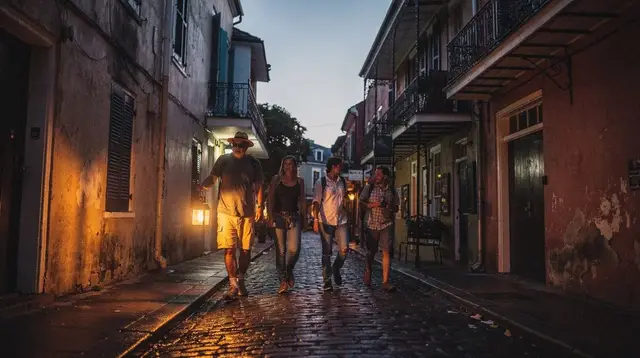
For a guided evening that leans into New Orleans’ darker history rather than treating the cemeteries as a backdrop, an option like this adults-only history and legends walk covers some of the same ground with a guide who can actually get you talking about context, not just costumes. If you’d rather split your evening between stories and a few bars along the way, a haunted pub crawl through the Quarter takes a lighter approach to the same history.
Planning Around It
If a cemetery visit matters to your trip, plan the logistics before you plan the outfit. Book a St Louis No. 1 guided tour a day or two ahead, especially in the busier spring and autumn shoulder seasons, and check the meeting point carefully since several operators run from slightly different corners of the Quarter.
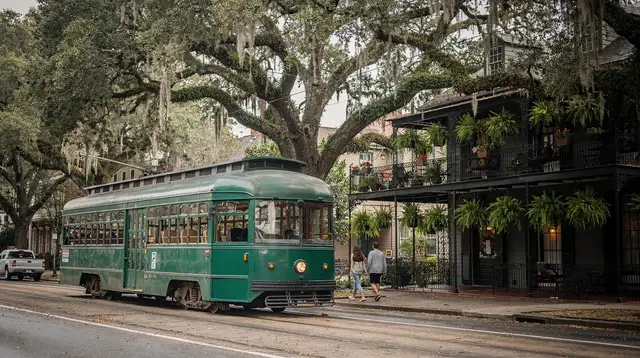
Lafayette No. 1 needs no booking, so it slots easily into a morning in the Garden District alongside the streetcar and the antebellum houses. Either way, wear real shoes — the paths are uneven brick and shell, not pavement — and bring water if you’re going in summer heat. Neither cemetery allows food, alcohol, or removing anything from a tomb, and guides at St Louis No. 1 are strict about staying on marked paths, since the vaults are genuinely fragile.
Whichever cemetery ends up on your itinerary, it helps to see them as part of a wider story rather than a single stop: the French Quarter around Jackson Square, the history of Voodoo in New Orleans, and the city’s African American heritage all connect back to the people buried in these two very different cemeteries.
If you’re building out a longer stay, our three days in New Orleans itinerary and the broader things to do hub both work these visits in alongside the rest of the city, and our history and culture tours category is the place to compare guided options once you know which cemetery you actually want to see.
Frequently Asked Questions About Visiting St Louis Cemetery No. 1 and Lafayette Cemetery No. 1
Why are New Orleans tombs above ground?
New Orleans sits at or below sea level with a very high water table, so in-ground burial historically caused coffins to float back up after heavy rain. The city adopted above-ground vaults, a practice reinforced by French and Spanish colonial custom, and the tombs became the dense, stacked “cities of the dead” you see today.
Can I walk into St Louis Cemetery No. 1 by myself?
No. Since 2015, access to St Louis Cemetery No. 1 has been restricted to family members and visitors on an authorised guided tour booked in advance. You cannot buy a ticket at the gate and wander in alone.
Is Lafayette Cemetery No. 1 the same as St Louis No. 1?
No, they are two different cemeteries. Lafayette Cemetery No. 1 is in the Garden District, dates from the 1830s, and can be visited independently during its posted hours. St Louis Cemetery No. 1 is near the French Quarter, dates from 1789, and requires a guide.
Is Marie Laveau really buried in St Louis Cemetery No. 1?
Yes. Marie Laveau, the nineteenth-century Voodoo Queen of New Orleans, is a documented historical figure and is buried in St Louis Cemetery No. 1. Her tomb is one of the most visited in the cemetery, and marking it is now prohibited to protect it.
Is voodoo just a tourist gimmick in New Orleans?
No. Louisiana Voodoo is a real syncretic religion with West African and Catholic roots, still practised today. Some tours treat it as serious history and living faith, others sell it as pure entertainment; it is worth knowing the difference before you book.
Do I need to book a cemetery tour in advance?
Yes, for St Louis Cemetery No. 1. Because independent entry is not allowed, spots on authorised guided tours can sell out, especially in the busier spring and autumn months, so booking a day or two ahead is safer than turning up on the day.
tours.Inspiration
Verified deep-linked GetYourGuide tours. Book through these links and we earn a small commission at no cost to you.
GetYourGuide does not provide a product photo for this activity — the image shows the meeting point, photographed by us.