African American Heritage in New Orleans
Where is African American heritage best experienced in New Orleans?
Treme, just north of the French Quarter, is the historic centre: Congo Square and Louis Armstrong Park mark where much of the city's music was born, and the neighbourhood's second line parades remain community events rather than staged shows. This heritage is a living, present-day culture, not only a historical exhibit.
A heritage still lived, not only remembered
New Orleans is often introduced to visitors through its restaurants and its bars, but the deepest layer of the city’s identity is African American, and it is still being lived out today in specific neighbourhoods, churches and streets. This is not a story confined to museums or to the plantation country upriver. It is a story with an address inside the city itself: Treme, just north of the French Quarter, one of the oldest African American neighbourhoods in the entire country.
Understanding Treme changes how the rest of New Orleans reads. The music heard in clubs across the city, the brass bands that appear seemingly from nowhere on a Sunday afternoon, the elaborate above-ground tombs, even the rhythms of the city’s Sunday routines, trace back in large part to what took root here. This guide keeps to that urban, cultural story — Treme, Congo Square and the birth of jazz — rather than the history of slavery as told at the River Road plantation museums, which is a different and equally important story told elsewhere.
Treme: property, freedom and community before the Civil War
Treme’s significance begins well before emancipation. Louisiana’s Spanish and French colonial history, and its Catholic legal tradition, produced a distinct social class rarely found elsewhere in the American South: free people of colour, many of whom owned property, ran businesses, and in some cases owned enslaved people themselves — a complex and uncomfortable history that guides in the neighbourhood address directly rather than smoothing over.
By the early nineteenth century, Treme had become a centre of Black civic and economic life in New Orleans. Its residents built churches, mutual aid societies and social clubs that still exist in descendant forms today. Those mutual aid and burial societies are the direct ancestors of the social aid and pleasure clubs that organise second line parades now. Understanding this line of continuity, from nineteenth-century mutual aid societies to today’s parading clubs, is the single most useful piece of context for making sense of what you see and hear walking through the neighbourhood.
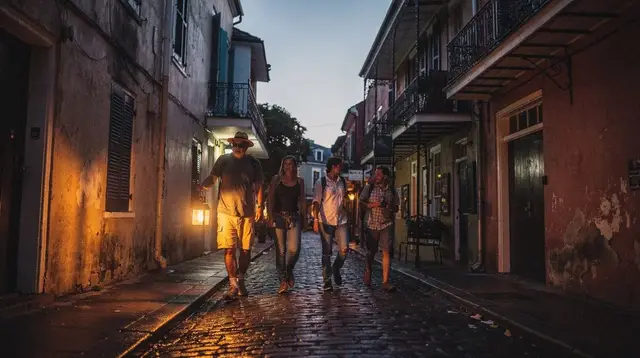
A guided walk through Treme, ideally with someone from the community or a specialist historian, does more to convey this than any plaque or marker.
a guided walk through Treme covering its Creole and African American history is the most direct way to get this context right, rather than piecing it together from a map.
Congo Square: where the music began
Inside Louis Armstrong Park, at the edge of Treme, lies Congo Square, one of the most significant sites in American cultural history. Under French and Spanish colonial rule, and continuing after the Louisiana Purchase, enslaved and free Black New Orleanians were permitted to gather here on Sundays. They danced, played drums and string instruments, sang and traded goods, in a practice that had no real equivalent elsewhere in the American South, where enslaved people were far more tightly controlled.
Historians and musicologists point to Congo Square as a wellspring for what followed: rhythmic and musical traditions carried from West and Central Africa and the Caribbean, sustained here for generations, that fed directly into the brass band tradition, into ragtime, and eventually into jazz itself. New Orleans’s claim to be the birthplace of jazz rests, in real part, on what happened on this particular patch of ground on Sunday afternoons for well over a century.
Today Congo Square sits quietly within Louis Armstrong Park, named for the city’s most famous musician, himself a product of a Black New Orleans musical culture that ran through Treme. Walking the square without a guide costs nothing and takes only a few minutes, but pairing it with a walking tour or a museum visit adds the historical layer that turns a quiet park into one of the most consequential sites in American music.
Louis Armstrong Park and the neighbourhood around it
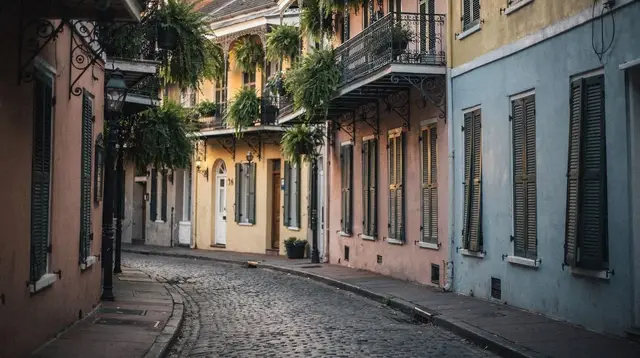
Louis Armstrong Park itself is worth slowing down for. Beyond Congo Square, the park includes performance spaces, statues and green space that host community events through the year, and it sits directly against Treme’s residential streets, small shotgun houses, corner churches and social club headquarters that make the neighbourhood feel lived-in rather than curated for visitors, because it is.
A museum stop adds depth that a walk alone cannot. New Orleans has dedicated institutions covering African American history and culture in the city, with exhibits on the free people of colour, the social aid and pleasure club tradition, and the musical lineage running from Congo Square through to the present.
an admission ticket to New Orleans’s African American history museum is worth building into a Treme visit, especially for travellers who want the fuller historical record behind what they see on the street.
Second lines: a neighbourhood event, not a show
No account of this heritage is complete without second line parades, and none should be attempted without a clear sense of what they actually are. A second line is a parade organised by a social aid and pleasure club, one of the descendant institutions of Treme’s nineteenth-century mutual aid societies, typically on a Sunday afternoon, following a route through the club’s home neighbourhood, with a brass band leading the way.
The “second line” itself refers to the crowd of neighbours, family and friends who fall in behind the main marching group, dancing, twirling parasols and handkerchiefs, and generally taking over the street for a few hours. It is a genuine community celebration, tied to a specific club’s calendar and neighbourhood, not a fixed tourist attraction with posted showtimes.
Visitors who happen to encounter a second line, in Treme or elsewhere, are generally welcome to watch respectfully from the side, and sometimes to join the dancing crowd behind the band. What matters is treating it as what it is: someone else’s neighbourhood celebration that a visitor has been allowed to witness, not a performance staged for cameras. Do not block the route, do not treat participants as photo subjects without consent, and follow the lead of people around you rather than pushing to the front.
Jazz, brass bands and the sound of the neighbourhood
New Orleans’s claim to being the birthplace of jazz is inseparable from Treme and Congo Square. The brass band tradition that grew out of these Sunday gatherings, blended with the marching band and funeral traditions of the city’s many social clubs, produced a musical culture that spread outward from this single neighbourhood into the city’s clubs, church services and streets.
This is a different thread from the nightly club scene found along Frenchmen Street on the edge of the French Quarter, which belongs to the city’s contemporary nightlife rather than to this historical lineage. Treme’s musical heritage is about origins and continuity: family bands passed down over generations, church-affiliated brass bands, and musicians who grew up within a few streets of Congo Square. A visit focused on heritage does better to stay with this history — the square, the park, the neighbourhood’s churches and clubs — than to fold in a list of present-day bars and venues, which belongs to a different kind of evening out entirely.
Planning a respectful, well-informed visit
A half-day is enough to take in Congo Square, Louis Armstrong Park and a walk through Treme’s core streets, ideally extended with a museum stop. Because Treme is a residential neighbourhood where people live their daily lives, not a sealed historic district, the most useful preparation is simply knowing what you are looking at and behaving accordingly.
| Element | What it is | How to approach it |
|---|---|---|
| Congo Square | Site of historic Sunday gatherings, root of the city’s music | Walk quietly, read the on-site markers, pair with a guide for full context |
| Louis Armstrong Park | Public park containing Congo Square | Free to enter during opening hours; a pleasant, unhurried stop |
| Treme streets | A living residential neighbourhood | Visit respectfully, ideally with a guide who knows the community |
| African American museum | Indoor exhibits on this history | Book ahead for busy weekends and festival periods |
| Second line parade | A neighbourhood celebration, not a tourist show | Watch from the side, never block the route, ask before photographing people |
For travellers who want a single overview of the city’s history alongside this focused visit, a broader city tour can help place Treme in context relative to the French Quarter, the Garden District and the river.
a broader city tour that places Treme’s history alongside the rest of New Orleans works well as a first orientation before a deeper, dedicated Treme visit.
Travellers planning several days in the city, and wanting to combine this cultural history with other major sights without pricing out each ticket separately, sometimes find a multi-attraction pass useful.
a multi-attraction pass covering several of New Orleans’s museums and sights can be worth comparing against buying tickets individually if a museum visit is one of several stops planned for the trip.
Where this fits in a wider New Orleans visit
Treme sits within easy walking distance of the French Quarter, so it slots naturally into a broader day of things to do in New Orleans, particularly for travellers already interested in the city’s history and culture tours or its museums and attractions.
It also connects directly to the story told at the city’s cemeteries, many of whose above-ground tombs belong to the same Creole and free Black communities that shaped Treme, and to the wider account of African American heritage in New Orleans as a citywide subject rather than a single stop.
For visitors weighing this against the River Road’s plantation museums, it helps to be clear-eyed about the difference: the Whitney Plantation and other plantations along the River Road tell the history of slavery from the rural sites where it was enforced, while Treme and Congo Square tell an urban story of a free and enslaved Black population that built a distinct culture inside the city itself, one that produced live jazz in New Orleans as it is still heard today, and the second line and brass band traditions that continue to define the city’s Sundays.
Those interested in the deeper roots of the city’s spiritual traditions may also want to read about Voodoo in New Orleans, a related but distinct thread of the city’s African-influenced heritage.
Travellers building a longer stay around these themes can pair a Treme visit with a three-day itinerary or a dedicated history and memory focused three days, and can read more broadly about first-time visitors to New Orleans for how to sequence this alongside the French Quarter and Garden District.
Treme and Congo Square FAQ: African American heritage in New Orleans
What is Treme and why does it matter?
Treme is a neighbourhood just north of the French Quarter and one of the oldest African American neighbourhoods in the United States. Free people of colour owned property and businesses here well before the Civil War, and the neighbourhood’s musical and social traditions still shape the city today.
What is Congo Square?
Congo Square, inside Louis Armstrong Park, is the site where enslaved and free Black New Orleanians gathered on Sundays to play music, dance and trade, in a practice unusual in the American South. Historians trace much of the city’s later musical development, including jazz, back to these gatherings.
Can visitors watch a second line parade?
Second lines can sometimes be seen or joined respectfully in public, but they are neighbourhood events organised by local social aid and pleasure clubs, not performances staged for tourists. Visitors should follow the lead of the community, stay out of the way of the main line and never treat the parade as a photo backdrop.
Is Treme safe to visit?
Treme is a real, lived-in residential neighbourhood, not a sealed-off attraction, so the same ordinary precautions apply as elsewhere outside the busiest tourist strips: visit in daylight or with a guide, stay on busier streets, and be respectful of residents’ daily life.
How is this different from the plantation museums on the River Road?
The River Road plantations, including the Whitney Plantation, tell the history of slavery from rural sites where enslaved people were held and worked. Treme and Congo Square tell a different, urban story: how a free and enslaved Black population helped build New Orleans itself and shaped its music, long before and after emancipation.
What is the best way to learn this history in depth?
A guided walking tour focused on Treme and Creole history gives context that is easy to miss on a self-guided walk, and a dedicated museum visit adds depth through artifacts and exhibits. Both work well combined with an unhurried walk through Congo Square and Louis Armstrong Park.
Is jazz still played in Treme today?
Yes. Treme remains closely tied to brass-band and jazz traditions, and its musicians, church parades and social clubs carry those traditions forward, distinct from the nightly club scene of Frenchmen Street.
History and culture tours on GetYourGuide
Verified deep-linked GetYourGuide tours. Book through these links and we earn a small commission at no cost to you.
GetYourGuide does not provide a product photo for this activity — the image shows the meeting point, photographed by us.