New Orleans History and Culture Tours
What counts as a history and culture tour in New Orleans?
It means paid, guided experiences inside the city itself — museum visits, walking tours through the French Quarter and Treme, authorised cemetery tours, and serious voodoo history tours — as opposed to free self-guided sightseeing. Most run two to three hours and cost between 25 and 65 USD per person.
Why History Here Is Better With a Guide
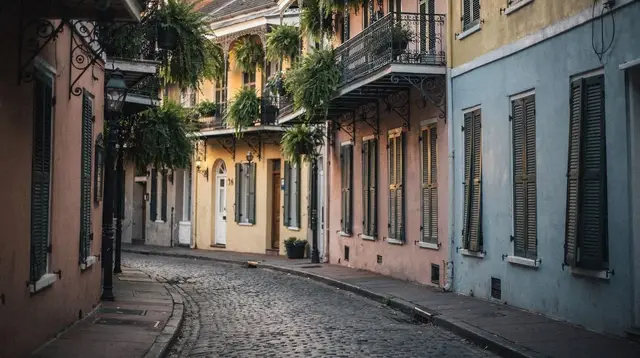
New Orleans rewards context more than most cities. A brick facade in the French Quarter can be Spanish colonial rebuilding after fire, not French at all; a modest shotgun house in Treme can sit two blocks from where jazz itself first came together; a cemetery of above-ground tombs can hold three centuries of yellow fever, flood and faith in a single row. None of that is obvious from the street. This page is about the paid, guided side of that history: museums with real curatorial depth, walking tours led by people who know the archives, and the handful of sites — cemeteries above all — where a guide is not a convenience but a requirement.
It sits apart from the neighbourhood things-to-do pages for the French Quarter or the Garden District, which list what visitors can see and do freely, on their own schedule, at no cost beyond admission. Here the focus is narrower: tours you book in advance, with a guide, usually lasting two to three hours, usually priced between 25 and 65 USD per person. Plantation tours along the River Road are a related but separate category, covered on their own page, since they sit outside the city and carry their own history of slavery that deserves dedicated treatment rather than a passing mention here.
The National WWII Museum and the City’s Major Institutions
The single largest anchor for history-minded visitors is the National WWII Museum in the Warehouse Arts District, a Smithsonian affiliate built around the fact that the Higgins boats used in the D-Day landings were manufactured in New Orleans. It is genuinely large: most visitors spend three to five hours across its several pavilions, and a rushed hour will leave most of it unseen. Guided highlights tours exist for travellers with limited time, walking visitors through the Road to Berlin and Road to Tokyo galleries with a docent who can answer questions the audio guide cannot.
Two smaller, older institutions sit at the historic heart of the French Quarter itself, both on Jackson Square: the Cabildo, seat of Spanish colonial government and the building where the 1803 Louisiana Purchase transfer documents were signed, and the Presbytère, which now houses the Louisiana State Museum’s Mardi Gras and Hurricane Katrina exhibits side by side — an unusual and deliberate pairing of the city’s two defining forces, celebration and catastrophe.
Both museums can be visited independently, but a guided architecture and history walk that includes them, such as a three-hour history, culture and architecture tour, threads the buildings into the wider story of the square rather than treating them as isolated stops. For a broader list of institutions beyond these two, see the guide to New Orleans museums.
a three-hour walk through the French Quarter’s colonial and Creole architecture is a reasonable starting point for a first visit, since it covers the ground the Cabildo, the Presbytère and the surrounding streets sit on before you go inside any one building.
Guided Walking Tours Through Three Centuries
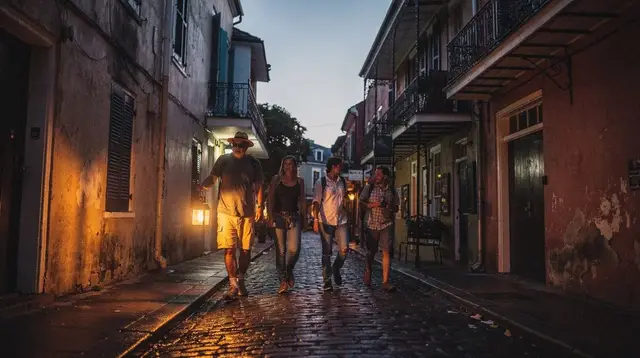
Beyond the big institutions, most of what qualifies as a “history and culture” tour in New Orleans is a guided walk. Operators differ in tone as much as content: some lean toward straight architectural and civic history, others frame the same streets around crime, vice or the darker corners of the city’s past.
A dark history walking tour or a wicked-history variant will cover documented events — duels, fires, epidemics, the Storyville red-light district — with a heavier emphasis on the grim than a standard architecture tour, while staying rooted in fact rather than folklore. These sit at the boundary with the ghost-tour category, and it is worth reading a tour’s own description before booking if you specifically want documented history rather than legend; the comparison of ghost tours covers that adjacent category in more detail.
a walking tour built around the city’s darker documented history works well paired with a cemetery visit on the same day, since both draw on overlapping material.
For a different pace, a guided neighbourhood bike ride covers more ground than a walking tour in the same amount of time, useful for visitors who want to connect the French Quarter to Treme, the Marigny and the Bywater without three separate outings. a bike tour through Creole and Afro-Caribbean neighbourhood history is one option for that wider loop. For visitors who prefer to plan their own route on foot first, the French Quarter walking guide lays out the grid independently of any tour.
Cemetery Tours: Why St Louis No. 1 Requires a Guide
The above-ground tombs of New Orleans are one of its most photographed features, a practical response to a water table too high for underground burial, and a visible record of yellow fever epidemics, family vaults reused across generations, and the city’s Catholic and Creole heritage. St Louis Cemetery No. 1, just north of the French Quarter, is the oldest surviving cemetery in the city and the most visited — and it is also the one with the strictest access rule on this site’s list.
Since 2015, independent entry has not been permitted: visitors can only enter with an authorised guide, or as part of a documented family plot visit. This is not a general rule for New Orleans cemeteries as a category — access rules vary by cemetery and do change — but for St Louis No. 1 specifically, a guided tour is the only practical way in.
That restriction is also why cemetery tours here are worth booking rather than improvising. A licensed guide can point out the tomb of Marie Laveau, the nineteenth-century Voodoo Queen and one of the cemetery’s most visited graves, alongside those of early mayors, war veterans and victims of the epidemics that repeatedly emptied the city in the 1800s. The full guide to New Orleans cemeteries covers Lafayette Cemetery No. 1 in the Garden District as well, which has different, generally less restrictive access.
Voodoo as Religion, Not Spectacle
Louisiana Voodoo is a real, living syncretic religion, blending West African spiritual traditions with Catholic saints and ritual, and it has practitioners in New Orleans today. It is not a Halloween theme or a marketing device, even though it is sold that way on parts of Bourbon Street. The tours available in the Quarter cover a wide range, from serious historical and religious instruction — covering figures like Marie Laveau, the historic Voodoo Museum, and the religion’s Haitian and West African roots — to tours built mainly for atmosphere and jump-scares.
The dedicated voodoo guide goes into that spectrum in detail; the short version for this page is that a tour marketed as “voodoo and cemetery” or “voodoo history” tends to sit closer to the serious end, while anything promising curses or hexes for entertainment sits closer to the show end.
Marie Laveau deserves a clear, single description: she was a real historical figure, a free woman of colour who became the most prominent Voodoo practitioner of her era in New Orleans, and she is buried at St Louis Cemetery No. 1 — which, again, only a guide can take you into.
African American Heritage and the Birth of Jazz
Treme, just north of the French Quarter, is one of the oldest African American neighbourhoods in the United States, and its history is inseparable from the city’s musical one: Congo Square, inside what is now Louis Armstrong Park, was the site where enslaved and free Black New Orleanians gathered on Sundays to play music, trade and maintain African traditions under colonial and early American law — a direct line to the brass-band and second-line traditions still active in the city.
A guided tour through Treme connects those threads in a way a self-guided walk through unfamiliar streets often misses, and it pairs naturally with a stop in the French Quarter itself given the two areas’ shared, tangled history. The guide to Treme and the birth of jazz and the broader African American heritage guide both expand on this; a mural-focused walk such as a guided walk through the city’s street art and community murals is a more visual, present-day complement to the same neighbourhoods.
Katrina, Memory and Recent History
Hurricane Katrina struck on 29 August 2005, and the catastrophe that followed was primarily the failure of the federal levee system rather than the storm itself — flooding roughly 80 percent of the city and hitting the Lower Ninth Ward, Lakeview and New Orleans East hardest. It remains a lived reality for residents, not a historical curiosity, and it is worth approaching guided tours on the subject with that in mind: the better operators frame the visit around resilience, rebuilding and the people who stayed, rather than disaster tourism through neighbourhoods where people still live.
a guided tour covering the levee failures and the flood’s aftermath is one option built around that framing; the dedicated Katrina guide discusses the subject and its ethics at greater length, and the Presbytère’s Katrina exhibit on Jackson Square is a self-guided complement to any tour.
Comparing the Main Options
| Tour type | Typical length | Typical price (USD) | Best for |
|---|---|---|---|
| Architecture and history walk | 2–3 hours | 25–40 | First-time visitors, orientation |
| Museum visit (WWII Museum) | 3–5 hours | 35–65 | History-focused travellers with time |
| Dark or wicked history walk | 1.5–2.5 hours | 25–35 | Visitors wanting documented but darker stories |
| Cemetery tour (St Louis No. 1) | 1–1.5 hours | 25–35 | Anyone wanting to enter this specific cemetery |
| Voodoo history tour | 1.5–2 hours | 25–35 | Visitors wanting the religion treated seriously |
| Neighbourhood bike tour | 2.5–3 hours | 55–70 | Covering Treme, Marigny and Bywater in one outing |
Prices vary by season and operator and should be checked at booking; Mardi Gras and Jazz Fest weeks push rates and availability in both directions.
Planning a History and Culture Day
Most of these tours run rain or shine, since much of the content is under cover (museums) or brief enough to manage in a shower (walking tours). Mornings tend to be cooler and less crowded, which matters more in summer than the subject itself. A practical one-day combination is a morning museum or Cabildo-and-Presbytère visit, a midday break to avoid the worst heat, and a late-afternoon cemetery or walking tour once the sun has eased off.
Guides expect a tip on top of the ticket price, in the same range as restaurant tipping, and cash is useful for that even when the tour itself was booked and paid online. For a wider view of how a history-focused day fits into a longer stay, see how many days you need in New Orleans and the general things-to-do overview for the city.
History and Culture Tours in New Orleans: FAQ
Do you need a guide to visit St Louis Cemetery No. 1?
Yes. Independent visitors have not been permitted since 2015; entry requires an authorised guide or a documented family plot visit. This is specific to St Louis No. 1, not a blanket rule for every cemetery in the city.
Is voodoo in New Orleans a real religion or a tourist show?
It is a real syncretic religion with African and Catholic roots, still practised today. Tours sold in the Quarter range from serious historical instruction to pure entertainment, so it is worth reading a description carefully before booking.
Who was Marie Laveau?
A real nineteenth-century figure, the most prominent Voodoo Queen of her era in New Orleans, buried in St Louis Cemetery No. 1, which can only be visited with a guide.
Is the National WWII Museum worth the time it takes?
Most visitors spend three to five hours there, and many rate it the best single museum stop in the city; a guided highlights visit suits travellers short on time.
What is the difference between a ghost tour and a history tour?
A history and culture tour sticks to documented events and architecture; a ghost tour leans on legend and atmosphere, sometimes only loosely tied to real events. Some operators sell both.
How long do most guided walking tours in the city take?
Typically two to three hours over one to two miles, at a relaxed pace with regular stops for context.
Are these tours suitable for children?
Architecture and neighbourhood tours generally suit families; cemetery, voodoo and Katrina-focused tours deal with death and disaster and suit teenagers and adults better than young children.
History and culture tours on GetYourGuide
Verified deep-linked GetYourGuide tours. Book through these links and we earn a small commission at no cost to you.
GetYourGuide does not provide a product photo for this activity — the image shows the meeting point, photographed by us.