Preservation Hall: How It Actually Works
What is Preservation Hall and how is it different from a jazz bar?
Preservation Hall is a small, dedicated performance room in the French Quarter built specifically to keep traditional New Orleans jazz alive, not a bar with a stage. It runs short, ticketed sets with limited seating, no food or drink service inside the room, and a working band rather than a house act, which is why it needs to be understood on its own terms before booking.
What kind of place is Preservation Hall
Most visitors hear the name Preservation Hall before they understand what it actually is, and that gap causes most of the confusion. It is not a bar with a stage in the corner, not a restaurant with background music, and not a club where the band is one part of a bigger night out. It is a small, purpose-built performance room in the French Quarter whose entire reason for existing is to keep traditional New Orleans jazz played live, on a small stage, in front of people who came specifically to listen.
That distinction matters before you plan an evening around it. A bar tolerates conversation over the music; Preservation Hall is built around the opposite assumption, that people came to hear the band. There is no food service and no bar service inside the room itself. The room is small, bench seating is limited, and standing room fills in behind it. None of that is a flaw in the experience — it is the point. The hall was set up specifically to give a stage to musicians playing a style of jazz that, at the time, other rooms in the city were moving away from in favour of newer sounds.
If you are coming from a Bourbon Street bar crawl mindset, recalibrate. If you are coming from a formal concert-hall mindset, recalibrate the other way — the room is intimate, worn, unpolished by design, and closer to a living room than a theatre. Both instincts are wrong, and that middle ground is what makes it distinctive.
Where it sits in the French Quarter
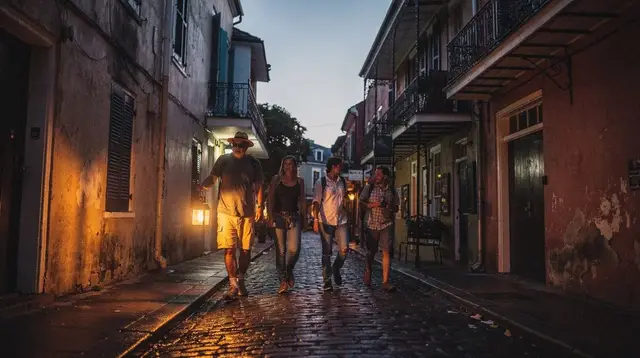
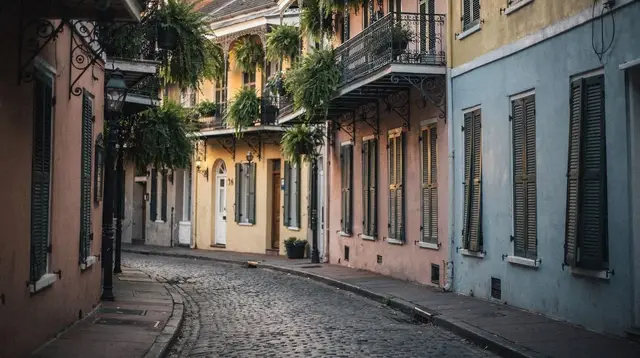
Preservation Hall sits inside the Vieux Carre, the historic grid that makes up the oldest part of the city. It is a short walk from Jackson Square and from the antique galleries of Royal Street, and it is close enough to Bourbon Street that visitors sometimes stumble on it by accident, drawn in by the sound leaking from the doorway during a set.
That proximity is worth noting for planning purposes: you can walk to it from almost anywhere in the Quarter, which means it slots easily into an evening that also includes dinner, a walk past St Louis Cathedral, or a stop at one of the Quarter’s historic bars beforehand.
Because the French Quarter is compact — a grid of roughly thirteen by six blocks — Preservation Hall is never far from wherever you are staying if you have booked inside the Quarter itself, and it is a short ride or a longer walk from the Garden District or the Central Business District.
The room and the sound
The physical space is old, plain, and deliberately unrenovated in spirit — wooden floors, exposed brick, folding chairs, and a stage barely raised above the audience. There is no elaborate lighting rig and no sound system doing heavy lifting; the room itself was chosen and kept for its acoustics with a small acoustic ensemble. That is a different experience from an amplified club show, and it is closer to what jazz sounded like in small New Orleans rooms before amplification became standard.
The band itself is a working ensemble of professional New Orleans musicians playing the traditional repertoire: brass, clarinet, upright bass, piano, drums, arranged in the older style rather than a modern jazz combo. This is not a tribute act re-creating a museum piece — it is musicians who play this repertoire as their ongoing practice, which is part of why the hall carries genuine standing among people who care about the music rather than functioning purely as a tourist stop.
How a set is structured
Where the difference from a normal night out becomes most concrete is in the format of the show itself. Rather than a band playing for several hours while a room mingles and drinks around them, Preservation Hall runs shorter, self-contained sets. Each one is treated as a discrete performance rather than a soundtrack to something else happening in the room. That has practical consequences for how you should think about the evening:
| What you might expect from a bar | What Preservation Hall actually does |
|---|---|
| Band plays for hours in the background | Short, focused, self-contained sets |
| Drinks and food available at your seat | No food or drink service inside the room |
| Casual arrival any time during the night | Entry organised around each set’s start |
| Talking over the music is normal | The room is built for listening |
| Large room, easy to find space | Small room, limited seating, standing room fills |
None of this makes it a stiff or formal experience — audiences clap, respond, and the band plays to the room — but it is a listening room first, and a social outing second. That is the single biggest adjustment for visitors used to Frenchmen Street or Bourbon Street.
What it is not: bar service, dinner, or a night-long crawl
Because there is no bar and no kitchen inside the hall, it does not work as a dinner venue or as the anchor of a long bar crawl. If your plan for the evening includes a meal and a few drinks alongside live music, treat Preservation Hall as one stop bracketed by other plans rather than the whole night. Many visitors have dinner in the Quarter first, walk over for a set, and then move on afterward to Frenchmen Street or a Bourbon Street bar for a louder, longer second half of the evening — the two are complementary rather than competing plans, precisely because they are built around different ideas of what a night of live music is for.
If you want a broader sense of where else to hear jazz on a given night, including venues that do serve food and drink, that comparison is covered in the nightly live jazz guide rather than repeated here — this page stays focused on the hall itself.
Why the hall matters historically
Preservation Hall’s significance is tied to the city’s broader jazz story without being a repeat of it. The music that the hall preserves has deep roots a few blocks away in Treme, one of the oldest African American neighbourhoods in the country and a place widely credited as central to where jazz itself took shape, including the tradition of brass-band parades and the communal gatherings that fed the style’s early development.
The hall was founded specifically to give that tradition a permanent, dedicated home inside the Quarter at a moment when it risked being crowded out by newer popular styles, and it has kept that singular mission — one room, one repertoire, one purpose — ever since. For the fuller story of that history, the Treme guide covers it directly; this page is about what a visit to the hall itself involves today.
The hall also connects to the city’s brass-band tradition more broadly, including the neighbourhood processions known as second lines, which are community events rather than staged shows. That connection is covered in more depth in the guide to second lines and brass bands, again without needing to be re-told at length here.
Deciding whether to book a specific night here
The practical question most visitors are actually weighing is not “what is Preservation Hall” in the abstract, but whether to commit an evening, or part of one, to this specific room on this specific trip. A few honest considerations help with that decision, without inventing a schedule or a price that this page cannot responsibly state, since both change and should be checked directly before you travel:
- If you want a bar-style night with food, drinks, and hours of music at your table, this is not that room — plan it as a shorter, separate stop.
- If you specifically want to hear traditional New Orleans jazz played by working musicians in a historic room built for exactly that purpose, this is close to as direct an experience of that as the city offers.
- Because the room is small, arriving with no plan and hoping to walk in on a busy night is the main way visitors are disappointed; checking on availability ahead of a specific night is worth doing before you commit the rest of the evening around it.
- Families travelling with children who can sit or stand quietly for a set often find it more workable than a bar-format club, since there is no alcohol service inside the room itself, though every child is different and parents should judge accordingly.
- Pairing it with a walk through the Quarter beforehand — past Jackson Square or along Royal Street — turns a single set into a fuller evening without requiring the hall itself to do more than it is built for.
Building it into a wider evening or trip
Because Preservation Hall is single-purpose by design, it works best as one deliberate piece of a larger plan rather than the whole plan. Visitors staying inside the Quarter can walk to it directly; those staying further out, in the Garden District or further afield, will want to factor in a short ride beforehand. A guided evening that frames the hall’s history alongside the Quarter’s other jazz landmarks can also help first-time visitors understand what they are hearing and why the room exists, rather than treating it as an isolated stop.
For a curated evening that folds jazz history, the French Quarter’s music landmarks, and a guided introduction to the culture into one outing, a guided jazz roots walk through the Quarter’s music culture gives useful context before or after a set. Small groups or those wanting a more tailored evening built around live music can also look at a private jazz-focused evening tour with live music included.
For visitors who want the hall as part of a bigger night that continues afterward, a guided VIP night-out tour of the city’s party districts is a way to extend the evening once the set ends. And for a first orientation to the Quarter and the wider city before committing an evening to any one venue, a general sightseeing tour covering the city’s core neighbourhoods is a practical starting point earlier in the day.
Getting there and around it
Preservation Hall sits well within walking distance of most French Quarter hotels, and the French Quarter is genuinely best explored on foot given its compact grid layout. If you are coming from further out — Mid-City, Uptown, or across the river at Algiers Point — a ride-hailing app or the RTA streetcar network into the Quarter is the practical way in, since parking inside the Quarter itself is limited, metered, and strictly enforced. Plan to arrive on foot for the last stretch regardless of how you get into the neighbourhood, since the surrounding streets are narrow, pedestrian-heavy, and not set up for casual curbside stops in the evening.
If your evening also includes dinner, keep in mind that the Quarter’s restaurant streets get busy after dark, particularly around Mardi Gras and Jazz Fest season when the whole neighbourhood is at capacity; building in extra time on those nights is worth doing regardless of which venue you end up at.
Jazz history behind the room, in context
It is worth being precise about what Preservation Hall represents historically, because the terms around New Orleans music get blurred easily by visitors. What is played at the hall is traditional New Orleans jazz, the specific pre-swing style that took shape in the city in the early twentieth century, with deep ties to the brass-band culture of neighbourhoods like Treme.
This is distinct from the zydeco and Cajun music traditions that belong to Acadiana around Lafayette, and distinct from the broader modern jazz and brass-band scene playing nightly across the city’s other venues. Preservation Hall’s focus on the traditional repertoire specifically, in one dedicated room, is precisely what sets it apart from a general jazz club — it is a living archive of a particular sound, not a general live-music venue that happens to book jazz acts.
The bottom line before you book
Preservation Hall rewards visitors who come in understanding what it is: a small, historic, purpose-built room for hearing traditional New Orleans jazz played by serious working musicians, run as short, focused sets rather than a long bar night. It does not serve food or drinks inside the room, seating is limited, and it is not designed to anchor an entire evening on its own.
Treat it as a deliberate, standalone stop — ideally planned ahead rather than a walk-in gamble — and pair it with dinner, a Quarter walk, or a later stop on Frenchmen Street or Bourbon Street to build a fuller night around it. Understood that way, it is one of the most direct ways to hear the city’s own musical tradition in the room built specifically to keep it alive.
Jazz dinners and shows on GetYourGuide
Verified deep-linked GetYourGuide tours. Book through these links and we earn a small commission at no cost to you.
GetYourGuide does not provide a product photo for this activity — the image shows the meeting point, photographed by us.