Live Jazz in New Orleans: A Nightly Guide
Where should you go to hear live jazz in New Orleans?
There is no single answer, because the music is spread across the city rather than concentrated in one venue. Frenchmen Street in the Faubourg Marigny is where locals go for a run of small clubs; brass bands and second lines carry the tradition through Treme and other neighbourhoods; and a scattering of restaurants and hotel bars add quieter, easier evenings. Choosing a night is really choosing a neighbourhood and a mood.
Choosing a jazz night instead of a jazz venue
Most guides to hearing music in New Orleans end up recommending one club. That misses the point of the city. Jazz here is not concentrated in a single room the way it might be in another city with one famous venue and a handful of imitators.
It runs through several neighbourhoods, in several forms, on several kinds of night, and the better question for a visitor with more than one evening free is not “which club” but “which kind of evening.” A quiet dinner with a trio in the background is a different night from following a brass band through the Marigny at midnight, and both are different again from catching a second line on a Sunday afternoon. This guide is built around that choice: New Orleans by neighbourhood and mood, for things to do in New Orleans after dark.
The city earned this reputation honestly. New Orleans is where jazz was born, in the decades either side of 1900, out of brass-band traditions, blues, ragtime and the African and Caribbean rhythms that had been part of the city’s culture for generations, much of it traceable to Treme and the birth of jazz and the gatherings once held at Congo Square. It is still played every night, by working musicians in front of local crowds, not as a museum piece. That living quality is worth protecting when planning a trip: chase a good band, not a famous street name.
Frenchmen Street: where locals go
If there is one strip that comes closest to a single answer, it is Frenchmen Street, in the Faubourg Marigny just downriver from the French Quarter. It is a few blocks of small clubs packed close together, several with no cover charge, and it is the address locals themselves point visitors toward when Bourbon Street clearly is not what they are after. For a longer treatment of exactly how the two streets differ and why one has become the going-out answer for residents, see Frenchmen Street vs Bourbon Street; this page assumes that comparison is already settled and treats Frenchmen as one option among several rather than the whole story.
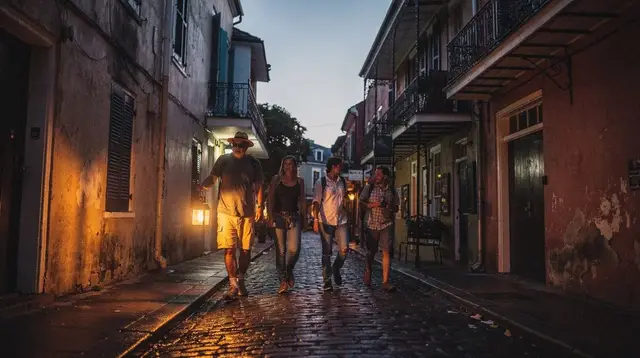
The character of a Frenchmen night is informal. Most clubs are small enough that the band is a few metres from the door, sets change over quickly, and it is entirely normal to duck into two or three rooms in one evening rather than commit to a single show. Music runs from traditional jazz to funk, brass and blues depending on the room and the night, and a bar minimum or a tip for the band is the usual cost of entry rather than a fixed ticket price. The street sits an easy walk from the French Quarter, but it is its own neighbourhood, part of the wider Faubourg Marigny and Bywater, and it feels different the moment the crowds and drink-runners of the Quarter fall away.
For a guided version of this kind of evening, a small-group outing built around a working jazz club and a drink included removes the guesswork of which door to choose on a first visit. The private evening pairing a jazz club with a drink is designed for exactly that first-night uncertainty.
Brass bands and the second-line tradition
Away from the club circuit, the other half of the city’s music lives in the street. Brass bands — trumpet, trombone, tuba, snare and bass drum, no amplification needed — are the sound most associated with New Orleans outside the clubs, and they are inseparable from the second line: a moving neighbourhood parade, organised by a social aid and pleasure club or a family marking an occasion, with the band at its centre and a crowd of dancers, the “second line,” following behind.
These are neighbourhood events with their own etiquette and their own calendar, not staged shows for visitors, and treating them that way is part of enjoying them properly. A full explanation of how they work, where they typically form, and how to watch respectfully is at second lines and brass bands explained.
Treme, immediately north of the French Quarter, is the historic centre of this tradition and one of the oldest African American neighbourhoods in the country; Louis Armstrong Park and the site of Congo Square sit at its edge. A night built around this side of the music looks different from a Frenchmen night: fewer indoor sets, more chance encounters, and a genuine sense of walking through the source material rather than a recreation of it. Visitors who want the history laid out properly before they go should read Treme and the birth of jazz first.
For a version of this evening with a guide who can supply the context and the introductions a first-time visitor lacks, a themed outing that pairs a walk through the music’s roots with a stop for a drink works well as a single, structured evening. The guided evening tracing the roots of the city’s music with a drink included is built for that.
Preservation Hall and the traditional-jazz reference point
No account of New Orleans jazz is complete without naming Preservation Hall, the small, unadorned room in the French Quarter that has kept traditional New Orleans jazz alive on its own stage since the early 1960s and remains the closest thing the city has to a living institution for the style. It deserves mention here because any visitor asking about jazz nights will hear its name repeatedly, but it also deserves its own page rather than a rushed summary: how the shows are structured, how to get in, and what to expect once inside are covered in detail at Preservation Hall: how it works.
For the purposes of choosing a night, it is worth knowing simply that it exists as a fixed, traditional-jazz anchor a short walk from both the Quarter’s main sights and from Frenchmen Street, and it can reasonably serve as one stop on an evening that also takes in a Frenchmen club or a Treme walk.
Dinner, brunch and easier evenings
Not every night needs to be a club crawl. New Orleans has a long-standing pairing of live music with a meal, and it suits visitors who want the atmosphere without a late night or a standing crowd. A jazz brunch — band playing through a buffet, usually in a French Quarter courtyard restaurant — is a well-established local institution and a gentler way to hear the music than an evening club. The jazz brunch buffet in a French Quarter courtyard is a straightforward way to build this into a daytime itinerary rather than a night out at all, useful for travellers with young children or an early flight the next morning.
At the other end of the spectrum, blues rather than jazz proper has its own venerable home in the city, and a night built around that history rather than a walk-in club works as a structured alternative. The guided evening at a historic blues venue with a live show suits a visitor who wants one well-chosen, fully arranged evening rather than several stops.
Matching a neighbourhood to a mood
The choice, in practice, comes down to what kind of evening is wanted and how many nights are available. A single night in the city is best spent on Frenchmen Street, since it packs the most variety into the smallest area and needs no advance booking. A visitor with two or three evenings can afford to specialise: one night on Frenchmen, one built around Treme and the brass-band tradition (ideally timed around a Sunday if a second line is active), and a jazz brunch as a lower-key alternative to a third late night. Visitors travelling with children, or anyone who prefers not to be out past mid-evening, should lean toward the brunch and dinner-show end of this list rather than the club circuit, which properly gets going later.
| Evening style | Where | What to expect | Booking |
|---|---|---|---|
| Club-hopping | Frenchmen Street | Small rooms, quick set changes, no fixed programme | Walk-in, no reservation |
| Traditional jazz | Preservation Hall (French Quarter) | Fixed venue, traditional repertoire, limited seating | Advance ticket recommended |
| Street tradition | Treme and beyond | Brass bands, second lines, informal and public | No booking; timing depends on events |
| Dinner or brunch with music | French Quarter restaurants | Band as background to a meal, family-friendly | Reservation advised |
| Guided evening | Various, with a host | Context, introductions, a drink included | Book ahead |
A short walking outing with commentary along the way, such as the guided segway tour through the historic streets, is not a music tour as such, but it is a useful way to get oriented across the French Quarter and the edge of the Marigny by day, before deciding which of these evenings to commit to that night.
A word on genre confusion
One mix-up trips up more visitors than any other: zydeco and Cajun music are not New Orleans music. Both come from Acadiana, the Cajun region centred on Lafayette roughly two hours west of the city, and both grew out of the Acadian and Creole communities of the prairies and bayous rather than the city itself. Zydeco leans on accordion and rubboard over a dance-hall rhythm; Cajun music has its own accordion-and-fiddle sound built for two-step and waltz.
A New Orleans club night will not typically include either, and a visitor who wants that music specifically should plan a separate trip out toward Cajun Louisiana rather than expect to find it on Frenchmen Street. It is a related but genuinely separate branch of the state’s music, worth its own evening on its own turf, not a substitute for a New Orleans jazz night.
Practical notes for planning a music night
Sets on Frenchmen Street generally begin in the early evening and run late, since Louisiana has no fixed closing time and clubs stay open as long as there is a crowd worth playing to. Cover charges are the exception rather than the rule for the smaller rooms, but a bar minimum or a tip for the band is expected everywhere, and cash still matters for that even where cards are accepted at the bar itself. Dinner shows and guided evenings work the opposite way: they need a reservation, especially around Mardi Gras and Jazz Fest, when the whole city’s calendar fills months out.
Getting there is straightforward from most of the city. Frenchmen Street sits an easy walk from the eastern edge of the French Quarter, and a short ride covers the distance from the Garden District or the Central Business District; see getting around New Orleans by streetcar for the practicalities of the streetcar network, which does not run directly to Frenchmen itself. Once a night runs past midnight, a short paid ride rather than a long walk back is the sensible default, particularly moving between the Marigny and areas further from the main strip.
Finally, a jazz night pairs naturally with the rest of the city’s after-dark culture without needing to become one long itinerary. Visitors curious about the voodoo and cemetery side of New Orleans nightlife, or weighing a ghost tour, will find those experiences sit on different nights rather than competing with a music evening, since both tend to run earlier and end before the clubs are properly warmed up. Keeping music nights and history nights separate, rather than trying to fold everything into one long evening, tends to produce a better version of both.
Live jazz in New Orleans: frequently asked questions
Is Bourbon Street a good place to hear jazz?
Bourbon Street is mostly cover bands, karaoke bars and loud pop music rather than jazz. It has energy and it is fun for a walk-through, but if live jazz specifically is the goal, Frenchmen Street and the brass-band scene are the better targets.
What is the difference between jazz, brass bands and second lines?
Jazz clubs are indoor venues with a band playing sets for a seated or standing audience. Brass bands are the same instrumentation but built for the street, often heard leading a second line, a moving neighbourhood parade with a club or family at its centre and a crowd dancing behind the band.
Are zydeco and Cajun music part of the New Orleans jazz scene?
No. Zydeco and Cajun music come from Acadiana, the Cajun region around Lafayette roughly two hours west, and belong to a different musical tradition built on accordion and fiddle. New Orleans nights are built around jazz, brass bands and, on Frenchmen Street especially, funk and R&B, not zydeco.
Do you need to book ahead for jazz clubs?
Small clubs on Frenchmen Street generally do not take reservations and fill on a first-come basis, so arriving before a set starts matters more than booking. Dinner shows and guided evenings that combine a meal with a band do take reservations, and those should be booked in advance, especially in high season.
What should you expect to pay for a night of live music?
Many small clubs have no cover charge but expect a bar minimum or a tip jar passed for the band, typically the equivalent of a drink or two per person. Larger venues and dinner shows charge a fixed cover or a set menu price, and either way tipping bar staff and musicians is expected on top.
Is it safe to walk between venues at night?
Frenchmen Street itself and the stretch of Decatur and Esplanade around it are busy and well lit most of the evening, but the wider Marigny and Bywater thin out quickly away from the main strip. A short ride rather than a long walk is the sensible default once a night runs late.
How late does live music run in New Orleans?
Sets on Frenchmen Street typically run from early evening into the small hours, with clubs often free to stay open as long as there is a crowd, since Louisiana has no fixed last call in the way many other US cities do. Brass-band sets and second lines keep earlier, more predictable hours, usually finishing by mid-evening.
Can you hear live jazz outside the French Quarter and Marigny?
Yes. Treme, the historic heart of the city’s brass-band tradition, and Mid-City and Uptown all host clubs, restaurants and neighbourhood bars with regular live sets, and a second line can appear in almost any residential neighbourhood on a Sunday afternoon.
Jazz dinners and shows on GetYourGuide
Verified deep-linked GetYourGuide tours. Book through these links and we earn a small commission at no cost to you.
GetYourGuide does not provide a product photo for this activity — the image shows the meeting point, photographed by us.