What to Pack for New Orleans
What should you pack for New Orleans?
Pack for a humid subtropical climate rather than a generic warm-weather trip: light, quick-dry clothing and a compact rain layer year-round, extra warm layers if travelling December to February, insect repellent for swamp and bayou excursions, and comfortable walking shoes for the French Quarter's compact grid. European visitors need a Type A or B plug adapter for 120-volt sockets and, for non-dual-voltage devices, a voltage converter.
Pack for the climate, not for a generic warm-weather trip
New Orleans sits in a humid subtropical zone, and that single fact should drive most of what goes in the suitcase. Summers are long, hot and very humid, with thunderstorms that build almost every afternoon and pass through quickly. Winters are usually mild, but the city can turn genuinely cold for a few days, sometimes with frost, so it is a mistake to assume a light jacket will always be enough.
Spring, roughly March to May, and autumn, roughly October to November, are the most comfortable stretches of the year and the easiest to pack for. This guide works through what to bring by season, then covers the extras that matter for this specific region: bayou excursions, the walking-heavy layout of the French Quarter, and the practical items European visitors tend to forget.
None of what follows touches personal safety or tipping etiquette — those are covered elsewhere, including in tipping and sales tax in New Orleans and is New Orleans safe for tourists. This page is strictly a checklist of what goes in the bag, organised around the season you are travelling in.
Summer (roughly June to September): heat, humidity and daily storms
Summer in New Orleans means long, hot days with humidity that makes the air feel heavier than the thermometer suggests, plus a strong chance of an afternoon thunderstorm most days. The goal is clothing that dries fast and a rain layer that is always within reach, not packed at the bottom of a bag.
- Lightweight, breathable clothing in natural or moisture-wicking fabrics — cotton, linen or technical blends — since heavy fabrics trap heat and humidity against the skin.
- A packable rain jacket or poncho and a compact umbrella. Summer storms tend to be short and heavy rather than all-day drizzle, so something you can stuff into a day bag matters more than a full waterproof shell.
- A wide-brimmed hat and sunglasses for the stretches of direct sun between storms.
- High-SPF sunscreen, reapplied through the day; humidity does not reduce UV exposure.
- A refillable water bottle. Heat and humidity make dehydration a real risk on long days outdoors, including on walking tours of the Garden District.
- A light, breathable layer for air-conditioned interiors. Restaurants, museums and the National WWII Museum are often kept noticeably cooler than the street outside.
Winter (roughly December to February): mild days, occasional cold snaps
Winter is the season most visitors under-pack for, because “New Orleans” and “cold” do not sound like they belong in the same sentence. Most winter days are mild, but the city can turn genuinely cold for a few days at a time, occasionally with frost, and rain is more persistent than in summer even if the storms are less dramatic.
- A proper jacket, not just a light sweater — something that will hold up on a genuinely cold day, since a cold snap can arrive with little warning.
- Layers: a base layer, a mid layer and the outer jacket, so the outfit can adjust as a mild afternoon turns into a cool evening.
- A rain layer or umbrella. Winter rain in the region tends to be steadier and less dramatic than summer thunderstorms, but no less soaking.
- Closed, comfortable shoes rather than sandals, since evenings can be genuinely chilly.
- A scarf or light hat for the occasional cold spell, easy to leave in a bag on the milder days.
Spring and autumn: the easiest seasons to pack for
Spring (roughly March to May) and autumn (roughly October to November) are the most comfortable seasons in the region, with milder heat than summer and less risk of a hard cold snap than winter. A flexible, layered approach still serves best, since afternoon temperatures can shift noticeably from the morning.
- Breathable layers: a T-shirt or light shirt with a light jacket or cardigan for evenings.
- A rain layer, since showers can appear in any season here, even if less predictably than in summer.
- Comfortable walking shoes, which matter in every season but especially across the longer days these two seasons tend to invite, from the French Quarter to City Park.
Footwear: built for a compact but dense grid
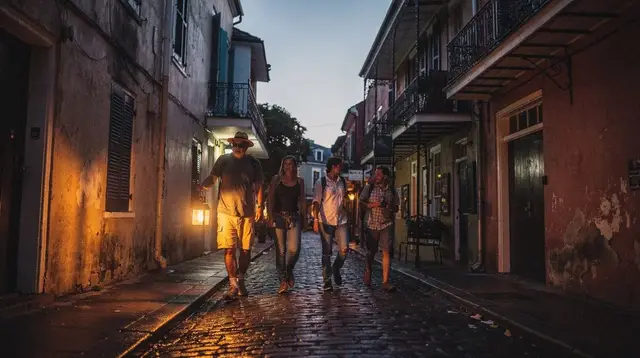
The French Quarter is roughly 13 by 6 blocks, and it is genuinely walkable, but the pavements are uneven in places, some streets keep their original brick or cobbled sections, and a day of sightseeing easily adds up to several kilometres on foot before accounting for the Garden District’s streetcar-and-walk combination or a morning at Jackson Square and St Louis Cathedral. Broken-in, closed walking shoes are the single most useful packing decision for this trip. Sandals are fine for an evening on Frenchmen Street but a poor choice for a full day of sightseeing, and heels are a genuine hazard on some of the older sidewalks.
Insect repellent: essential for the swamps, useful everywhere
Mosquitoes are a real and expected part of the region, particularly at dusk, and they are considerably more noticeable on the water than in the city centre. Anyone booking a trip into Honey Island Swamp or the wider bayou country should pack insect repellent as a priority item, not an afterthought bought at the last minute. A few points worth planning around:
- Bring repellent from home or buy it on arrival; it is widely available in pharmacies and supermarkets.
- Apply it before boarding a boat, not once mosquitoes are already a problem — airboat and pontoon operators around Jean Lafitte and Des Allemands run outdoors with little shade.
- Long, light sleeves are a useful backup to repellent on early morning or late afternoon swamp departures, when insect activity tends to peak.
- Repellent is useful in the city too, especially near City Park or Bayou St. John after rain, though it is far less critical there than on a swamp tour.
Packing for day trips beyond the city
Most of what this site covers lies within a two-hour drive of the French Quarter, and a day trip out of the city often calls for a slightly different kit than a day spent walking downtown. A car (rented or with a tour operator) means more room for extra layers and gear than the compact day bag suits central sightseeing.
- A wide-brimmed hat and sturdy, closed shoes for the River Road plantations, where a visit typically involves time outdoors on grounds and grass rather than pavement — Oak Alley’s quarter-mile alley of live oaks and the outdoor exhibits at Whitney Plantation both involve extended time in direct sun with little shade.
- Insect repellent and long sleeves for anything venturing into bayou country or the wider swamp region, on top of what is already packed for a swamp tour proper — some plantation grounds bordering wetlands see mosquitoes too.
- A light rain layer, since a day trip out of the city does not come with the option of ducking into a nearby café until a shower passes; open-air plantation grounds and boardwalk trails leave little cover.
- Comfortable shoes for a full day of walking and driving if heading west toward Cajun Country or Lafayette, where a single day often combines a museum visit, a walk through a historic village and time outdoors at a market or garden.
- Sun protection for a beach day on the Gulf Coast, roughly an hour to ninety minutes east of the city, where the packing list shifts closer to a standard beach kit: swimwear, a beach towel and extra sunscreen.
None of this replaces the core list above — it is worth checking the weather for the specific day of a planned excursion rather than assuming conditions will match the city, since river and swamp-adjacent areas can feel noticeably more humid, or in winter more exposed to wind, than central New Orleans.
Electrical: adapters and converters for visitors from outside North America
Louisiana uses Type A and Type B sockets — the flat two-pin and two-pin-with-earth plugs standard across North America — running at 120 volts and 60 Hz. This matters for two separate reasons, and it is easy to only pack for one of them:
- A plug adapter is needed by anyone travelling with European, UK or most other non-North-American plugs, simply to physically fit the socket.
- A voltage converter is a separate item, needed only for devices that are not dual-voltage. Most modern phone, laptop and camera chargers are dual-voltage (check the small print on the charger itself, which usually reads something like “100–240V”), in which case an adapter alone is enough. Older hairdryers, straighteners and some electric shavers often are not, and running them on 120V without a converter can damage the device or simply not work.
A single travel adapter with USB ports is usually the most useful item to pack, covering phones, cameras and laptops without the bulk of a full voltage converter, which is only worth carrying for a specific non-dual-voltage appliance.
Hurricane season: an insurance decision, not a packing item
The Atlantic hurricane season runs from 1 June to 30 November, with its statistical peak in late August and September. This is not a reason to avoid travelling in those months — a named storm actually affecting a trip is the exception rather than the rule — but it is a real enough risk that it is worth checking travel insurance before departure, specifically that it covers weather-related trip disruption or cancellation. This is a planning step to take before booking rather than something to solve by packing differently; see hurricane season: what visitors should know for how the season actually plays out for a typical visit.
A day-bag checklist for touring
Whatever the season, a light day bag makes the difference between an outdoor tour going smoothly or not. It is worth keeping a small, dedicated kit ready to grab each morning:
| Item | Why it matters here |
|---|---|
| Compact rain layer or umbrella | Afternoon storms are common even outside summer |
| Insect repellent | Essential for swamp and bayou excursions, useful in the city at dusk |
| Refillable water bottle | Heat and humidity increase dehydration risk on long walking days |
| Sunscreen and sunglasses | Sun exposure between storms can be intense |
| Comfortable walking shoes | The French Quarter and Garden District are best covered on foot |
| Portable phone charger | Long days touring, photographing and using maps drain batteries fast |
A quick city introduction while you plan
For visitors putting together a first look at the city alongside the packing list, a guided overview is a practical way to get oriented before setting out independently. The New Orleans city tour covers the main historic districts in a single outing, which pairs well with the walking-shoe advice above since most of it happens on foot or with short stops.
Those more drawn to the city’s darker folklore can combine sightseeing with the New Orleans voodoo tour, best done in comfortable shoes and, in summer, with a rain layer close at hand. Visitors planning several attractions across a longer stay may find the New Orleans Power Pass a convenient way to bundle admissions, while a shorter option like the 3-hour city tour suits a single free afternoon between packing-list essentials and everything else on the itinerary.
Frequently asked questions about packing for New Orleans
Do I need to pack for rain in New Orleans even in summer?
Yes. Summer afternoons bring near-daily thunderstorms, so a packable rain layer or umbrella belongs in the bag whatever the season, alongside light, breathable clothing for the heat and humidity.
Is New Orleans cold enough in winter to need real warm clothes?
Winters are generally mild, but the city can turn genuinely cold for a few days, occasionally with frost, so a proper jacket and layers are worth packing for a December to February trip rather than relying on a light sweater alone.
What should I bring for a swamp or bayou tour?
Insect repellent is the priority, since mosquitoes are active at dusk on the water, along with a hat, sunglasses and closed shoes; airboat and pontoon tours run outdoors regardless of light rain, so a rain layer is worth having on hand too.
What shoes are best for exploring New Orleans?
Comfortable, broken-in walking shoes are the priority, since the French Quarter is a compact but dense grid best covered on foot, and cobbled or uneven sidewalks in the older neighbourhoods make sandals or new shoes a poor choice for long days.
Do European visitors need a plug adapter for New Orleans?
Yes. Louisiana uses Type A and Type B sockets at 120 volts and 60 Hz, so European and UK visitors need a plug adapter, and a voltage converter as well for any device that is not dual-voltage.
Should I pack anything specifically because of hurricane season?
Hurricane season runs from 1 June to 30 November, with a statistical peak in late August and September, so travel insurance that covers weather disruption is worth arranging before a trip in those months, alongside the usual rain-ready clothing.
What is the most comfortable season to pack light for?
Spring, roughly March to May, and autumn, roughly October to November, are the most comfortable seasons, allowing a lighter packing list of breathable layers without the heaviest summer humidity or the occasional winter cold snap.
Tours for a first visit on GetYourGuide
Verified deep-linked GetYourGuide tours. Book through these links and we earn a small commission at no cost to you.
GetYourGuide does not provide a product photo for this activity — the image shows the meeting point, photographed by us.