Is New Orleans Safe for Tourists?
Is New Orleans safe for tourists?
The French Quarter, Garden District and Warehouse District are busy, well-lit and well-policed, and most visits pass without incident. New Orleans does have a higher violent-crime rate than the US average, but it is concentrated well outside the areas tourists spend time in, and ordinary precautions at night are the main thing that matters.
The honest answer: safe where visitors spend their time, less so elsewhere
New Orleans is one of the most visited cities in the United States, and the overwhelming majority of visits to it pass without any safety incident at all. At the same time, it is a fair and often-repeated fact that New Orleans has a higher violent-crime rate than the US average. Both things are true, and neither one on its own tells you what you actually need to know before a trip. The useful version of the story is about geography and time of day, not about the city as a whole.
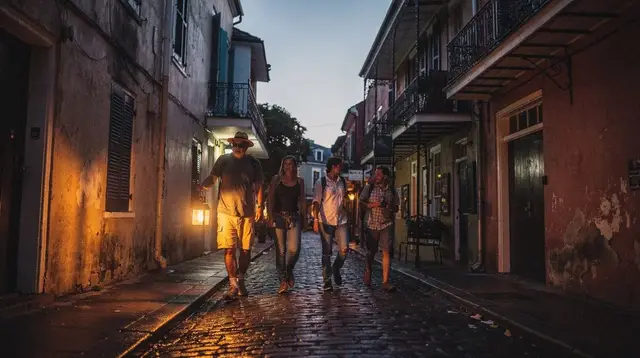
The areas that cover almost everything in things to do in New Orleans — the French Quarter, the Garden District, the Warehouse Arts District and the Central Business District — are busy with pedestrian traffic well into the evening, lit, patrolled, and used to a constant flow of visitors.
That is exactly where a first-time visitor following a three-day itinerary or a French Quarter walking tour will spend nearly all of their time. The city’s higher crime rate is concentrated in residential neighborhoods well outside that core, places a tourist has little reason to pass through on the way between the sights described on this site.
That distinction — center versus periphery, not “safe city” versus “unsafe city” — is the frame for everything below.
Where the tourist core stands, and why it matters
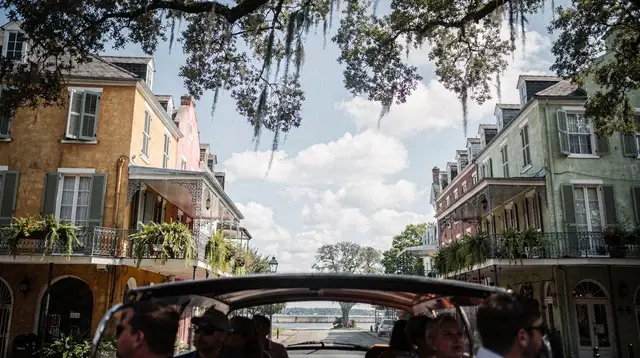
It helps to know the shape of the area you’ll actually be walking. The French Quarter is a compact grid, roughly 13 by 6 blocks, bounded by Canal Street, Rampart Street, Esplanade Avenue and the Mississippi River. Jackson Square, St Louis Cathedral, the Cabildo, the Presbytere, Royal Street’s galleries, Decatur Street, the French Market and Cafe du Monde all sit inside or right at the edge of that grid.
Just downriver, the Faubourg Marigny and Bywater are where Frenchmen Street’s live-music strip runs, and that stretch is also busy and well used at night. Uptown along St Charles Avenue, the Garden District and Lower Garden District combine antebellum mansions, Lafayette Cemetery No. 1, and one of the RTA streetcar lines running right through them.
All of this forms a connected, walkable, well-trafficked zone that a guide like things to do in the French Quarter or things to do in the Garden District covers in full. Straying a few blocks outside it, especially after dark, is where judgment starts to matter more.
Ordinary precautions that actually make the difference
None of the following is dramatic. It’s the same short list that applies in most large American cities, and it is what keeps a New Orleans trip in the “uneventful” category that most visits fall into.
- Stick to lit, busy streets at night. The difference between a comfortable walk back to a hotel and an uncomfortable one is almost always which street you chose, not which neighborhood you were technically in. Royal Street, Bourbon Street, Decatur Street, St Charles Avenue and Frenchmen Street itself are busy late; a quiet residential side street two blocks over may not be.
- Take a car rather than walk long distances after dark. Ride-hailing apps are widely available and inexpensive by the standards of an evening out, and a short ride removes the guesswork entirely. This matters most for the walk between the French Quarter and a Garden District hotel, or back from Frenchmen Street late at night.
- Be more careful on the fringes of Bourbon Street late at night. Bourbon Street itself is heavily trafficked and generally fine earlier in the evening, but as the night goes on and the crowd thins toward the edges — especially the blocks nearer Rampart Street — it is worth more caution, and a good moment to switch to a ride rather than a walk.
- Never leave anything visible in a parked car. Break-ins to parked vehicles are a genuinely common and avoidable problem, in French Quarter garages as much as anywhere else. Bags, cameras, phones and luggage should go out of sight in a trunk, or better, not be left in the car at all.
- Keep valuables reasonably discreet in crowds. Jackson Square, the French Market and Bourbon Street draw dense crowds where pickpocketing is the more realistic risk than anything more serious. A cross-body bag and an eye on your phone cover most of it.
None of this requires anxiety about the trip — it’s the kind of ordinary street sense that applies to visiting most large cities, applied consistently rather than only on the first night.
Two subjects worth naming specifically
Ghost, voodoo and cemetery tours after dark. These are genuinely popular evening activities, covered in detail in ghost tours in New Orleans compared and voodoo in New Orleans, and a guided group walking together at night through the Quarter or Garden District is a normal, safe way to spend an evening — the group itself is part of what makes it comfortable. A related but separate point: St Louis Cemetery No. 1 can only be entered with an authorized guide in any case, which removes any question of wandering it alone after dark.
Cars, not just crowds. A rental car is how most visitors reach the plantations, the swamps, Lafayette and the Gulf Coast, all described in the day trips section. The safety point there is purely about parked cars and visible belongings, not about the roads themselves, which are ordinary.
Non-criminal risks: heat, humidity and mosquitoes
Crime is the question this page is asked most often, but it is worth being direct that other risks are, for most visitors, more likely to actually affect a trip.
Heat and humidity are serious in summer. July and August routinely reach the low thirties Celsius with humidity that makes the effective temperature considerably higher, and hours of walking around the French Quarter or a River Road plantation in that heat is genuinely taxing. Pace outdoor time, carry water, and treat early afternoon as a time to be indoors — in a museum, a restaurant, or air-conditioned transport — rather than on a long walking tour. This applies as much to Oak Alley and other plantation visits as to the city itself.
Mosquitoes are a genuine nuisance rather than a safety emergency for most people, but they are worth taking seriously, especially at dusk and especially on swamp and bayou excursions around Honey Island Swamp or the Barataria Preserve. Repellent, long sleeves and covering up in the evening make a real difference; alligators, for context, are much less active in the cold months, so the peak mosquito season and the best wildlife-viewing season broadly overlap.
Tap water is drinkable. This is one risk visitors don’t need to worry about at all: New Orleans tap water is treated and safe, unlike in some other popular travel destinations where bottled water is the default advice.
A quick comparison of risk types
| Risk | Where it matters most | Practical response |
|---|---|---|
| Violent crime | Outside the tourist core, mainly at night | Stay in the French Quarter / Garden District / Warehouse District core; take rides after dark |
| Petty theft / pickpocketing | Dense crowds: Jackson Square, French Market, Bourbon Street | Cross-body bag, phone awareness, nothing left unattended |
| Car break-ins | Any parked car, including hotel and garage parking | Never leave belongings visible in a parked car |
| Heat and humidity | City-wide and on plantation visits, June–September | Pace outdoor time, hydrate, avoid mid-afternoon exertion |
| Mosquitoes | Dusk city-wide; more so on swamp and bayou tours | Repellent, long sleeves, cover up at dusk |
| Waterborne illness | Not applicable | Tap water is safe to drink |
Building safety into your plan rather than worrying about it
The practical way to handle all of this is to fold it into ordinary trip planning rather than treat it as a separate anxiety. Choosing where to stay already does a lot of the work: see where to stay in New Orleans for how the French Quarter, Garden District and CBD compare for a visitor who wants to be within walking distance of the busy core at night. A well-structured plan, such as one from how many days in New Orleans, naturally keeps evenings within that same core rather than sending you further afield after dark.
A guided introduction on the first day is also a low-effort way to get oriented quickly and see where the busy, comfortable areas actually sit on the ground. A guided city tour of New Orleans covers the French Quarter, Garden District and the wider layout in a single day and gives a clear mental map before you start walking on your own. For a longer stay, a New Orleans sightseeing pass bundles several attractions and tours together, which tends to mean less improvising after dark trying to figure out where to go next.
Visitors specifically interested in the city’s history and culture alongside safe, guided evening context often choose a culture-focused city tour that pairs sightseeing with local narration on the neighborhoods you’re passing through. For an evening out built around ghost stories and the Quarter’s darker history — done as a guided group after dark rather than a solo wander — a guided evening history and ghost-lore walk is a comfortable way to experience that side of the city.
None of these substitute for the basic precautions above, but they do remove a lot of the after-dark uncertainty that trips people up on a first visit.
What this page is not
This page focuses specifically on personal and property safety — the questions of where, when and how to be careful. It is not a list of every way a visitor can go wrong on a trip: for scheduling errors, overpaying, or missing what the city is actually known for, see New Orleans travel mistakes to avoid — wait, that guide lives at travel mistakes to avoid. For the separate practical question of how much to tip and how sales tax is added at the till, see tipping and sales tax in New Orleans rather than this page.
Frequently asked questions about safety in New Orleans
Is the French Quarter safe at night?
Yes, in general: it is busy, lit and patrolled, and most of a typical evening there is uneventful. The margins matter more than the center — stick to Bourbon, Royal, Chartres and Decatur streets rather than quiet side streets, and be more cautious on the far end of Bourbon Street after midnight.
Which parts of New Orleans should tourists avoid?
There is no single street to avoid; the issue is distance from the tourist core. Neighborhoods well outside the French Quarter, Garden District, Warehouse District and Uptown’s main avenues carry higher risk after dark and are not places a visitor has a reason to wander into without a specific destination.
Is it safe to walk alone at night in New Orleans?
Walking short distances on lit, busy streets in the tourist core is generally fine. For anything longer, or for streets that are quiet or unfamiliar, take a rideshare or taxi rather than walk, especially after midnight.
Is the tap water safe to drink in New Orleans?
Yes. New Orleans tap water is treated and safe to drink, so it is not a health risk for visitors in the way it can be in some other travel destinations.
Do I need to worry about mosquitoes in New Orleans?
Mosquitoes are a real nuisance rather than a safety crisis for most visitors, but they are worth planning for, particularly at dusk and on swamp and bayou tours where they are more numerous. Repellent and long sleeves make the difference.
Is it safe to leave belongings in a rental car in New Orleans?
No — break-ins to parked cars are a known, avoidable risk. Never leave bags, electronics or luggage visible in a parked car, in the French Quarter or anywhere else, even for a short stop.
Is New Orleans safe for solo female travelers?
Many solo travelers, including women, visit New Orleans without incident by following the same ordinary precautions as anyone else: sticking to busy, lit streets at night, taking rides rather than walking long distances after dark, and keeping an eye on drinks in bars.
Is summer heat a real risk in New Orleans?
Yes. Summer heat and humidity are a genuine health risk, more likely to affect a visit than crime is, and worth taking as seriously as any other safety precaution on this list.
Tours for a first visit on GetYourGuide
Verified deep-linked GetYourGuide tours. Book through these links and we earn a small commission at no cost to you.
GetYourGuide does not provide a product photo for this activity — the image shows the meeting point, photographed by us.