Driving and Parking in New Orleans: What to Know Before You Rent a Car
Do you need a car to get around New Orleans?
No. The French Quarter is walkable and the RTA streetcars and buses cover the rest of the city well. A car becomes useful once you leave New Orleans for the River Road plantations, the swamps, Lafayette or the Gulf Coast, all of which are reached by road.
The question of whether to drive in New Orleans has a different answer depending on what “in New Orleans” means. Inside the city, a car is rarely worth the trouble: the sights that draw most visitors sit close together, the streetcars and buses cover the rest, and parking is genuinely difficult in exactly the neighbourhood most people spend the most time in. Outside the city, the picture flips completely. This guide separates the two questions cleanly, because conflating them is the single most common planning mistake — people either rent a car they barely use downtown, or assume they can reach the River Road plantations or the bayou country without one.
Driving in the city itself: usually more trouble than it’s worth
New Orleans traffic drives on the right, the same as the rest of the United States, which matters mainly for visitors used to driving on the left. Beyond that adjustment, the bigger obstacle isn’t the driving — it’s what happens once you stop.
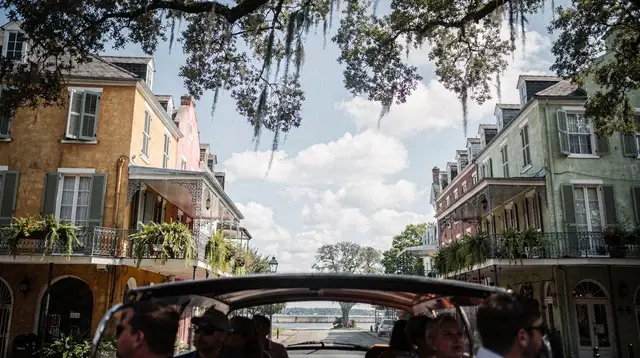
The French Quarter is a compact grid, roughly thirteen blocks by six, and it was laid out long before cars existed. Streets are narrow, one-way patterns are common, and pedestrians, delivery trucks and horse-drawn carriages all share the same tight space. It is, by a wide margin, easier to walk than to drive through. For anyone staying inside or near the Quarter, a car adds cost and stress without adding convenience.
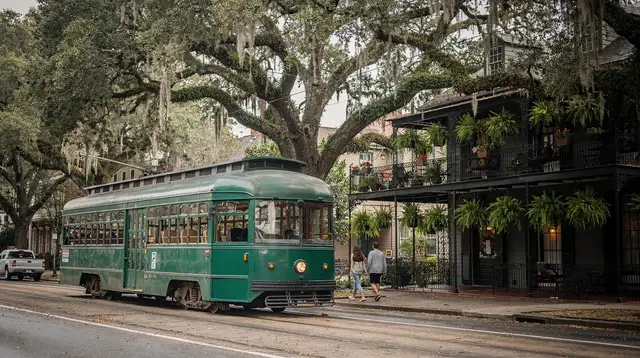
The Garden District, Uptown, Mid-City and the Central Business District are more spread out, and a car can feel tempting there. But this is exactly the part of the city the St Charles streetcar line was built to serve, running the length of St Charles Avenue through the Garden District and out to the universities. A Jazzy Pass covers a day or several across the streetcar and bus network, and for most itineraries it does the job a rental car would otherwise be asked to do, minus the parking problem.
Parking in the French Quarter: the part that changes the calculation
This is the detail that should decide the question for most visitors. Parking in the French Quarter is scarce, metered, and enforced with real consistency — this is not a place where a slightly expired meter or an ambiguous curb goes unnoticed. Tow-away enforcement is strict, and a towed car in an unfamiliar city, on a trip with a fixed schedule, is the kind of problem that can cost an entire day.
Practically, this means:
- Do not plan to park in the Quarter for sightseeing. If you’re staying there, park once at your hotel — many of which either have no on-site parking or charge separately for it — and leave the car until you need it again.
- Read every posted sign at a metered space carefully. Restrictions change by block, by time of day and by side of the street, and the posted rule is what’s enforced, not what seems reasonable.
- Never treat curb space near Bourbon Street, Jackson Square or the French Market as casual short-term parking. These are among the most closely monitored blocks in the city.
- If in doubt, use a staffed parking garage rather than street parking, even though it costs more; the certainty is usually worth it.
None of this is a reason to avoid driving altogether — it’s a reason to be deliberate about when the car is out of the garage and when it isn’t.
Why the car is unnecessary for the airport transfer
Some visitors assume that since they’re renting a car anyway, they should pick it up straight at MSY and drive themselves into the city. This usually backfires. The airport sits about 18 km west of the French Quarter, a 25 to 40 minute drive depending on traffic, and taxis, ride-hailing apps and the RTA airport bus all handle that route without requiring you to navigate an unfamiliar city on arrival, find parking on your first night, or pay for parking you won’t use until you leave.
If your plans include a day trip that starts right after landing, it can make sense to pick up a car at the airport and head straight out — but for most visitors, arrival and downtown driving should be kept separate.
Where a car becomes genuinely useful
Everything changes once the destination is outside New Orleans. The River Road plantations, the swamps and bayous south and west of the city, Cajun Country around Lafayette, and the Gulf Coast are all reached by road, either with an organised tour that includes hotel pick-up or with a rental car of your own. Amtrak does serve the city from Union Passenger Terminal, but its routes and schedules are not built around these day-trip destinations and aren’t a practical way to see the region.
| Destination | Rough driving time from New Orleans | Practical for a rental car day trip? |
|---|---|---|
| Oak Alley Plantation | 45 min–1 h | Yes |
| Whitney Plantation | 45 min–1 h | Yes |
| Barataria Preserve / swamp tours | ~40 min | Yes |
| Honey Island Swamp | ~1 h | Yes |
| Baton Rouge | ~1 h 30 | Yes, if starting early |
| Lafayette / Cajun Country | ~2 h 15 | Better as an overnight or a full day |
| Mississippi Gulf Coast | 1 h–1 h 30 | Yes |
For a single plantation or swamp visit, many travellers rent a car for exactly one day, picking it up in the morning and returning it that evening rather than holding a rental for the whole trip. That approach avoids paying for a car during the days spent entirely inside the city, where it would otherwise sit unused — or worse, sit accumulating parking costs in the Quarter. If your plan covers several of these destinations, it’s worth comparing this option against organised transport; see the comparison of plantation tours and swamp tour operators for how each destination is typically reached.
What the roads themselves are like once you leave the city
The driving itself, once you’re out of the Quarter’s tight grid, is straightforward. Interstate 10 is the backbone: it runs from downtown New Orleans west toward Baton Rouge and Lafayette, and east toward Slidell and the Mississippi state line, and it’s the fastest way to cover distance to Cajun Country or the Gulf Coast. For the River Road plantations, the more direct route follows LA-18 and LA-44 along the river itself on either bank, which is slower than the interstate but far more scenic — the road runs close enough to the levee that sugarcane fields and plantation alleys appear with little warning.
A few things are worth knowing before you’re actually on these roads:
- Cell signal thins out fast once you’re off the interstate. The stretch of River Road between Destrehan and Oak Alley, and most of the backroads around the swamps and bayous, have patchy coverage at best. Download or print directions rather than relying on a live connection.
- Gas stations are sparser in the swamp and bayou country than in the city or along the interstate. It’s worth filling up before heading out toward Honey Island Swamp or the more remote parts of the Atchafalaya Basin, rather than assuming one will appear when needed.
- Two-lane roads through bayou country can flood after heavy rain, and low-lying stretches sometimes close temporarily. This is rarely a problem for a normal day trip, but it’s part of why locals treat weather forecasts more seriously than visitors from drier climates might expect.
- Wildlife occasionally crosses rural roads near the swamps, so it’s worth slowing down on backroads at dawn or dusk, particularly around Kraemer, Des Allemands and the roads leading into the Barataria Preserve.
None of this makes the driving difficult — Louisiana’s rural roads are generally well maintained and lightly trafficked outside the interstate — but it rewards a bit more preparation than driving between sights inside the city does. Anyone still weighing whether to self-drive these routes at all versus joining an organised trip should see do you need a car in Louisiana for a fuller comparison.
Algiers Point: the one crossing where you leave the car behind
There’s one exception worth flagging to the general rule that a car is a downtown liability: getting to Algiers Point, the historic neighbourhood directly across the Mississippi from the French Quarter. The pedestrian and bicycle ferry from the foot of Canal Street crosses the river in a few minutes, and it’s a far simpler way to see Algiers Point than driving around to one of the bridges and finding parking on the far bank. It’s a useful reminder that “driving in New Orleans” isn’t a single uniform problem — some crossings and short hops are better solved by boat than by road, in a city where the river itself is often the more direct route.
Driving plans during hurricane season
Louisiana’s hurricane season runs through the warmer half of the year, and it’s worth factoring into any driving plan, even one that has nothing to do with storm risk directly. Evacuation routes use the same interstates that day-trip traffic normally relies on, and rental availability and road conditions can shift quickly if a storm system is approaching the Gulf. This is a low-probability concern for most trip dates, but not a negligible one, and visitors travelling in the season should read hurricane season: what visitors should know alongside this guide rather than treating driving logistics and weather planning as separate questions.
Renting a car: what to check before you sign
Rental counters at MSY and around the city are competitive, but a few practical checks matter more here than in many other US cities:
- Confirm what parking your hotel offers, or doesn’t, before the car arrives — this is the detail that most often surprises first-time visitors to the Quarter.
- Check the excess/deductible and any local damage-waiver terms carefully, as with any US rental.
- Ask specifically about drop-off flexibility if you’re combining a day trip with a later flight or an onward drive, since one-way fees vary by company.
- Keep a printed or offline copy of your route for areas like the Atchafalaya Basin or backroads near Avery Island, where signal can be patchy.
- Keep valuables out of sight in a parked car, whether outside a swamp-tour dock or at a plantation car park — ordinary precaution, not a specific local warning.
If you’d rather skip the logistics of driving to your day trips altogether, a guided option such as the citywide driving tour led by a local jazz musician covers the city’s neighbourhoods without you needing to find parking anywhere along the route.
For visitors who want a broad first look at the city by vehicle without renting one, the narrated city tour and the three-hour city tour both cover the major districts from a bus or van, sidestepping the parking question entirely. Visitors planning to combine several paid sights over a few days might also compare the multi-attraction Power Pass against renting for the same period — bundled admission can outweigh the cost and hassle of parking near each stop.
A simple way to decide
If your trip is entirely inside New Orleans, skip the rental car. Walk the French Quarter, use the streetcars for the Garden District and beyond, and take a taxi or ride-hailing app for anything after dark or over a longer distance. If your trip includes the River Road, the bayous, Lafayette or the Gulf Coast, plan the car around those days specifically — picked up the morning you leave the city and dropped off when you return — rather than treating it as a constant companion for the whole stay. For planning a fuller day-trip itinerary around the region, see the overview of day trips from New Orleans.
Driving and Parking in New Orleans: Frequently Asked Questions
Should I rent a car for my whole New Orleans trip?
Only if you plan day trips outside the city. For the city itself, a car is a liability: parking in the French Quarter is scarce, metered and strictly enforced, while the streetcars and walking cover the main sights.
Is parking difficult in the French Quarter?
Yes. Streets are narrow, metered parking is limited and closely monitored, and towing for expired meters or restricted zones is common and swift. Most visitors are better off parking once at their hotel and leaving the car there.
Which side of the road do people drive on in Louisiana?
The right-hand side, as throughout the United States. Visitors used to driving on the left should take extra care at intersections and when turning, especially in unfamiliar traffic patterns downtown.
Do I need a car to get from the airport to the French Quarter?
No. A rental car adds parking costs and hassle for a trip that a taxi, ride-hailing app or airport shuttle handles more simply. Renting only makes sense if you are heading straight out of the city afterward.
When does a rental car actually make sense in this region?
Once you leave New Orleans city limits. The River Road plantations, the swamps and bayous, Cajun Country around Lafayette and the Mississippi Gulf Coast are all reached by road, and most of them have no practical public transport link from the city.
Can I just rent a car for one day to see the plantations or swamps?
Yes, and many visitors do exactly that, picking up a car for a single day trip and returning it the same evening rather than holding a rental for the whole stay.
Is it safe to leave valuables in a parked car in New Orleans?
Keep valuables out of sight in any parked car, in the city or on the road. This is ordinary travel caution rather than a specific local risk, and it applies as much at swamp-tour parking lots as it does downtown.
Is I-10 the main route to the plantations and Cajun Country?
Interstate 10 is the fastest route toward Baton Rouge, Lafayette and the Gulf Coast, but for the River Road plantations the slower riverside roads (LA-18 and LA-44) are more direct and far more scenic, since they run close to the levee on either bank of the Mississippi.
Does hurricane season affect driving plans in the region?
It can. Evacuation routes use the same interstates that day-trip traffic relies on, and rental availability or road conditions can shift quickly if a storm approaches the Gulf. It’s a low-probability concern for most trip dates, but worth checking if travelling during hurricane season.
Getting around New Orleans on GetYourGuide
Verified deep-linked GetYourGuide tours. Book through these links and we earn a small commission at no cost to you.
GetYourGuide does not provide a product photo for this activity — the image shows the meeting point, photographed by us.