French Quarter Food and Drink: What to Eat and Drink, and Where
What should you eat and drink in the French Quarter?
Start with beignets and chicory coffee at Cafe du Monde, then work through gumbo, a po'boy and a muffuletta from the neighbourhood's kitchens. For drinks, the Quarter claims four cocktails as its own: the Sazerac, the Ramos Gin Fizz, the Hurricane and the Vieux Carre.
Eating and drinking your way through the Vieux Carre
The French Quarter’s architecture and colonial history have a page of their own; this one is about what goes on the table. The oldest grid in New Orleans is also its densest concentration of kitchens, counters and bars, and a visitor who does nothing but eat and drink their way around it for a day will have understood a real part of the city. This guide sets out the dishes worth seeking, the drinks the Quarter claims as its own, and where locals send people rather than where the crowds already are.
None of this is Cajun food, and that distinction matters enough to state plainly before anything else. The full explanation of why lives at Creole vs Cajun food explained, but the short version: Creole cooking formed here, in the city, out of French, Spanish, African and Caribbean traditions, and it tends toward tomatoes and city ingredients.
Cajun cooking belongs to the descendants of the Acadians who settled the rural prairies and bayous around Lafayette, and it is built on a roux rather than a tomato base. The two get used interchangeably by people who have never eaten either, and it shows. New Orleans is a Creole city. If you want the Cajun register properly, that is a trip out to Cajun Country, not a dish on a Bourbon Street menu.
Cafe du Monde and the ritual of beignets
Start where most first visits to the Quarter start: Cafe du Monde, on Decatur Street facing the French Market, open around the clock and selling essentially one thing, beignets, alongside chicory coffee. The beignets arrive three to an order, square, deep-fried and buried under a drift of powdered sugar that will get on your clothes regardless of how carefully you eat. The chicory coffee, served black or au lait with hot milk, is a New Orleans habit dating back to supply shortages that made chicory root a wartime coffee stretcher; the city kept the taste after the shortages ended.
The queue can look worse than it is. It moves quickly because turnover at the tables is fast, and it thins out considerably very early in the morning or late at night, when the Quarter’s other rhythms have already shifted toward music rather than food. There is no need to dress it up as more than what it is: a simple, well-made thing, eaten the same way it has been for well over a century, and worth doing once even if you are sceptical of anything this touristed.
The French Market and grazing on Decatur Street
Behind and around Cafe du Monde runs the French Market, a stretch of stalls and small vendors along Decatur and North Peters that has operated in some form since the late eighteenth century. It is not a single destination so much as a corridor to graze through: praline stands, fruit vendors, seafood counters, and stalls selling po’boys and other quick plates. It rewards an unhurried half hour more than a single stop, and it sits directly on the route between Cafe du Monde and Jackson Square, so it costs nothing extra to fold in.
Decatur Street itself, running the length of the Quarter along the river side, carries a mix of the market’s food stalls, casual restaurants and the odd bar, and it is generally a calmer, more food-focused walk than Bourbon Street a few blocks inland.
Gumbo, po’boys and muffulettas: the local register
Three dishes do most of the work of explaining French Quarter food, and all three are Creole rather than Cajun in their New Orleans form, though gumbo in particular has roots on both sides of that divide.
Gumbo is a thick, dark stew built on a roux, usually with the trinity of onion, celery and bell pepper, and filled with some combination of seafood, sausage and chicken, served over rice. Versions vary enormously between kitchens, and a Quarter restaurant’s gumbo says a fair amount about its overall kitchen.
The po’boy is New Orleans’ everyday sandwich: local French bread with a crisp crust and soft crumb, split and filled, classically with fried shrimp or oysters, or with roast beef and gravy for the “dressed” version that piles on lettuce, tomato, pickles and mayonnaise. Po’boy shops are scattered through the Quarter and the wider city, and it is a lunch built for eating standing up or on a bench, not a formal sit-down dish. A fuller comparison of where to find good versions of all these dishes is at Beignets, po’boys and gumbo: where to eat.
The muffuletta is the Quarter’s other signature sandwich, a round, Sicilian-style loaf split and stacked with cured meats and provolone, topped with a chopped olive salad that soaks into the bread as it sits. It is associated with the Italian grocers who settled around the Quarter’s edges, and one sandwich is genuinely enough for two people; splitting it is normal, not a sign of a small appetite.
Beyond these three, the wider Louisiana food vocabulary appears throughout Quarter menus: jambalaya, etouffee, boudin, crawfish when in season, red beans and rice (traditionally served on Mondays), bananas Foster for dessert, and king cake if you happen to be there during Carnival season, roughly January through Mardi Gras itself.
| Dish | What it is | Where to expect it |
|---|---|---|
| Beignets | Fried dough squares, powdered sugar | Cafe du Monde and other Quarter cafes |
| Gumbo | Roux-based stew, seafood or meat, over rice | Most sit-down Quarter restaurants |
| Po’boy | Filled French bread sandwich | Po’boy shops, casual counters |
| Muffuletta | Cured meats and olive salad on round loaf | Italian grocers and delis near the Quarter |
| Red beans and rice | Simmered beans, usually with sausage | Monday specials citywide |
The cocktails the city calls its own
The French Quarter also claims a share of American cocktail history, and four drinks in particular are treated as New Orleans inventions rather than borrowed favourites. A full account of their origins and where to order each one properly is at Cocktails of New Orleans: Sazerac to Hurricane, but the shortlist is worth knowing before you sit down anywhere in the Quarter.
The Sazerac, built on rye whiskey, Peychaud’s bitters and a rinse of absinthe, is widely described as America’s oldest cocktail and is closely tied to New Orleans bar history. The Ramos Gin Fizz, a shaken, citrus-and-cream drink topped with soda, was created in the city in the late nineteenth century and is notoriously labour-intensive to make correctly, which is part of its appeal. The Hurricane, sweet, rum-based and served in its distinctive glass, began life as a French Quarter bar’s way of moving surplus rum. The Vieux Carre, named for the Quarter itself, blends rye, cognac and sweet vermouth and was created at a hotel bar within the neighbourhood.
All four are on menus across the Quarter, with quality varying considerably between a careful cocktail bar and a Bourbon Street tourist trap; a bartender who can explain what goes into a Ramos Gin Fizz is usually a reasonable proxy for a kitchen and bar worth trusting more broadly.
A practical note that surprises visitors from stricter jurisdictions: it is legal to carry an open alcoholic drink on the street within the French Quarter, but only in a plastic “go-cup,” never in glass, and only inside the permitted boundary. The drinking age is 21 and bars do check identification.
Guided food tours versus eating on your own
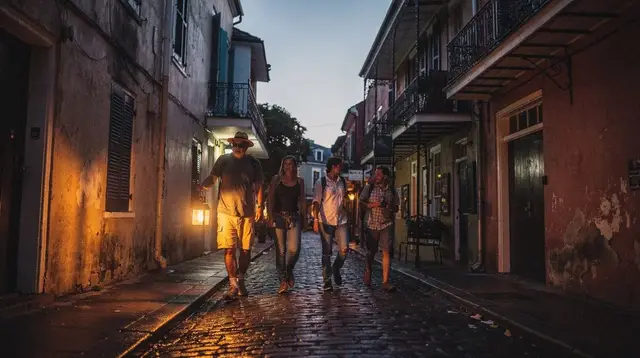
The Quarter’s food scene is compact and walkable enough that an independent visitor with a plan can cover most of the ground described above in a single day, moving between the French Market and a handful of chosen stops without any need to book ahead. That said, a guided outing has real advantages: several tastings across different kitchens in one trip, a local’s current read on which version of a dish is having a good month, and the kind of context on Creole cooking and its history that turns a meal into an actual understanding of the city.
For a broad survey of the Quarter’s food alongside the wider city, the Beyond the French Quarter food tour extends the tastings past the neighbourhood’s core blocks.
To keep the focus squarely on the Vieux Carre itself, the French Quarter food and culture tour pairs the eating with background on where each dish comes from, while the French Quarter food walking tour is built around moving on foot between a series of tastings. Visitors with limited time sometimes prefer the 45 Minutes in the French Quarter tour as a quick, guided orientation before striking out to eat independently.
Whichever route you take, a full comparison of the food tour options operating in the city, not just the Quarter, is at Food tours in New Orleans compared.
Practical notes: timing, cash and tipping
Cash still matters in the Quarter, even though cards are widely accepted at sit-down restaurants and most bars. Street musicians near Jackson Square, some French Market stalls and a handful of smaller counters run on cash or expect it for tips, and it is worth carrying some regardless of how you plan to pay for meals. Sales tax is added at the till rather than shown in menu prices, and tipping in restaurants and bars runs roughly 18 to 20 percent, standard across the city and not specific to the Quarter. A fuller rundown of both habits is at Tipping and sales tax in New Orleans.
Timing affects the experience more than most visitors expect. Breakfast and late morning are the calmest windows for Cafe du Monde and the French Market; by mid-afternoon and into the evening, Bourbon Street’s bar crowd spills into the surrounding blocks and the food side of the Quarter gets harder to hear yourself think in. If quiet matters to you, aim for mornings, and save the livelier bar-hopping for after dark once you have already eaten.
Humidity and heat, especially from June through September, make an outdoor food crawl more tiring than the short distances suggest; pacing a day with shaded stops and plenty of water matters more here than in a milder climate. None of this should discourage a visit in summer, but it is worth building in slower stretches between stops.
For a wider view of what else the Quarter has to offer beyond its kitchens and bars, its architecture, museums and walking routes are covered separately at French Quarter walking guide, and its music scene, closely tied to some of the same streets, is covered at Live jazz in New Orleans: a nightly guide.
Frequently asked questions about French Quarter food and drink
Is Cafe du Monde worth the queue?
Most visitors think so. It sells one thing well, beignets and chicory coffee, around the clock, and the queue usually moves faster than it looks. Early morning or late night avoids the worst of it.
What is the difference between Creole and Cajun food?
Creole cooking formed in New Orleans itself, from French, Spanish, African and Caribbean influences, and leans on tomatoes and city ingredients. Cajun cooking comes from the Acadian descendants who settled the rural prairies and bayous around Lafayette, and it is built on a roux. The two are related but not the same, and New Orleans is a Creole city, not a Cajun one.
What is a po’boy?
A French Quarter and New Orleans sandwich on crisp-crusted local bread, filled with anything from fried shrimp or oysters to roast beef and gravy. It is an everyday lunch, sold in po’boy shops and grocery counters across the Quarter and the wider city.
What is a muffuletta?
A round Sicilian-style loaf split and layered with cured meats, cheese and an olive salad, a New Orleans creation associated with the French Quarter’s Italian grocers. One is usually enough for two people.
Which cocktails does New Orleans claim as its own?
The Sazerac, the Ramos Gin Fizz, the Hurricane and the Vieux Carre all trace their origins to the city, and several to French Quarter bars specifically. All four are widely served in the neighbourhood today.
Can you drink alcohol on the street in the French Quarter?
Yes, within the French Quarter it is legal to carry an open alcoholic drink outdoors, but only in a plastic go-cup, never in glass, and only inside the permitted area. The legal drinking age is 21 and identification is checked.
Do I need to book a food tour, or can I just eat my way around?
Both work. The French Quarter is compact enough to graze through independently, but a guided food tour is useful for context, for tastings across several kitchens in one outing, and for a local’s read on where the register of a dish is done well that week.
Food and drink tours on GetYourGuide
Verified deep-linked GetYourGuide tours. Book through these links and we earn a small commission at no cost to you.
GetYourGuide does not provide a product photo for this activity — the image shows the meeting point, photographed by us.