A Food Lover's Three Days in New Orleans
Three days, three neighbourhoods, one long table
This is a New Orleans trip organised around meals rather than sights, and it never requires a car. The three days stay inside the French Quarter, the adjoining Central Business District, and the Garden District, reached directly by the St Charles streetcar, the oldest continuously operating street railway in the world. Day one covers the French Quarter’s essential dishes, day two widens the vocabulary with the city’s own cocktails and a few dishes visitors rarely order on the first pass, and day three rides the streetcar out to the Garden District for a slower, sit-down pace among the antebellum houses.
This is not the same trip as the longer One Week in New Orleans Without a Car itinerary, which reaches out to plantation country and the swamps with organised tours. Here, the plantations of the River Road and the bayous stay off the map entirely; the point is depth in a small area, not breadth across the region. It is also worth saying early: New Orleans cooking is Creole, formed in the city itself out of French, Spanish, African and Caribbean roots. Cajun food belongs to Acadiana, the prairies and bayous around Lafayette, well outside this three-day radius — see Creole vs Cajun food explained if the distinction is new.
For orientation before setting out, the French Quarter walking guide and the getting around New Orleans by streetcar guide cover the practical basics: the Quarter is a compact grid, roughly 13 by 6 blocks, and a day or multi-day streetcar pass covers everything needed for day three.
The three neighbourhoods sit close enough together that the whole trip plays out within a single, walkable corridor. The French Quarter’s grid gives directly onto the Central Business District, where Canal Street marks the old dividing line between the French and American parts of the city and where a wider choice of hotels and restaurants fills the blocks between the Quarter and the streetcar line. From there, the same line runs on into the Garden District for day three. None of this touches the car-dependent legs that a trip to the River Road plantations or the bayous further out would require; everything here stays inside that one corridor, on foot or on the streetcar, which is exactly what allows an unhurried pace built around meals rather than a rush between sights.
Day 1: the French Quarter’s essential plate
Start early at Cafe du Monde on Decatur Street for coffee and beignets before the queue builds; it is a tourist institution, but a deserved one, and the is Cafe du Monde worth the queue piece has timing tips if the line looks long. From there, walk the French Market, a few blocks of stalls selling produce, spices and snacks, a good place to understand the ingredients behind the dishes to come.
Lunch is a po’boy, the city’s sandwich, on French bread with roast beef or fried shrimp; several counters inside the Quarter do this well without ceremony. For a fuller sense of where each of the day’s core dishes is done properly, the beignets, po’boys and gumbo: where to eat guide is worth reading before setting out, since it separates the tourist-friendly spots from the ones locals actually favour. Spend the afternoon exploring Jackson Square, St Louis Cathedral and Royal Street’s galleries — the Jackson Square and St Louis Cathedral guide covers the square itself — before circling back for dinner.
Dinner should be gumbo and jambalaya, the two dishes most people come to New Orleans specifically to eat: gumbo is a dark roux-based stew, usually with okra or file powder, over rice; jambalaya is a rice dish cooked with the meat and stock together. A sit-down Creole restaurant in the Quarter or just across Canal Street handles both properly. For a wider view of where to find each dish done well, see where locals actually eat in New Orleans and gumbo, jambalaya and etouffee explained.
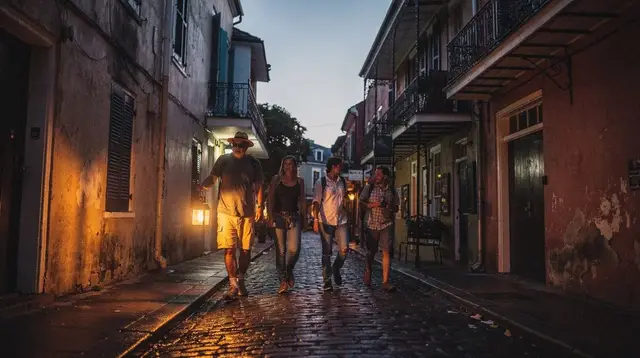
If evenings appeal more to atmosphere than another meal, a walk toward Frenchmen Street rounds out the night with live jazz rather than another course — see Frenchmen Street vs Bourbon Street for which strip suits which mood. Those drawn instead to the Quarter’s other reputation, its ghost stories and above-ground cemeteries, can fold in a evening walking tour through the Quarter’s haunted history between dinner and a nightcap.
Day 2: widening the vocabulary
Day two moves past the obvious three dishes into the rest of the city’s plate. Breakfast can be lighter — chicory coffee and pastry — before a late-morning muffuletta at one of the Quarter’s Italian-Creole delis: a round sesame loaf layered with cured meats, cheese and olive salad, invented here and rarely found elsewhere in this form.
Spend part of the afternoon on a guided introduction to the food scene rather than picking spots at random; a guided tasting walk through and just beyond the Quarter’s food stops is an efficient way to try several small plates — boudin, oysters, a taste of red beans — without committing to full meals at each. For background on how these tours compare, see food tours in New Orleans compared.
Evening is for the city’s cocktails, all of which New Orleans claims as its own: the Sazerac, built on rye and Peychaud’s bitters; the Ramos Gin Fizz, notoriously slow to shake properly; the fruit-forward Hurricane, invented here though often oversweetened elsewhere; and the Vieux Carre, a split-base classic named for the Quarter itself.
A bar crawl of two or three of these, rather than a single stop, is the better way to taste the differences — see cocktails of New Orleans: Sazerac to Hurricane for where each is done properly. Dinner tonight can be red beans and rice, traditionally a Monday dish born from washday cooking but served daily in most kitchens now, or, if the calendar allows, a seasonal crawfish boil — check availability, since crawfish season runs roughly from late winter into early summer and is not a year-round dish.
A table below sets out roughly what day two costs, for planning purposes:
| Stop | What | Rough cost per person (USD) |
|---|---|---|
| Muffuletta lunch | Half muffuletta + drink | 12–18 |
| Guided food-tasting walk | Several small tastings | 60–90 |
| Cocktail (each) | Sazerac / Ramos Gin Fizz / Hurricane / Vieux Carre | 12–16 |
| Red beans and rice dinner | Main course | 16–25 |
| Crawfish boil (seasonal) | By the pound | 8–12 per pound |
Prices vary by venue and season; treat this as a planning range, not a quote, and remember sales tax is added at the till, and 18–20 % tipping is expected on top — the tipping and sales tax in New Orleans guide sets out both in more detail, which matters over three days of restaurant meals more than it does on a single stop.
Day 3: the Garden District by streetcar
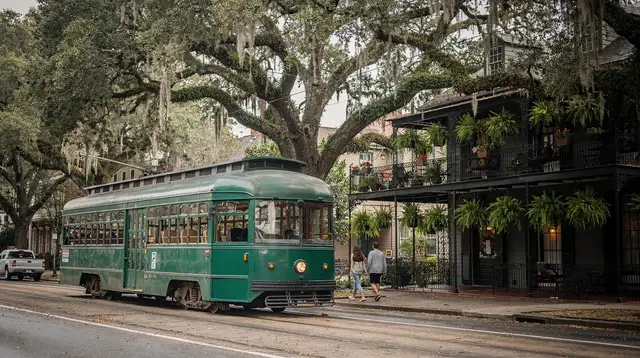
Ride the St Charles streetcar from Canal Street into the Garden District, a slower morning among the uptown mansions and oak-lined avenues. This is the day the trip leaves the Quarter’s grid, but not the city, and certainly not by car — the streetcar line itself, the oldest continuously operating street railway in the world, is worth the ride for its own sake. The Garden District and the streetcar guide and getting around New Orleans by streetcar cover tickets and stops in detail.
Walk St Charles Avenue and the surrounding streets for the antebellum houses, then take in Lafayette Cemetery No. 1, whose above-ground tombs are one of the city’s best-known images; unlike St Louis Cemetery No. 1 in the Quarter, it can generally be visited independently, though hours and rules change, so check current access before going.
Those who want the history filled in rather than self-guided can join a walking tour that pairs the cemetery with the district’s grand houses, or, for a version that leans into the neighbourhood’s ghost-story reputation alongside the architecture, a Garden District stroll built around the cemetery and its stories. Background on the neighbourhood’s cemeteries more broadly is in the cemeteries of New Orleans visitor guide.
Lunch is a slower, sit-down affair here — the Garden District has fewer counters and more proper restaurants than the Quarter, a good place for a leisurely Creole lunch away from the crowds. Ride the streetcar back into the CBD or the Quarter in the afternoon, leaving the evening free for a final dinner at whichever Quarter institution was missed on day one, or a last round of the cocktails from day two.
For a broader sense of how this compares to longer stays, how many days in New Orleans and three days in New Orleans set this food-focused plan against a more sight-heavy three-day version, and things to do: food and drink tours is a good next stop for building a fourth day if time allows.
Making it your own
This plan is deliberately narrow, and that is the point: three days is not enough to do food, history and music all properly, so this version picks food and stays with it. Travellers who want the same neighbourhoods but a heavier dose of the city’s past should look instead at history and memory: three days, which spends more time on the museums and cemeteries this plan only passes through. Those working with a tighter budget can keep the same structure while trimming the tours and sit-down dinners using New Orleans on a budget: three days, which leans harder on po’boy counters and the French Market. And anyone who ends up with a fourth day free, rather than heading home, could use it on a single, well-chosen stop from New Orleans food and drink tours — a cooking class or a second tasting walk is a natural extension of this itinerary rather than a change of direction.
FAQ: a food-focused three days in New Orleans
Do I need a car for this itinerary?
No. Everything on these three days sits inside the French Quarter, the Central Business District and the Garden District, all connected on foot or by the St Charles streetcar. A rental car adds parking cost and hassle for no benefit here.
Is this the same as the one-week no-car itinerary?
No. The longer one-week-without-a-car itinerary reaches further into the region using organised tours. This three-day plan stays deliberately narrow, inside three walkable, food-focused neighbourhoods, with no plantations and no swamp tours.
What is the difference between Creole and Cajun food?
Creole food formed in the city itself, out of French, Spanish, African and Caribbean influences, and leans on tomatoes and city ingredients. Cajun food comes from the Acadian settlers of the prairies and bayous around Lafayette, and is rural and roux-based. This itinerary stays in New Orleans, so it is a Creole food trip, not a Cajun one.
How much should I budget per day for food?
A mid-range day of two sit-down meals, a coffee stop and a cocktail or two runs roughly 60 to 100 US dollars per person, before tours. Po’boys, muffulettas and beignets are inexpensive; a multi-course dinner at a Creole institution pushes the top of that range or beyond.
Do I need to book restaurants ahead?
For the well-known Creole institutions and any cooking class, yes, book a few days ahead, more during Mardi Gras or Jazz Fest. Po’boy counters, the French Market and casual lunch spots take walk-ins.
Is Bourbon Street part of this itinerary?
Only in passing. The food itinerary favours Royal Street, Decatur Street, the French Market and Frenchmen Street for eating and drinking; Bourbon Street’s bars are not the focus here.
tours.3 days
Verified deep-linked GetYourGuide tours. Book through these links and we earn a small commission at no cost to you.
GetYourGuide does not provide a product photo for this activity — the image shows the meeting point, photographed by us.