New Orleans Food & Drink Tours: Gumbo, Cocktails and the French Quarter Table
Are New Orleans food and drink tours worth it?
Yes, if you want a guided path through the city's dense food vocabulary in a short visit. A three-hour tasting tour typically covers four to six stops, mixes gumbo, po'boys or beignets with a cocktail stop, and is priced from roughly 65 to 130 USD before tax and tip, which is added separately at every stop.
What a New Orleans food and drink tour actually covers
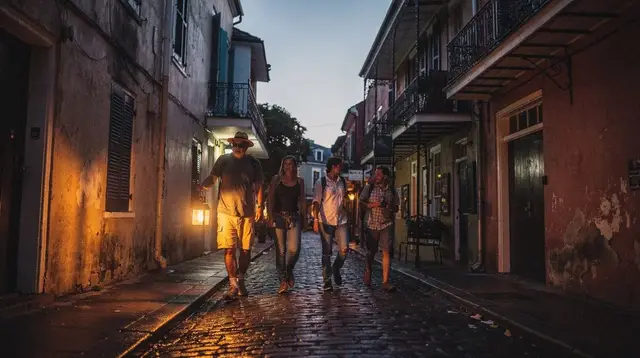
New Orleans has two very different kinds of guided tour, and it is easy to book the wrong one. A French Quarter walking tour is built around Jackson Square, the Cabildo, Royal Street architecture and the layout of the old Creole city.
A food and drink tour is built around the plate and the glass: it moves at a slower pace, spends less time on any single building, and stops every fifteen to twenty-five minutes to eat or drink something specific, with history used only to explain the food. If you want the vocabulary of the city — gumbo, jambalaya, étouffée, po’boy, muffuletta — explained by someone tasting it alongside you, this is the category to book, not the general-purpose New Orleans tours that mix a bit of everything.
Most tasting tours run for two and a half to three hours, cover four to six stops within walking distance of each other, and are priced from roughly 65 to 130 USD per person depending on how much alcohol and how many full plates are included. That price is before Louisiana sales tax, which is always added at the till and never shown in the advertised figure, and before any tip you leave the guide, which follows the same 18 to 20 percent logic as a sit-down restaurant meal. See our guide to tipping and sales tax if the arithmetic of a US bill is new to you.
The French Quarter and French Market as the natural ground
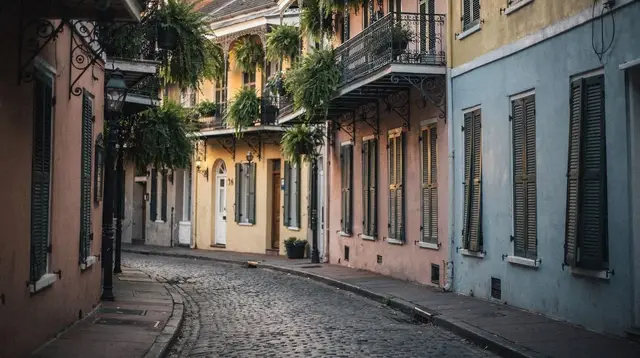
Almost every food and drink tour in the city starts inside or just beside the French Quarter, and for a simple reason: the Vieux Carré still holds the highest concentration of the kitchens, oyster bars and cocktail rooms that built the city’s reputation, along with the French Market itself, the covered stalls along Decatur Street that have sold produce, spices and snacks since the eighteenth century.
A tour that starts at the French Market and works inward toward Royal and Chartres Streets is covering the same physical ground as an architecture-focused walk, but the stops themselves are the point, not the wrought-iron balconies above them. If you would rather see both the buildings and the plates on the same afternoon, pair a tasting route with one of the things to do in the French Quarter rather than trying to get a guide to do both jobs at once.
Café du Monde, on Decatur Street facing Jackson Square, is the one stop every visitor already knows by name, and it sits inside the same few blocks. Its beignets — squares of fried dough buried in powdered sugar — and its chicory coffee are a genuine local tradition, not a tourist invention, but the queue can run long at almost any hour. Some tour guides build a stop around it deliberately; others route past it and send guests back on their own later, at a quieter time. Neither approach is wrong, but it is worth knowing which one your tour follows before you book, especially if a short queue would eat into a tight schedule.
The vocabulary a tasting tour should actually teach you
New Orleans food is a distinct vocabulary, and a good guide treats that vocabulary as the tour’s real subject. Gumbo, a dark roux-based stew usually built on okra, seafood or sausage, and jambalaya, a rice dish closer to Spanish and Caribbean cooking than to Cajun rice dishes further west, are the two words visitors arrive already half-knowing and often confuse with each other.
Étouffée, a thicker, more concentrated stew usually served over rice with crawfish or shrimp, and the po’boy, a dressed sandwich on French bread that can be filled with fried shrimp, oysters or roast beef, round out the everyday plate. The muffuletta, a round sesame loaf layered with Italian meats, cheese and olive salad, is a New Orleans invention specifically, tied to the city’s Sicilian immigrant history, and a tour that includes one is usually proud to say so.
A few dishes carry their own small rules worth knowing before a guide explains them anyway. Red beans and rice is traditionally a Monday dish, a habit that goes back to using the day after Sunday’s ham for the pot, and some kitchens still only serve it on that day. Boudin, a Cajun sausage of rice and pork, belongs more properly to the country west of the city around Lafayette than to New Orleans itself, and a boiled-crawfish stop is seasonal, since crawfish season runs roughly from late winter into early summer and thins out or disappears outside that window.
Bananas Foster, the flambéed dessert invented at a French Quarter restaurant in the 1950s, and king cake, the ring-shaped pastry that appears only during the Carnival season between Twelfth Night and Mardi Gras, are two more dishes whose story is tied to a specific time of year rather than to the city in general. Our companion piece on gumbo, jambalaya and étouffée goes deeper into how the three are actually different, and where locals eat is a useful check against a tour route built mainly for visitors.
None of this is Cajun food, and mixing the two labels up is the single most common mistake visitors make. Creole cooking is the cuisine that formed inside the city itself, historically urban, often tomato-based, shaped by French, Spanish, African and Caribbean influences. Cajun cooking belongs to the descendants of the Acadians who settled the prairies and bayous around Lafayette after their expulsion from Nova Scotia, and it is rural and roux-based in a different way.
A New Orleans food tour is, almost by definition, a Creole food tour; genuinely Cajun cooking is better explored on a trip out toward Cajun country itself. Our explainer on Creole versus Cajun food sets the distinction out in full.
Cocktail history tours and the four drinks the city claims
New Orleans also treats cocktail history as its own subject, and several tours are built entirely around it rather than around food. The city claims four drinks as specifically its own: the Sazerac, generally credited as the oldest branded cocktail in the United States and built on rye whiskey and Peychaud’s bitters; the Ramos Gin Fizz, a slow-shaken, egg-white cocktail invented in a nineteenth-century New Orleans bar; the Hurricane, the rum-and-passionfruit drink associated with Pat O’Brien’s on Bourbon Street; and the Vieux Carré, a whiskey, cognac and vermouth cocktail invented at the Hotel Monteleone and named for the French Quarter itself.
A cocktail-history tour usually visits three or four historic bars, explains where each drink was invented and why, and serves a full or tasting-size pour at each stop, which is a different pace and a different budget than a straight tasting tour built around food.
For a route that leans specifically into this, the New Orleans combo cocktail and food history tour pairs both threads in one outing, moving between a handful of historic bars and food stops rather than choosing one or the other. It is a reasonable middle option for a visitor who wants the drinks story without giving up an evening entirely to bar-hopping.
Our guide to the cocktails of New Orleans covers all four drinks and where each one is traditionally served if you would rather visit on your own terms and skip the guided version.
The main formats worth booking
The most straightforward option is a general tasting walk through the French Quarter and French Market, the Eat Drink and Vue New Orleans tour, which strings together several kitchens and a rooftop or elevated stop in a single afternoon and works well as a first taste of the city’s food culture without committing to a theme narrower than “New Orleans food” itself.
For visitors who need plant-based options, the New Orleans vegan food tour is a genuinely separate itinerary rather than a modified version of the standard route, built around kitchens that serve vegetarian and vegan takes on Creole staples, since the classic versions of gumbo, po’boys and jambalaya are built on meat, shellfish or their stocks by default.
Music and drink are also sold together, since so much of the city’s nightlife runs on both at once. The jazz roots tour combining music, culture and drink moves through the neighbourhoods tied to the birth of jazz with stops for a drink along the way, which sits closer to our live jazz coverage than to a pure food tour, but suits an evening built around both interests.
If food and drink are only part of a longer stay, a multi-attraction pass such as the New Orleans Power Pass can bundle a tasting experience with museums or other attractions and is worth pricing against booking each element separately, especially over a stay of three days or more; see our three-day itinerary for food lovers for how that might fit together.
Comparing the main formats
| Format | Typical length | What it centres on | Rough price range (before tax/tip) |
|---|---|---|---|
| French Quarter tasting walk | 2.5–3 hours | Gumbo, po’boys, beignets, muffuletta across 4–6 stops | 65–100 USD |
| Vegan/vegetarian food tour | 2.5–3 hours | Plant-based takes on Creole staples | 70–110 USD |
| Cocktail and food history combo | 2.5–3.5 hours | Sazerac, Vieux Carré, Ramos Gin Fizz, plus food stops | 90–130 USD |
| Jazz, culture and drink tour | 2.5–3 hours | Live music neighbourhoods with drink stops | 75–120 USD |
| Multi-attraction pass | Multi-day | Bundles tastings with other paid attractions | Varies by inclusions |
Practical notes before you book
A few details matter more than they might elsewhere in the United States. Sales tax is never included in a posted menu or tour price and is added at the register, so a stated 89 USD tour and a stated 12 USD cocktail both come to slightly more than the number you first see; our note on why US prices are higher at the till explains the habit if it is unfamiliar. Tipping culture is standard American practice: roughly 18 to 20 percent at any restaurant or bar stop that is not already gratuity-inclusive, and a few dollars per person for the guide at the end of a walking tour, ideally in cash.
New Orleans is also one of the few American cities that allows an open container of alcohol on the street within the French Quarter, but only in a plastic go-cup, never in glass, and only inside the permitted area — a detail some cocktail tours use to let a drink travel between stops. First-time visitors unfamiliar with any of this should also read our broader first-time visitor guide before their first evening out.
Heat and humidity are worth planning around too, particularly for a tour booked in July or August, when a two-and-a-half-hour outdoor walk between stops is a genuinely different experience from the same route in March or November. None of that changes what is on the plate, but it changes how comfortable the walk between stops will be, so check the season against our broader best time to visit coverage before locking in an afternoon slot.
Food and drink tours in the New Orleans food/drink tours FAQ
What is the difference between a food tour and a walking tour in New Orleans?
A walking tour in the French Quarter is organised around architecture, courtyards and history, with food mentioned in passing. A food and drink tour is organised around tasting stops, with history used to explain what is on the plate or in the glass, not the buildings around it.
Is tax included in the price of a New Orleans food tour?
No. Louisiana sales tax is added at the till on food, drink and most retail purchases, and it is never folded into the menu price or the tour price shown online. Budget a little above the listed figure for every stop that involves a purchase outside the pre-booked tour.
How much should I tip on a food or drink tour?
Restaurant and bar service in New Orleans runs on the same expectation as the rest of the United States, roughly 18 to 20 percent, and a guide on a tasting tour is typically tipped a few dollars per person on top of the tour price, in cash if possible.
What is the difference between Creole and Cajun food?
Creole cooking formed in the city of New Orleans out of French, Spanish, African and Caribbean influences and is often tomato-based; Cajun cooking comes from the Acadian settlers of the rural bayous and prairies around Lafayette and is built on a roux. The two words are not interchangeable, and a good tour will explain which dish belongs to which tradition.
Can I do a food tour and a cocktail tour on the same day?
Yes, but most operators run tasting tours in the late morning or afternoon and cocktail-history tours in the early evening, so the two rarely overlap. Pairing a daytime food tour with an evening cocktail or jazz-and-drink tour is a common way to cover both without repeating the same block of streets.
Do food tours in New Orleans cater to vegetarians and vegans?
Some do. A small number of operators run dedicated plant-based tasting tours built around the city’s vegan and vegetarian kitchens, which is a different itinerary from the standard gumbo-and-po’boy circuit and worth booking specifically if that is what you need.
Is Cafe du Monde included on most food tours?
Often, but not always, since the queue can be long and unpredictable. Some guides route around it and point visitors there separately for beignets and chicory coffee at a quieter hour instead of building a group stop around the line.
Food and drink tours on GetYourGuide
Verified deep-linked GetYourGuide tours. Book through these links and we earn a small commission at no cost to you.
GetYourGuide does not provide a product photo for this activity — the image shows the meeting point, photographed by us.