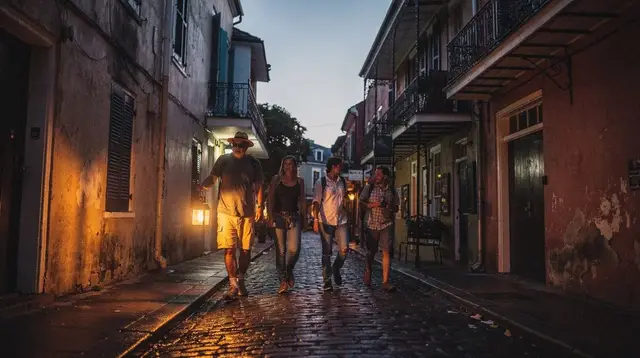
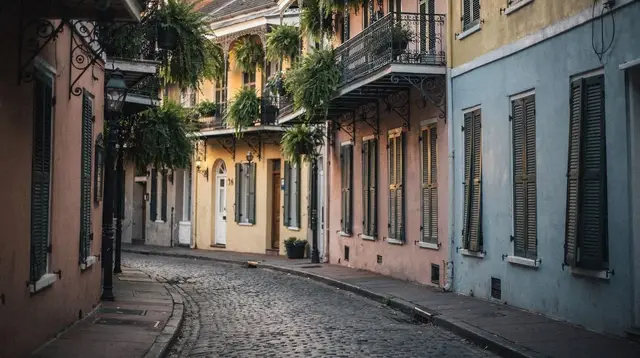
Ghost and Vampire Tours in New Orleans
What is the best ghost or vampire tour in New Orleans?
There is no single best tour because the category covers two different products: serious walking tours that treat Voodoo, cemeteries and local history carefully, and entertainment-first vampire or true-crime tours built for a fun night out. Pick based on which one you actually want, and always confirm any cemetery stop is with an authorised guide.
New Orleans is built around a real, and a performed, history of the dead
No category on this site has more listings than ghost and vampire tours: 48 separate offers, at last count, cover everything from serious historical walks through the French Quarter to loud, costumed vampire nights aimed squarely at a fun evening out. That range is the point of this page.
Rather than reviewing every operator, it explains what actually separates a careful tour from a purely entertainment one, and it does that at the scale of the whole city rather than street by street. For block-level detail on the Vieux Carre itself, its courtyards and its named haunted addresses, the companion guide to French Quarter ghost and vampire tours picks up where this page leaves off.
The city earns its reputation honestly. Much of New Orleans sits at or below sea level, its cemeteries bury the dead above ground because the water table will not allow otherwise, and its history includes yellow fever epidemics, piracy, and a slave economy whose legacy the city is still working through. Ghosts, in other words, are not an invented marketing hook here the way they might be elsewhere; the raw material long predates the tour industry built on top of it.
Two different products wearing the same marketing
Before booking anything, it helps to separate two categories that get sold with near-identical branding.
Serious history tours treat Voodoo, cemeteries and death customs as cultural and religious subjects, led by guides who cite sources, correct myths on the spot, and are often licensed specifically to enter cemetery grounds. Entertainment-first tours use ghosts and vampires as a costume for a good night out: dramatic storytelling, jump scares, and sometimes very loose history in service of atmosphere. Neither approach is wrong for what it is, but they suit different travellers, and the same company can offer both kinds of product under different tour names.
A few practical tells help before you book: does the description name specific historical figures and dates, or only atmosphere and adjectives; does it mention a licensed cemetery guide if a cemetery stop is included; and does it target families and daytime slots, or an adults-only evening crowd. None of these alone is proof, but together they give a reasonable read.
The real history behind the theme: Voodoo and Marie Laveau
The single most common confusion sold to visitors is treating Louisiana Voodoo as a spooky theme-park attraction. It is not. Voodoo in Louisiana is a real syncretic religion, blending West African spiritual traditions brought by enslaved people with Catholic saints and ritual, and it is still practised today, quietly, by actual adherents rather than performers. A tour that reduces it to jump-scares and gift-shop dolls is missing, or ignoring, that history.
Marie Laveau is the figure most tours build around, and she deserves the same care. She was a real nineteenth-century woman, widely known in her lifetime as the Voodoo Queen of New Orleans, a free woman of colour who combined healing, religious leadership and considerable social influence. She is buried in St Louis Cemetery No. 1, and her tomb remains one of the most visited grave sites in the city.
Crucially, that cemetery cannot be entered independently: St Louis Cemetery No. 1 is accessible only as part of an authorised guided tour, a rule that exists to protect fragile above-ground tombs from decades of souvenir-hunting and graffiti. Any tour promising a stop there should be using a properly licensed guide, not slipping a group in informally.
The best tours in this category state plainly that they are covering religious and cultural history, treat Voodoo practitioners as living people rather than props, and separate documented biography of Marie Laveau from the folklore that has grown up around her since. The weaker ones blur all of that into generic “curse and mystery” narration.
From the Vieux Carre to the Garden District: the city-wide picture
Ghost tourism in New Orleans is not confined to one neighbourhood, and this page’s job is to show how the pieces fit together across the whole city, before you narrow down to a single walk.
The French Quarter, laid out around Jackson Square and the St Louis Cathedral, is the historical core of almost every itinerary: narrow streets, hidden courtyards, buildings that survived the city’s great fires, and a concentration of reputedly haunted addresses that no other neighbourhood matches. St Louis Cemetery No. 1 sits just outside the Quarter’s formal boundary and is where most Voodoo-focused walks end up, guide in hand.
Uptown, the Garden District offers a different register entirely: wide, tree-lined streets, antebellum mansions along St Charles Avenue, and Lafayette Cemetery No. 1, whose rows of above-ground tombs are arguably as striking, if less crowded, than anything in the Quarter.
Some tours combine a French Quarter evening with a separate Garden District daytime walk; a smaller number link the two directly, often riding the historic streetcar between them. If your time is limited to one neighbourhood, the Quarter delivers more ghost-story density per block, while the Garden District rewards visitors more interested in architecture and quieter cemetery walking.
Further out, Treme, just north of the Quarter, carries its own weight of history as one of the oldest African American neighbourhoods in the country, though it appears less often in ghost-tour marketing than in the city’s music and heritage circuits; see African American heritage in New Orleans for that thread.
What the 48 tours actually cover, grouped by type
| Tour type | What it typically includes | Best suited to |
|---|---|---|
| Walking ghost tours (French Quarter) | Narrated walk past reputedly haunted buildings, courtyards, occasional cemetery view from outside | First-time visitors wanting classic ghost stories |
| Vampire and true-crime tours | Dramatised local legends, real historical crimes, costumed or theatrical guiding | Visitors after atmosphere and entertainment over strict accuracy |
| Voodoo history tours | Religious and cultural history, sometimes a licensed cemetery stop, focus on Marie Laveau | Travellers who want the real story, not just the scare |
| Combination passes | Bundle a ghost or Voodoo walk with unrelated attractions, museums or a city tour | Visitors optimising for value across several activities |
| Cemetery-inclusive tours | Only these can legally bring you inside St Louis Cemetery No. 1, via a licensed guide | Anyone specifically wanting to see Marie Laveau’s tomb |
Two hours on foot is the standard length for most walking options; combination passes run longer because they cover more ground and more stops.
Choosing a tour that matches what you actually want
If your priority is understanding the real cultural and religious history behind New Orleans’ reputation, look for tours explicitly framed around Voodoo history or cemetery heritage rather than vampires, and confirm any cemetery visit uses a licensed guide. The New Orleans: Voodoo Tour is built around exactly that angle, tracing Voodoo’s real history through the city rather than treating it as costume.
If you want a fun, atmospheric evening without worrying too much about strict historical accuracy, tours blending vampires, ghosts and local legend into one theatrical walk deliver that well. The New Orleans: Vampires Voodoo and Ghosts Tour and the shorter 2 Hour New Orleans Ghosts Vampires Walking Tour both sit in this entertainment-first lane, good options for a group looking for a memorable night rather than a history lecture.
Travellers drawn to the darker, factual side of the city’s past — actual unsolved crimes and documented tragedies alongside the folklore — are better served by a tour that names itself accordingly, such as the New Orleans: Ghost True Crime Voodoo and Vampire Tour, which mixes true-crime narrative with the Voodoo and ghost-story material rather than leaning on invented legend alone.
Whichever type you choose, treat any cemetery stop as a marker of legitimacy rather than a bonus feature: a tour that cannot legally take you inside St Louis Cemetery No. 1 should not imply that it can, and one that genuinely does should be using a guide licensed for that specific cemetery.
Practical planning notes
Evening is the default time slot for most ghost and vampire tours, since atmosphere depends on it, though a handful of daytime and family-oriented Voodoo history walks exist for travellers who would rather skip the crowds and heat of a summer night. Comfortable shoes matter more than costume: French Quarter sidewalks are old, uneven brick and flagstone, and Garden District routes involve longer stretches of walking between sights.
Mosquitoes are a real consideration from late spring through early autumn, especially near cemetery greenery, so repellent is worth packing alongside a light rain layer, since most walking tours proceed regardless of weather. Groups travelling with children should check a tour’s description carefully: true-crime and vampire-themed walks often lean into graphic detail unsuitable for younger visitors, while straightforward historical walks are generally fine.
For a broader view of what else sits in this category and how it compares neighbourhood by neighbourhood, see ghost tours in New Orleans compared, and for the specific question of vampire folklore’s roots in the Quarter, vampire lore and the French Quarter goes deeper than this page’s city-wide scope allows. Anyone planning a first visit more broadly should also read New Orleans for first-time visitors and is New Orleans safe for tourists before finalising an evening itinerary that has you walking quieter streets after dark.
If you are bundling several attractions into one trip rather than booking single tours, a wider pass is worth comparing against buying tours individually; the New Orleans: Power Pass covers a broad range of the city’s attractions for travellers who want flexibility beyond ghost tours alone.
Ghost and Voodoo tours in New Orleans: your questions answered
Is Voodoo real in New Orleans, or is it a tourist show?
Voodoo is a real syncretic religion with African and Catholic roots, still practised in Louisiana today. Some tours treat it as serious cultural history, others package it purely as spooky entertainment, and it is worth knowing which one you are booking.
Who was Marie Laveau?
Marie Laveau was a real nineteenth-century Voodoo Queen of New Orleans, a historical figure rather than a legend. She is buried in St Louis Cemetery No. 1, which can only be visited with an authorised guide.
Can I visit St Louis Cemetery No. 1 on my own?
No. St Louis Cemetery No. 1 can only be entered as part of an authorised guided tour; independent visits are not permitted. This is one of the main reasons ghost and Voodoo tours that include a cemetery stop use licensed guides.
Are ghost tours in New Orleans suitable for children?
Some are, some are not. Family-friendly walking tours focus on history and architecture with light spooky framing, while true-crime and vampire-themed tours lean into graphic detail and are aimed at adults.
Do ghost tours cover the French Quarter only, or other neighbourhoods too?
Most ghost and vampire tours concentrate on the French Quarter, but several extend into the Garden District to see its above-ground tombs, including Lafayette Cemetery No. 1, and some combine a Quarter walk with a Garden District streetcar leg.
What should I wear or bring on an evening ghost tour?
Comfortable walking shoes for uneven Quarter sidewalks, a light layer even in summer since courtyards can be breezy, and mosquito repellent in warmer months. Most evening tours run rain or shine, so a compact umbrella is worth carrying between roughly May and October.
Is Bourbon Street part of these tours?
Some vampire and party-oriented tours start or end near Bourbon Street because of its bars, but the historical content itself is drawn from quieter side streets, courtyards and cemeteries away from the noise.
How long do ghost and vampire tours usually run?
Most walking tours run around two hours, on foot, at a relaxed pace covering a mile or two of the Quarter and sometimes an adjoining neighbourhood. Combination passes that bundle a ghost tour with other attractions can span a full day.
Ghost and vampire tours on GetYourGuide
Verified deep-linked GetYourGuide tours. Book through these links and we earn a small commission at no cost to you.
GetYourGuide does not provide a product photo for this activity — the image shows the meeting point, photographed by us.