Five Days: City, Swamp and River Road
Two directions, two very different landscapes
This five-day plan sends a car in two directions from the French Quarter and keeps them separate on purpose. East of the city, past Slidell, the Pearl River spreads into the cypress wetlands of Honey Island Swamp, reached by boat rather than on foot. West of the city, the River Road follows the Mississippi through plantation country, where several historic sites — not just one — sit within easy reach of each other.
The swamp trip is wildlife and landscape; the plantations are history, much of it hard, built around the people who were enslaved there. Keeping the two apart, on different days, is the whole point of this itinerary: they are not variations on the same excursion, and this trip never treats them as one.
The car isn’t a single day’s rental here — it’s with you from Day 3 onward, covering roughly two hours of driving total across the week, split between the two directions.
It helps to hold the geography in mind before setting out. New Orleans sits on a bend of the Mississippi River, not on the coast — the city is wedged between the river and Lake Pontchartrain, a large brackish lake to the north, and much of it lies at or below sea level, held dry by levees and pumps rather than by elevation. It is also not Louisiana’s capital; that’s Baton Rouge, further upriver, which is why this itinerary’s plantation day heads toward Baton Rouge rather than away from it. Almost everything in this five-day plan — the swamp, the River Road plantations — lies within about two hours of the French Quarter, which is what makes a single rental car practical for the whole week rather than needing to relocate a hotel base partway through.
Day 1: The French Quarter on foot
Start in the French Quarter itself, a compact grid roughly 13 by 6 blocks that rewards walking rather than driving. Begin at Jackson Square, with St Louis Cathedral, the Cabildo and the Presbytere framing the square, then work down Decatur Street to the French Market and Cafe du Monde for beignets. Royal Street, one block over, carries the galleries and antique shops; Bourbon Street, another block on, carries the bars — worth a look by day, when it’s far quieter than its reputation suggests.
Spend the afternoon on the history layered into these few blocks: guided walking tours cover architecture, hauntings and the city’s Creole past in different mixes, and this is a good day to book one.
a guided walk through the Quarter’s haunted history after darkFor more on how to sequence the neighbourhood block by block, see the French Quarter walking guide. There’s no need for a car yet, and no reason to rent one before Day 3 — the French Quarter, the Garden District streetcar and Frenchmen Street are all reachable on foot or by public transit, and parking in the Quarter is tight and metered. For food along the way, beignets, po-boys and gumbo: where to eat covers the classics without needing a car to reach any of them, and tipping and sales tax in New Orleans is worth a read before the first restaurant bill arrives.
Day 2: Music, cemeteries and the Garden District
Morning: St Louis Cemetery No. 1, the city’s oldest and most photographed cemetery of above-ground tombs, can only be entered with an authorised guide — there’s no independent access — so book ahead.
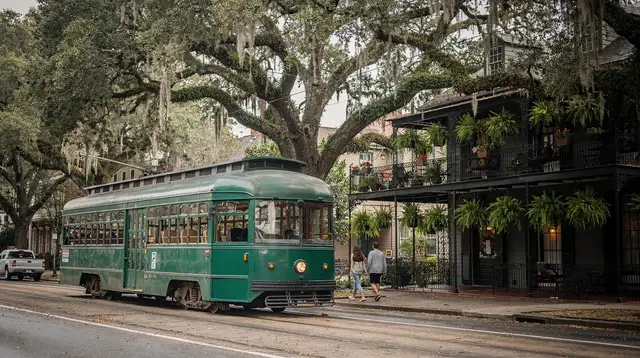
a combined cemetery, French Quarter and voodoo history tourAfternoon: ride the St Charles streetcar, the oldest continuously operating street railway in the world, uptown into the Garden District for its antebellum mansions and Lafayette Cemetery No. 1, whose above-ground tombs are gentler viewing than St Louis No. 1’s guided-only visits, and can be walked independently. In the evening, head downriver to Frenchmen Street in the Faubourg Marigny — the live-music strip locals actually go to, distinct from Bourbon Street. Background on that distinction is in Frenchmen Street vs Bourbon Street, and on the neighbourhood’s deeper musical roots — running back to Congo Square and Louis Armstrong Park in Treme — in Treme and the birth of jazz. Anyone tempted to fold live music into every night of this trip should read live jazz in New Orleans: a nightly guide first, since venues and start times shift by night of the week.
Day 3: East to Honey Island Swamp
Pick up the rental car (or your tour’s pick-up) and head east, past Slidell, to the Pearl River and Honey Island Swamp. This is cypress wetland, draped in Spanish moss, home to alligators, egrets and herons — and it’s a genuinely different landscape from anything in the city or along the river to the west. A flat-bottomed boat gets into narrower channels than an airboat and tends to suit wildlife-watching better; both are common options.
a guided boat tour through the swamp’s cypress channels, transportation includedWorth stating plainly: alligators are much less active in cold weather, so don’t expect the same sightings on a cool-season trip as on a warm one. Travellers who want a different angle on the same wildlife, or who are visiting outside the warmest months and want to maximise the odds of a sighting, can also consider an evening option.
For a fuller comparison of swamp-tour formats, see swamp tours compared: airboat vs boat, and for the wildlife itself, alligators and wildlife in the bayou. Return to the city by evening.
Day 4: West along the River Road
This is where a full day with a car pays off. Rather than stopping at a single plantation, the River Road between New Orleans and Baton Rouge lines up several distinct sites, each telling its history differently, and a car lets you choose more than one.
Oak Alley Plantation is the most photographed, its quarter-mile alley of live oaks leading to the main house. Laura Plantation tells its story from the Creole family’s own written records. Whitney Plantation is the first museum in the United States built entirely around the history of the enslaved people who lived and worked there — not a garden tour, and not romantic history. Destrehan Plantation, the closest to the city, is a practical add-on if time allows. Further along the road, St Joseph Plantation is still a working sugar-cane estate rather than a museum piece, and San Francisco Plantation and Houmas House round out the route for anyone with a full extra day to spare — see river Road plantations day trip from New Orleans for how far each one sits from the others.
an entry ticket to the River Road African American Museum, which tells the region’s history from records and oral accounts rather than from the plantation houses themselves
A realistic day pairs two sites — commonly Oak Alley or Laura with Whitney — rather than trying to cover all four; each visit runs an hour to ninety minutes with guided tours. For help choosing, read plantations along River Road compared and Whitney Plantation and the history of slavery. Never treat this day as a scenic drive with a house at the end of it — the subject is the people who were held there, and the museums differ sharply in how directly they tell that story.
| Plantation | Distance from New Orleans | Focus |
|---|---|---|
| Destrehan | ~30–40 min | Closest, colonial-era house |
| Oak Alley | ~45–60 min | Live oak alley, architecture |
| Laura | ~50–60 min | Creole family records |
| Whitney | ~50–60 min | History of slavery, told from that perspective |
Day 5: City Park, museums or a last swamp-free morning
With the car still in hand, use the final day for whatever the week left out: Mid-City’s City Park and the sculpture garden and the New Orleans Museum of Art, the National WWII Museum in the Warehouse District, or a slower morning back in the Quarter before an afternoon flight from MSY, roughly 25–40 minutes from downtown by road. Return the rental car before heading to the airport if you haven’t already.
FAQ: planning a five-day New Orleans, swamp and River Road trip
Do I need a car for this five-day itinerary?
Yes. The French Quarter itself is walkable, but Honey Island Swamp and the River Road plantations are only reachable by road, either with a rental car or an organised tour that includes hotel pick-up. This itinerary treats the car as the tool for the whole week, not just one day.
Are the swamp tour and the plantation tours the same kind of excursion?
No, and it matters. The swamp trip is a boat or airboat ride through cypress wetlands to see wildlife. The plantations are historic sites built around the story of enslaved people who were held and worked there. They sit in opposite directions from the city and belong to different days of this trip, never combined into one outing.
Will I definitely see alligators at Honey Island Swamp?
Sightings are common but never guaranteed. Alligators are cold-blooded and are much less active in cold weather, so a trip planned in the cooler months should expect fewer and shorter sightings than one made in warmer weather.
Which plantation should I prioritise if I only have time for two?
Most visitors pair Oak Alley, for its quarter-mile alley of live oaks and plantation-house architecture, with Whitney Plantation, the first museum in the United States built specifically around the history of slavery. Laura Plantation is a strong third choice for its detailed Creole family records.
Can I drive myself to the plantations, or should I book a tour?
Both work. A rental car gives you the freedom to choose which plantations to see and how long to stay at each; a guided tour with hotel pick-up removes the driving and often bundles two sites with narration in between. Either way, book plantation tour slots in advance, especially in high season.
Is Honey Island Swamp part of Cajun country?
No. Honey Island Swamp sits on the Pearl River near Slidell, east of New Orleans, in bayou and wetland country. Cajun Louisiana is centred on Lafayette and Acadiana, roughly two hours west — a separate cultural region with its own food, music and history.
How much driving does this itinerary involve?
Modest by US standards. Slidell is under an hour east of the French Quarter. The River Road plantations lie roughly 45 minutes to an hour and a half west of the city, on both banks of the Mississippi, so the two out-and-back drives bookend two days of city walking in between.
tours.5 days
Verified deep-linked GetYourGuide tours. Book through these links and we earn a small commission at no cost to you.
GetYourGuide does not provide a product photo for this activity — the image shows the meeting point, photographed by us.