Drinking in the Street Is Legal Here — the Actual Rule
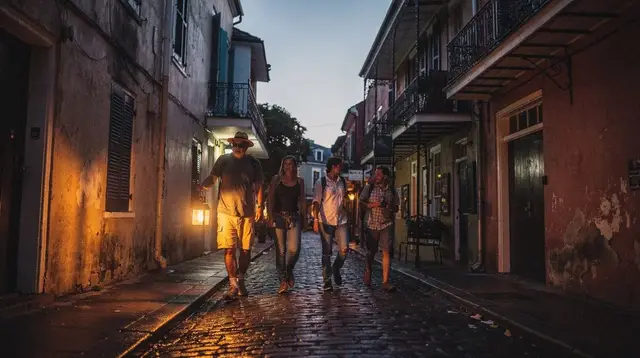
The first time I stepped out of a bar in the French Quarter with a drink still in my hand, I genuinely expected someone to stop me. Where I’m from, walking down a public street holding a cocktail is the kind of thing that gets you a fine, or at least a look. Nobody stopped me. Nobody even glanced twice. That’s when it actually sank in: this is one of the very few places in the United States where drinking on the street is not just tolerated, it’s built into how the neighbourhood works.
But “you can drink on the street here” is the kind of half-true rumour that gets people into trouble, because visitors hear the first half and skip the details. So here is the rule, in full, the way I had to piece it together from actually living it for a week rather than from a bar napkin.
The rule, precisely
New Orleans allows open containers of alcohol on public streets, but the tolerance comes with three hard conditions, and all three have to be true at once.
- The container must be plastic, never glass. If you buy a drink in a glass or a bottle, you cannot walk out with it as-is. Bars in the French Quarter are used to this and will pour your drink into a disposable plastic cup — a “go-cup” — the moment you say you’re heading out. Some hand you a go-cup automatically when you order at a walk-up window. Carrying a glass bottle or an open can outside is not covered by the exception and can get you cited.
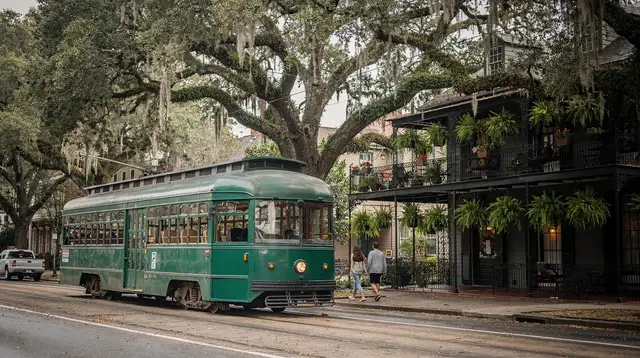
- The location has to be inside the permitted zone, which is the French Quarter itself — not the whole of New Orleans. Step over into the Garden District, Uptown, the Central Business District, or really anywhere outside the Quarter’s boundaries, and the ordinary rule applies: open containers on the street are illegal, exactly as they would be in most American cities. I made the mistake of assuming the rule travelled with me on a walk toward the Garden District one afternoon and got a polite but clear correction from a shop owner who’d clearly explained this a hundred times before.
- You have to be 21 or over, and it is genuinely checked. Louisiana’s legal drinking age is 21 like the rest of the US, and bars and package stores in the Quarter ID people routinely, including visitors who look well past their twenties. Bring a passport or another form of photo ID if you plan to order anything.
Put those three together and the actual sentence is: plastic cup, French Quarter, 21+. Not “New Orleans lets you drink anywhere,” which is the version that circulates online and gets people an unpleasant surprise a few blocks from where they started. If you’re still working out how the rest of the city’s rules apply to a first visit, it’s worth reading through New Orleans for first-time visitors and the list of travel mistakes to avoid before you land — the go-cup rule is only one of several things that catch people out.
Why the plastic-cup rule exists
It’s not an aesthetic choice. Glass on a street this busy, this late, with this much foot traffic, is a hazard — broken bottles on a sidewalk crowded with people in flip-flops are a genuinely bad combination. The go-cup system lets the city keep the tradition of open-air drinking that’s part of the Quarter’s character, especially around Bourbon Street and its side streets, without turning every night into a glass-cleanup operation. It’s a pragmatic compromise, and once you see it that way, the rule stops feeling arbitrary and starts feeling like it fits the place.
Where the boundary actually sits
The permitted area tracks the French Quarter itself, the roughly 13-by-6 block grid laid out around Jackson Square. If you’re inside that grid, drinking in a plastic cup on the street is fine.
If you’re crossing into the Central Business District on your way back to a hotel, or heading toward Frenchmen Street in the Faubourg Marigny for the live music, check before you assume — the two neighbourhoods sit right next to each other and the rule doesn’t automatically extend. I’d rather finish a drink at the bar or ask staff to pour it out than carry an open cup somewhere it isn’t covered, especially at night when a citation is the last thing you want to deal with.
If Frenchmen Street is on your list for the evening anyway, it’s worth reading up on live jazz in New Orleans and on New Orleans jazz, music and nightlife more broadly, so you know which side of the boundary you’ll be on before you order a drink to go.
What I actually did with this rule
Honestly, once I understood the boundaries, it changed how I moved through an evening. Instead of nursing one drink at a table for two hours, I’d finish one bar, step outside with a go-cup, and walk to the next place while I finished it — which is exactly the rhythm a lot of locals and repeat visitors fall into. It’s also, incidentally, part of what makes a guided pub crawl work so well here: someone else handles the route and the pacing, and you just enjoy the walk between stops.
I ended up doing a haunted pub crawl through the French Quarter one night mostly out of curiosity about the ghost stories, and the go-cup rule turned out to be exactly why the format works at all — you’re not stuck finishing a pint before the group moves on. There’s also a similar evening pub crawl option if the first one’s schedule doesn’t line up with yours. If you want to weigh up the different formats before booking, our ghost tours in New Orleans compared guide runs through how the walking, pub-crawl and cemetery options differ.
If your evening runs the other direction — out toward the coast rather than deeper into the Quarter — the open-container rule obviously doesn’t apply once you’re in a vehicle, but it’s worth knowing that a haunted bayou cruise near Bay St Louis is a very different, much quieter kind of evening if you want a break from the Quarter’s crowds entirely.
What can still go wrong
The two mistakes I saw other visitors make, repeatedly, in one week: walking out with a glass bottle because they assumed the whole city was covered, and assuming the tolerance meant “no rules at all,” which isn’t true either — public drunkenness, disorderly conduct and underage drinking are all still enforced normally. The go-cup exception is narrow and specific, not a blanket licence. Treat it as exactly what it is — a practical local allowance for one particular neighbourhood — and it’s a genuinely pleasant part of a French Quarter evening rather than a source of confusion.
Related practical reading
A few other pages fill in the gaps around this one. If you’re still figuring out how many nights to build your trip around, how many days in New Orleans and our two days in New Orleans itinerary both cover an evening in the French Quarter as part of a wider plan. For tipping and the extra tax added at the till — another thing that surprises first-time visitors as much as the go-cup rule does — see tipping and sales tax in New Orleans. And if cocktails are as much a part of your trip as the go-cup rule, cocktails of New Orleans, Sazerac to Hurricane explains what’s actually worth ordering once you’re inside a bar rather than out on the street.
FAQ: the open-container rule in New Orleans
Can I drink alcohol on any street in New Orleans?
No. The allowance is specific to the French Quarter. Outside that area — the Garden District, Uptown, the CBD, anywhere else in the city — open containers on the street are illegal, the same as in most American cities.
Do I need a special cup, or can I just carry my drink outside?
You need a plastic cup, commonly called a go-cup. Bars routinely transfer your drink from glass into a plastic cup when you’re heading out; carrying an open glass bottle or can onto the street is not covered by the rule.
What’s the legal drinking age in Louisiana?
21, checked with photo ID. Bring a passport or another accepted form of ID if you plan to order alcohol anywhere in the city, including in the French Quarter.
Is Frenchmen Street covered by the same rule?
Frenchmen Street sits in the Faubourg Marigny, just outside the French Quarter boundary, so don’t assume the go-cup rule automatically extends there. Check locally rather than guessing.
Can I bring a drink into a taxi or rideshare car?
No. Open containers are not permitted inside vehicles regardless of the street rule, and drivers can refuse a fare over it.
Does the rule apply during Mardi Gras or other festivals?
The same French Quarter boundary and plastic-cup requirement apply during Mardi Gras and other events, though enforcement and crowding both intensify, so keep your cup visible and your ID on you. See our Mardi Gras guide for visitors for what else changes during the parades.
Will I get in trouble for carrying a drink one block outside the Quarter?
Yes, this is treated as a genuine open-container violation outside the permitted zone, not a technicality that’s overlooked. Finish your drink, or ask the bar to hold it, before you cross the boundary.
Is public drunkenness still against the law inside the Quarter?
Yes. The go-cup rule only covers the container and the location; disorderly conduct and public intoxication are enforced normally throughout the city, including inside the French Quarter.
tours.Practical
Verified deep-linked GetYourGuide tours. Book through these links and we earn a small commission at no cost to you.
GetYourGuide does not provide a product photo for this activity — the image shows the meeting point, photographed by us.