The French Quarter Before Breakfast
There is a version of the French Quarter that most visitors never quite meet, because by the time they arrive it has already filled in around the edges with noise, heat and other people’s plans. I found it almost by accident, the first time jet lag pulled me out of a Marigny guesthouse well before the city had properly woken up, and I have gone looking for it again on every visit since.
What changes when the crowds haven’t arrived yet
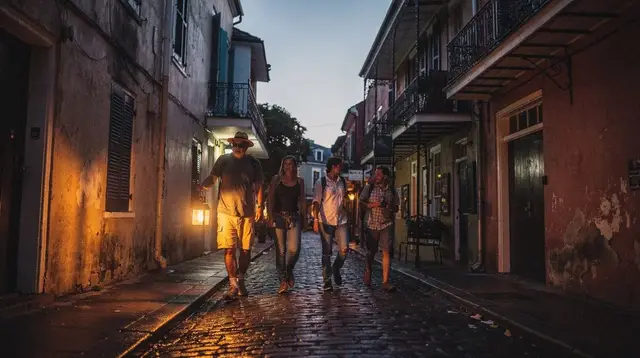
The French Quarter is the oldest part of New Orleans, the original Vieux Carre laid out by French engineers as a tight grid of roughly thirteen blocks by six, wedged between Rampart Street and the river. Walk that grid at the hour when the sky is turning but the shopfronts are still shuttered, and the geometry does the work that a guidebook usually has to explain. You notice how narrow the streets actually are, how the wrought-iron balconies of Royal Street lean out just far enough to shade the banquette below, how the whole neighbourhood was built for people on foot, not for the volume of people who eventually arrive on it.
Royal Street in particular belongs to this hour. By mid-morning it is one of the best places in the city to browse galleries and antique shops, but at dawn the same storefronts are simply closed, their windows lit only by whatever the sky is doing, and the street itself becomes a corridor of ironwork and shutters with almost nobody in it. I have stood at intersections along Royal Street that I would never dream of stopping in later in the day, just to look down the block in both directions.
Walking out from a Marigny guesthouse the way I did, the contrast starts before you even reach Rampart Street. Frenchmen Street at that hour is the tail end of the night before, still smelling faintly of the clubs, while the Quarter proper is already turning over into something closer to stillness. Crossing that line on foot, early enough that both versions of the neighbourhood are still half-visible, is part of what makes the walk worth doing at all.
Jackson Square in the pause before the day starts
Jackson Square is the heart of the Quarter’s original layout, the formal park that the French and Spanish colonial city was arranged around, facing the river with St Louis Cathedral, the Cabildo and the Presbytere forming its landmark backdrop. During the day it is animated in a very specific way: street musicians, tarot readers, portrait artists and a steady current of visitors moving through. Early, all of that is switched off, and what is left is the square itself — its central path, its iron fence, the three colonial-era buildings holding their positions against the sky.
St Louis Cathedral is the oldest continuously active Catholic cathedral in the United States, and its facade catches the first direct light before almost anything else in the Quarter does, simply because of which way the square faces. The Cabildo, where the Louisiana Purchase transfer documents were signed, and the Presbytere beside it sit in that same light, and for a few minutes the three of them look less like a postcard and more like the working seat of a colonial city that they actually were. It is a strange, useful thing, seeing a landmark before its meaning has been reasserted by a hundred other people looking at it too.
The sound of a neighbourhood people actually live in
What surprised me most, on that first accidental early walk, was how residential the French Quarter still felt. Bourbon Street’s night reputation and Decatur Street’s daytime bustle around the French Market can make it easy to forget that people live behind those balconies, and early morning is when that becomes obvious again — a door opening, someone sweeping a stoop, a delivery being carried in through a carriageway.
The Quarter’s daytime life, the music drifting from doorways, the crowds moving toward the French Market, the pull of Frenchmen Street after dark, all of it comes later. What I am describing is the pause before any of that starts, and it is worth experiencing on its own terms rather than as a warm-up act for the rest of the day.
Even the cemeteries feel different in the abstract at that hour, though visiting one is its own separate undertaking with its own rules — the above-ground tombs the city is known for, like those at St Louis Cemetery No. 1, only open with an authorised guide, and that is a plan for later in the day, not for a solitary dawn walk.
Why this hour rewards patience rather than a checklist
I don’t think of this as a list of things to see before breakfast, because that misses the point of it. The value is in slowing down enough to notice a neighbourhood that is usually experienced at speed: the particular grey-gold light that New Orleans mornings often have near the river, the sound of your own footsteps actually being audible on Chartres or Dauphine, the sense that the Cabildo and Presbytere are just buildings again, not backdrops.
It pairs naturally with everything the Quarter is known for once the day gets going — its jazz and nightlife, its history along Decatur Street, even the ghost stories that come out after dark, when a guided walk through the Quarter’s older, stranger corners makes a very different kind of evening than the one I am describing here.
If the Quarter’s calm hours make you curious about its other layers, the after-dark side of the same streets is worth booking ahead: a guided walk through the Quarter’s ghost lore covers many of the same corners once the light and the crowd have both changed completely, and a later evening ghost walk through the Vieux Carre leans further into that contrast.
For a day trip that extends the same instinct for quiet, older places out along the River Road, a guided tour of St Joseph Plantation is worth planning for another morning entirely.
Making the most of an early start in the Quarter
None of this requires any particular expertise or a fixed route. It requires being awake before the neighbourhood fully is, and being willing to walk without an agenda for half an hour or so. The grid is small enough that you cannot really get lost, and Jackson Square, the cathedral and Royal Street are close enough together that a loop between them takes no real planning. What it gives back is a version of the French Quarter that most people simply never see, because by the time they are up and out, the city has already moved on without them.
If you would rather follow someone who already knows the grid, several operators run walking tours of the Quarter that cover the same streets with the history filled in; they just run later in the day than the walk I am describing. And if this is your only morning in the city before moving on to the plantations or the swamps, it is worth checking how many days actually suit the rest of what you want to see, since a single early walk is a good start but rarely the whole visit.
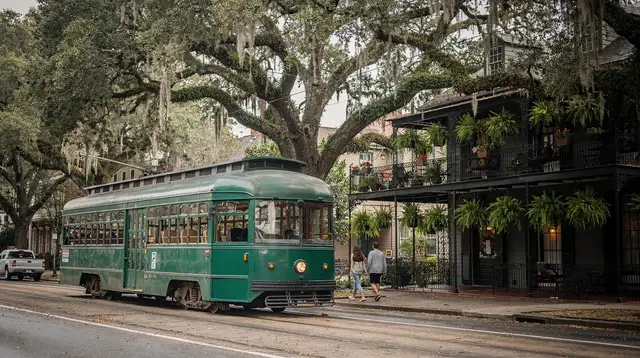
The same instinct — going out before a neighbourhood’s public hours start — works a few streetcar stops away too. The Garden District has its own quiet version of this, with the antebellum mansions along St Charles Avenue catching early light before the tour groups arrive, and it pairs naturally with a French Quarter dawn walk if you are building out a two-day visit rather than a single morning.
Questions about seeing the French Quarter early
Is the French Quarter safe to walk early in the morning?
The core blocks around Jackson Square, Royal Street and the cathedral are generally quiet and low-key at dawn rather than deserted, and this is a well-trodden part of the city. As anywhere, stick to the main, lit streets and use ordinary judgement rather than wandering the fringes alone.
What time does the French Quarter start to feel quiet, and when does it fill up?
This site does not state a fixed hour, since foot traffic builds gradually rather than switching on at a set time. In practical terms, the earlier you are out, the quieter the streets and Jackson Square will feel, with the neighbourhood filling in steadily as the morning goes on.
Can I go inside St Louis Cathedral early in the morning?
Opening hours are not something this page states, since they can change. The cathedral’s facade and Jackson Square itself are the draw described here; check current hours locally if you want to go inside.
Is this the same walk as a guided French Quarter tour?
No. This is a description of walking the neighbourhood informally, on your own, for the atmosphere rather than a structured itinerary. A guided walking tour of the Quarter is a different, more informative experience and a good complement rather than a substitute.
Does an early walk work well with a ghost tour later that day?
Yes, and the contrast is part of the appeal — the same streets read very differently once evening falls and a guided ghost walk leans into their older, stranger stories.
Should I plan breakfast into this walk, or do it before eating?
This page is deliberately about the walk itself rather than any particular meal stop, including the well-known queue at Cafe du Monde, which is covered on its own elsewhere on this site. Treat the walk and breakfast as two separate decisions.
Is Royal Street open for browsing at this hour?
No — the galleries and antique shops along Royal Street are part of its daytime life. Early on, the appeal is the closed storefronts and quiet ironwork rather than any shopping.
Do I need to book anything for an early walk through the Quarter?
No. Walking the neighbourhood on your own before the day gets going costs nothing and needs no reservation. Bookings only come into play for guided experiences like a ghost tour or a River Road plantation visit later on.
Does the time of year change how this walk feels?
Some. Humidity, light and how early the sun rises all shift across the year, so the exact hour that feels quiet and comfortable moves with the season — see this site’s best time to visit guide if you are still choosing when to come.
tours.Inspiration
Verified deep-linked GetYourGuide tours. Book through these links and we earn a small commission at no cost to you.
GetYourGuide does not provide a product photo for this activity — the image shows the meeting point, photographed by us.