Frenchmen Street After Midnight
The first time someone in New Orleans told me to skip Bourbon Street, I didn’t believe them. I’d flown in for four days, I had one night free, and every list I’d read before the trip put Bourbon Street at the top. A bartender at my hotel just shook her head. “That’s for tourists who want to drink,” she said. “If you want to hear music, go to Frenchmen.”
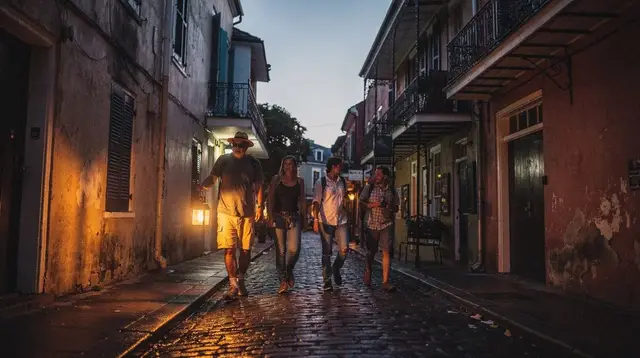
So around eleven that first night I walked it myself: out of the French Quarter, past Esplanade Avenue, into the Faubourg Marigny, until the crowd thinned and a different kind of noise started spilling out of open doorways. Not the piped-in pop and the hurricane-cup chaos I’d just left behind, but an actual band, playing to a room that was listening. That was Frenchmen Street, and by one in the morning I understood exactly what she meant.
Two streets, two different nights
Bourbon Street and Frenchmen Street are barely a kilometre apart, but they are not the same kind of evening. Bourbon is loud, bright and built for crowds: bars with cover bands piping music onto the sidewalk, daiquiri shops, the whole street closed to cars most nights so people can walk with a drink in hand. It’s not fake, and I don’t think anyone should feel bad about going — it’s a genuine New Orleans institution, and the open-container rule that lets you carry a plastic go-cup down the street is one of the city’s real quirks. But it is built around volume, not listening.
Frenchmen Street is smaller, darker and quieter in the sense that matters: when a band plays, people actually stop talking. It runs a few blocks through the Marigny, just past where the French Quarter’s grid gives out, lined with clubs stacked close together — brass bands in one room, a jazz trio next door, funk or blues a few steps further on. Locals go there on a Tuesday, not just to show visitors something. That’s the difference I keep coming back to: Bourbon Street is performed for tourists, Frenchmen Street just happens to let you in.
I’ve written up the two streets side by side in more detail in Frenchmen Street vs Bourbon Street, and if you’re still weighing whether Bourbon Street deserves any of your night at all, is Bourbon Street worth it goes into that question on its own. If you’d rather have a fixed-route, guided way to see Bourbon Street’s bars without wondering where to go next, I’ve also taken a guided Bourbon Street bar crawl with shots, which is a fair way to do that street properly before or after a Frenchmen Street night.
Why locals point you there
I’ve asked several people who live in New Orleans where they’d actually spend a Friday night, and Frenchmen Street comes up almost every time — not because it’s secret (it stopped being a secret a long time ago) but because it’s still where the music is the point. Cover charges tend to be modest, some rooms have none at all, and it’s entirely normal to duck out of one club mid-set and wander into another because you can hear something better through the next door. That kind of drifting, ear-led evening is hard to have on Bourbon Street, where the crowd itself is the main event.
It also helps that Frenchmen Street is compact. Most of the clubs sit within two or three blocks, so you’re not trekking between venues — you’re crossing a street, maybe two. I usually treat it as a loose crawl rather than a plan: start somewhere with a band you like the sound of from outside, stay as long as it’s good, move on when it isn’t.
If live music generally, not just this one street, is what’s pulling you to New Orleans, it’s worth reading New Orleans jazz, music and nightlife and live jazz in New Orleans: a nightly guide before you land — Frenchmen Street is the anchor of a night out, but it isn’t the whole picture.
What a night there actually looks like
If you want structure rather than pure wandering, a guided pub crawl through the street’s clubs takes the guesswork out of a first visit — someone who already knows which rooms are worth ten minutes and which have the better band that night. I’ve done the VIP live music pub crawl along Frenchmen Street on an evening when I didn’t want to gamble on cover charges and closed doors, and it solved that problem cleanly: a fixed route, entry sorted, and a guide who clearly went most nights.
Left to my own devices, I show up around ten, later if I’ve already had dinner in the Quarter, and I don’t commit to a single venue. I check what’s playing — a lot of the clubs post the night’s band on a chalkboard by the door — and I let that decide things more than any plan I made in advance. Some nights end at two in the morning with my ears ringing pleasantly; other nights, if I’m tired, I’ve called it after one set and walked back into the Quarter for a nightcap instead.
Not every night in New Orleans needs to be about music, either. On an evening when I wanted something different from the Marigny’s clubs, I did the after-dark French Quarter ghost tour earlier in the evening and still made it to Frenchmen Street by eleven with time to spare — the two pair well because the Quarter empties out just as the Marigny is filling up.
Getting there and where to stay for it
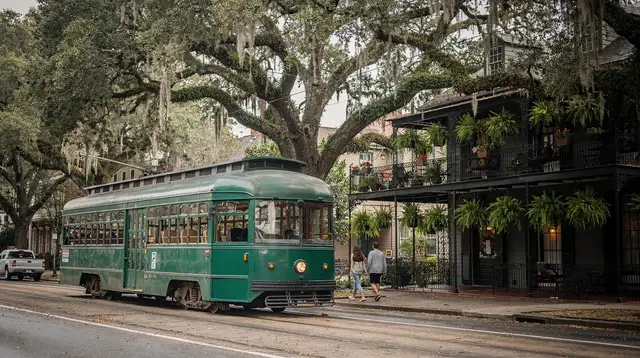
Frenchmen Street works best if you’re already staying somewhere you can walk home from, which is most of the French Quarter and the wider New Orleans city area. If you’re still choosing a base, where to stay in New Orleans covers which neighbourhoods keep you close to a night like this one, and getting around New Orleans by streetcar is useful if your hotel is a little further out, uptown along St Charles Avenue. Arriving from the airport, getting from MSY to the French Quarter covers that first leg.
If you’re building out a longer trip around a night like this, three days in New Orleans and the dedicated music lovers: three days itinerary both give Frenchmen Street a proper slot rather than squeezing it in as an afterthought, and New Orleans for first-time visitors is worth reading before any of it if this is your first trip to the city.
| Bourbon Street | Frenchmen Street | |
|---|---|---|
| Character | Bars, crowds, cover bands, street party | Live jazz, funk, brass; smaller clubs |
| Who goes | Mostly visitors | Locals and visitors together |
| Walking with a drink | Allowed with a go-cup | Same city rule applies, quieter street |
| Best for | A loud group night out | Actually listening to a band |
| Neighbourhood | Inside the French Quarter | Faubourg Marigny, just outside it |
One thing worth being clear about
Frenchmen Street is not the French Quarter, and it’s worth keeping that straight before you set out. It sits just past Esplanade Avenue, in the Faubourg Marigny — a separate, older residential neighbourhood that happens to border the Quarter on its downriver edge. It’s an easy, short walk from Jackson Square or the French Market, well lit and busy most nights, but you are leaving the Quarter’s grid behind, not finding a quieter corner within it. I mention this because more than one visitor has told me they spent an hour looking for it inside the Quarter itself.
I’ll also say plainly what this isn’t. This isn’t about the second line parades that appear unannounced on a Sunday afternoon — those are neighbourhood events with their own etiquette, and they deserve their own conversation; second lines and brass bands explained is where I’d send you for that. And it isn’t a substitute for the more formal jazz tradition you’ll find at a room like Preservation Hall, which is its own kind of evening, seated and reverent, inside the Quarter itself — how Preservation Hall works explains the difference in practice. Frenchmen Street sits in between: not a parade, not a concert hall, just bars and clubs where a band happens to be very good and the room happens to be paying attention.
Practical notes for a late night out
A few things I’ve learned the slightly hard way. Cash still matters here — some of the smaller clubs and the street musicians who sometimes play outside them prefer it, even if the bar itself takes cards. Cover charges, where they exist, are usually collected at the door in cash, and tipping and sales tax in New Orleans covers what’s normal to leave for a band’s tip jar as well as at the bar.
The street gets genuinely busy on weekends, so if you have a specific band in mind, checking their set time before you leave your hotel saves a wasted walk. And however good the night gets, this is still a city where it’s smarter to take a short ride back rather than walk long stretches alone once things wind down past two — ordinary caution, not a reason to stay away; is New Orleans safe for tourists covers this more broadly, and New Orleans travel mistakes to avoid has a wider list of the small things that trip up first-time visitors.
Frenchmen Street nightlife: frequently asked questions
Is Frenchmen Street safe at night?
It’s a busy, well-lit strip and generally fine while the crowds are out, but the same city-wide caution applies as anywhere: stick to the lit, busy blocks, and take a short ride rather than walk far alone once the street empties out toward closing time.
Do I need to book ahead for Frenchmen Street clubs?
Usually not — most rooms are walk-in, and drifting between them is part of the appeal. If you’d rather have a fixed plan and guaranteed entry, a guided pub crawl along the street removes that uncertainty.
Is Frenchmen Street part of the French Quarter?
No. It’s in the Faubourg Marigny, a separate neighbourhood just downriver, reached by an easy walk past Esplanade Avenue at the edge of the Quarter.
What time does Frenchmen Street get going?
Bands typically start mid-evening, but the street feels most itself from around ten or eleven onward, with sets often running well past midnight.
Is Frenchmen Street more expensive than Bourbon Street?
Not really — many clubs have modest or no cover charge, and drink prices are broadly comparable to the Quarter. The difference is what you’re paying for: attention to a live band rather than a loud street scene.
Can I still carry a drink outside on Frenchmen Street?
Yes, the same open-container rule applies as elsewhere in the city, using a plastic go-cup rather than glass.
Does Frenchmen Street cover jazz, funk and brass, or just one style?
All of the above, often within the same block — one room leaning jazz, the next funk or blues, another a brass band. Part of the fun is hearing which one is playing before you decide where to go in.
tours.Inspiration
Verified deep-linked GetYourGuide tours. Book through these links and we earn a small commission at no cost to you.
GetYourGuide does not provide a product photo for this activity — the image shows the meeting point, photographed by us.