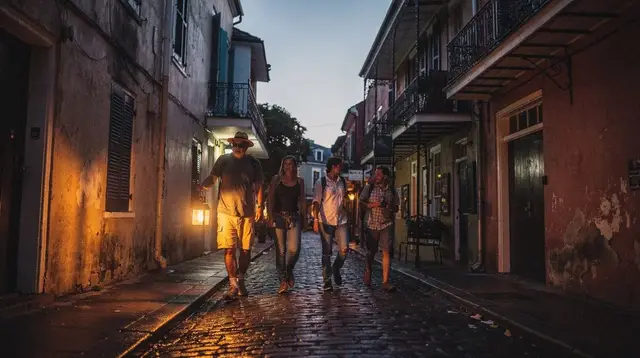
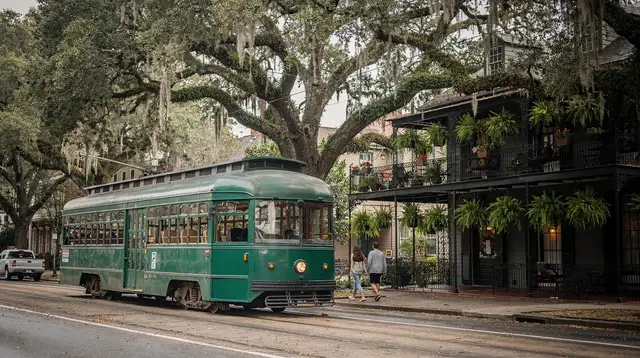
New Orleans Weekend Break: 2 Days in the French Quarter on Foot
Why this weekend stays inside the Quarter
Two days is not enough time to add the Garden District, a plantation or a swamp tour without the whole trip turning into transit. This itinerary deliberately does the opposite: it stays inside the French Quarter, the oldest and most compact neighbourhood in New Orleans, and lets you cover it properly on foot rather than seeing a thin slice of several places. If you have more time, the three-day itinerary or the four-day plantation add-on build outward from here.
The Quarter is laid out on a grid roughly 13 blocks by 6, bounded by the Mississippi River, Rampart Street, Canal Street and Esplanade Avenue. Nothing inside it is more than a 20-minute walk from anything else. A Jazzy Pass for the RTA streetcars is worth having for the Canal Street or Rampart-St Claude line if your feet get tired or the afternoon turns hot and humid, but it is genuinely optional here — treat the streetcar as a convenience, not a requirement, for this particular weekend.
For getting a full sense of how walkable the grid is before you land, the French Quarter walking guide and the French Quarter walking guide overview are useful background reading.
Day 1: Jackson Square, the river and the French Market
Start at Jackson Square, the historic heart of the Quarter, laid out in front of St Louis Cathedral. Spend the first hour simply walking the square: the artists along the iron fence, the street musicians, and the three landmark buildings that frame it — the cathedral itself, the Cabildo and the Presbytere, both former seats of colonial government and now museums covering the city’s Spanish, French and American history. Going inside either one adds real depth to the morning if you want a break from the heat; going inside both in one visit is a lot for a budget weekend, so pick whichever period interests you more.
From Jackson Square, walk the short distance to Decatur Street, which runs along the river side of the Quarter, and follow it to the French Market, a covered market that has operated in some form since the late eighteenth century. It’s a good place for a casual lunch — po’boys and local produce stalls sit alongside souvenir stands — and for a first taste of how the Quarter mixes the genuinely old with the openly touristy, often on the same block. For background on what’s worth eating here versus what’s aimed purely at visitors, see beignets, po’boys and gumbo: where to eat.
No first visit to this stretch is complete without Cafe du Monde, the open-air coffee stand across from Jackson Square that has served beignets and chicory coffee since 1862. Expect a queue, especially at midday and in the evening — it is one of the most visited single spots in the city, and whether it’s worth the wait is covered honestly in Cafe du Monde: is it worth the queue?. A workable approach on a tight schedule is to go early in the morning or later in the evening rather than at peak lunch hours.
Spend the rest of the afternoon on Royal Street, one block back from Bourbon Street, known for its antique shops, art galleries and, on weekends, its own street musicians. It’s a quieter, more browsable counterpart to Decatur Street and a good way to slow the pace down after a busy morning. If you’d rather have the history laid out by someone who knows the buildings, a guided introduction such as the Ghosts of the French Quarter walking tour covers a good stretch of this same ground with stories attached to specific addresses, which works well as a first-afternoon orientation.
For dinner, cross north into the Faubourg Marigny, just beyond the Quarter’s edge, and head for Frenchmen Street. This is the strip locals actually go to for live music — several small clubs sit within two blocks of each other, most with no cover charge before a certain hour, and it’s common to walk between two or three venues in one evening rather than committing to a single show. It’s a deliberately different pace and crowd from late-night Bourbon Street, and for a budget weekend it’s also considerably cheaper. The difference between the two streets, and why this itinerary sends you to one and not the other, is explained in Frenchmen Street vs Bourbon Street.
Day 2: history, hauntings and a slower afternoon
Day 2 leans into the neighbourhood’s other reputation: New Orleans is a city that takes its cemeteries, its Voodoo history and its ghost stories seriously, and the Quarter is the natural place to explore that side of it. Start the morning at a relaxed pace — a coffee and pastry somewhere other than Cafe du Monde is a good way to avoid a second queue — before joining a guided tour that gets you into places you can’t visit alone.
St Louis Cemetery No. 1, the city’s oldest cemetery and the resting place of Marie Laveau, the nineteenth-century Voodoo Queen, can only be entered with an authorised guide; there is no independent walk-in access. A tour such as the 3-in-1 French Quarter Cemetery and Voodoo tour combines the cemetery visit with the wider Voodoo history of the neighbourhood, which is a real, syncretic religion with African and Catholic roots rather than a novelty subject, and is worth treating that way.
If you’d rather go deeper into the Voodoo history specifically and less into the cemetery mechanics, the Voodoo Cemetery tour covers similar ground from that angle. Background on how the cemeteries work and why access is restricted is in cemeteries of New Orleans: visitor guide and the Cities of the Dead explained.
Use the middle of the day for lunch and a change of pace. If two days of Cajun and Creole staples have you curious about the difference between the two — they are not the same cuisine, and locals notice when visitors mix them up — a guided walk such as the Beyond the French Quarter food tour is a good use of a few hours and comes with a running explanation of what you’re eating. For the short version in writing first, Creole vs Cajun food explained is worth five minutes.
Spend the late afternoon back on foot with no fixed plan: revisit whichever street held your attention on Day 1, sit in Jackson Square again as the light changes, or use Louis Armstrong Park, just north of the Quarter at its Rampart Street edge, for a quieter walk through the neighbourhood’s musical history around Congo Square. In the evening, treat Frenchmen Street as the default again, or, if you want the after-dark version of the ghost stories from the day before, the Ghosts of the French Quarter walking tour runs evening departures that suit a second night better than a repeat of Day 1’s dinner plan.
A realistic pace for two full days
| Time block | Day 1 | Day 2 |
|---|---|---|
| Morning | Jackson Square, cathedral, Cabildo/Presbytere | Slow coffee, then a guided cemetery/Voodoo tour |
| Midday | French Market, lunch, Cafe du Monde | Lunch, optional food-focused walk |
| Afternoon | Royal Street, galleries, browsing | Free walking, Louis Armstrong Park |
| Evening | Dinner and live music on Frenchmen Street | Frenchmen Street again, or an evening ghost tour |
This is a full, active pace rather than a relaxed one — two days genuinely fills up when you’re doing all of this on foot in New Orleans humidity, so build in café stops rather than treating the table above as a fixed schedule. If it feels rushed once you’re there, the museums (Cabildo or Presbytere) are the easiest single item to drop without losing the shape of the weekend.
Practical notes for a car-free weekend
Because this itinerary never leaves the Quarter, you won’t need a car, a rideshare budget or even much streetcar use — most of what’s listed above is within comfortable walking distance of most French Quarter hotels. Keep a little cash on hand for tipping street musicians and for the guides on any tour you book; tipping in the 18-20% range is standard for guided tours and sit-down meals, and it isn’t always addable by card on the street. Sales tax is added at the till rather than shown in listed prices, which catches some visitors off guard on a tight budget.
Pace yourself around the weather rather than the clock: New Orleans humidity is real for most of the year, and a midday break indoors — a museum, a café, an air-conditioned gallery on Royal Street — keeps the afternoon walk from Day 1 or Day 2 from feeling like a slog. For more on when to visit and what the climate actually does across the seasons, see best time to visit New Orleans and is New Orleans safe for tourists? for general safety notes that apply to walking the Quarter at night.
If this weekend leaves you wanting more, the natural next step is a day trip rather than an extra night in the Quarter — the River Road plantations or a swamp tour are the two most common additions once travellers realise New Orleans itself was only ever meant to be the start.
FAQ: a two-day French Quarter weekend
Can you really see New Orleans in two days without a car?
You can see the French Quarter properly in two days without a car, since it’s a compact grid roughly 13 by 6 blocks and everything in this itinerary sits within easy walking distance. You won’t get to the Garden District, the plantations or the swamps in this timeframe — those need a longer trip or a return visit.
Do I need the streetcar for this itinerary?
No. The streetcar is a nice option if you want a break from walking or the afternoon turns especially hot, but every stop in this two-day plan is walkable from most French Quarter hotels. Treat a day pass as a convenience, not a necessity.
Is Cafe du Monde worth the wait on a tight schedule?
It’s worth visiting, but the queue can be long at midday and in the evening. Going early morning or later at night usually means a shorter wait, and it’s easy to fit into either day of this itinerary without losing much time.
Can I visit St Louis Cemetery No. 1 on my own?
No. Independent entry isn’t possible; the cemetery can only be visited with an authorised guide, which is why Day 2 of this itinerary builds around a guided cemetery and Voodoo tour rather than a self-guided stop.
Should I spend an evening on Bourbon Street instead of Frenchmen Street?
This itinerary points you to Frenchmen Street because it’s the live-music strip locals actually recommend, with a different, more music-focused atmosphere than late-night Bourbon Street. Nothing stops you from walking down Bourbon Street to see it, but it isn’t built into either evening here.
Is this itinerary budget-friendly?
Yes, it’s designed around walking, modest food stops like the French Market and Cafe du Monde, and no-cover music venues on Frenchmen Street. The main costs are your accommodation, meals and whichever guided tours you choose to add for the cemetery and history stops.
What’s the biggest mistake people make trying to do New Orleans in a weekend?
Trying to add a plantation or swamp day trip on top of the French Quarter in the same two days. Both are worthwhile, but they add hours of driving and turn a relaxed weekend into a rushed one — better saved for a longer trip using an itinerary built around them.
tours.2 days
Verified deep-linked GetYourGuide tours. Book through these links and we earn a small commission at no cost to you.
GetYourGuide does not provide a product photo for this activity — the image shows the meeting point, photographed by us.