LGBTQ New Orleans: A Practical Guide
Is New Orleans a good destination for LGBTQ travellers?
Yes. New Orleans has a long-established, visible LGBTQ community centred on the Faubourg Marigny and the lower French Quarter, with year-round nightlife and major annual events. The practical rules that matter most are the same as for any visitor: the drinking age is 21 with ID checks, open containers must be in a plastic go-cup, and 18-20% tipping is expected.
New Orleans has one of the oldest continuously visible LGBTQ communities in the American South, and it shows up in ordinary, everyday ways rather than as a single “gay district” pinned on a map. This page is not a retread of the French Quarter walking guide or the site’s general safety guide; it is a filter, pulling out what a reader planning a trip actually needs to know if this side of the city matters to their visit.
Where the community is visible
The most concentrated cluster of LGBTQ bars and venues sits at the lower end of Bourbon Street, roughly where it meets St Ann Street, inside the French Quarter. This stretch has anchored gay nightlife in the city for decades, and it sits within the same grid covered by the site’s French Quarter walking guide — it is a few blocks of a much larger, mixed nightlife strip, not a separate neighbourhood, and it operates alongside, not instead of, the straight bars and drag-adjacent tourist spots that fill the rest of Bourbon Street.
A second, quieter cluster sits in the Faubourg Marigny, just downriver of the Quarter, close to Frenchmen Street. Frenchmen Street itself is best known citywide as the live-music strip locals point visitors to, covered in the site’s comparison of Frenchmen Street vs Bourbon Street; its side streets and the Marigny’s residential blocks house a number of LGBTQ-owned bars, guesthouses and coffee shops with a more neighbourhood feel. Neither strip is exclusively one thing — both are shared, mixed nightlife areas, and mentioning them here is a matter of geography, not a value judgement about either street.
Beyond nightlife, the community’s presence runs through the city’s civic life: LGBTQ residents and organisations are woven into the second-line and brass-band tradition, into Carnival krewes, and into the volunteer and arts networks based around Treme and the wider Central Business District. None of this requires seeking out a separate itinerary — it is part of the same city covered in the standard things to do in New Orleans listings.
The scene reaches beyond bars and clubs into everyday city life: LGBTQ-owned guesthouses, coffee shops and small shops sit throughout the Marigny and the lower Quarter, and the same streets that host nightlife after dark function as ordinary, mixed residential blocks by day. Visitors mixing a night out with daytime sightseeing in the Garden District or a stroll past Jackson Square and St Louis Cathedral will find nothing about either experience changes based on this angle — it’s the same city, seen from a particular angle rather than a separate itinerary.
The rules that apply to everyone, and why they matter here
None of the following rules are specific to LGBTQ travellers, but they are worth restating because a night out built around bars and clubs is exactly where they come up most often.
The legal drinking age is 21, without exception, and it is enforced. Door staff and bartenders in New Orleans check identification routinely, including for visitors who are clearly well over 21 — a passport, driving licence or other government photo ID is standard, and a phone photo of an ID is not accepted. This is covered in general terms in the site’s tipping and sales tax guide, but it is worth flagging directly here since a bar-crawl evening means several separate ID checks over a few hours.
Drinking on the street is legal in the French Quarter, but only under specific conditions. A drink carried outside a bar must be in a plastic “go-cup” — never in a glass or a can — and only within the Quarter’s permitted area. Staff will pour a drink into a to-go cup on request when you’re ready to leave a bar; carrying a glass out the door, or crossing outside the permitted zone with an open container, is an easy way to attract police attention for no good reason.
Tipping is expected, and it runs higher in nightlife settings than the baseline restaurant rate. Plan on roughly 18-20% at bars and clubs, the same range given in the site’s general tipping guide, and it’s common practice to add a dollar or two per round at a busy bar even before the final tab. Drag and cabaret performers are typically tipped in cash during the show, so carrying some cash alongside a card is worth doing for a night out, even though cards are accepted almost everywhere in the city, including on RTA streetcars.
Sales tax is added at the till, not shown in the menu price — a detail that surprises visitors from countries where displayed prices include tax, and one more reason a bar tab often runs higher than the drinks list suggests.
Safety: the same general advice, with particular relevance
New Orleans’ general safety picture applies here without modification: the French Quarter, the Faubourg Marigny and the Warehouse District are busy, well-trafficked and heavily policed at night, but the city as a whole has a higher violent-crime rate than the US average, concentrated well outside the areas visitors spend time in. The practical advice from the site’s broader safety guide holds here just as it does anywhere else in the city: stay on lit, busy streets after dark, take a short ride-hail trip rather than walk a long distance late at night, and be a little more alert on the quieter fringes of any nightlife street — Bourbon Street included — once the crowds thin out in the small hours.
This guide does not designate any specific block, bar or neighbourhood as a particular refuge or a particular risk beyond that general pattern; no such claim would be reliable, and situations change. The sensible approach is the same ordinary travel caution that applies to a night out anywhere: know roughly how you’re getting back before you go out, keep your phone charged, and let someone know your plans if you’re heading somewhere unfamiliar alone.
Where to stay
Travellers who want to be within walking distance of the Bourbon Street cluster typically look at guesthouses inside the French Quarter itself; those who prefer the quieter Marigny scene often stay in one of the neighbourhood’s small guesthouses near Frenchmen Street, a short walk or streetcar ride from the Quarter. The site’s general where to stay in New Orleans guide covers both areas alongside the Garden District and CBD, and none of the standard neighbourhood trade-offs — noise, walkability, price — change based on this angle; they’re simply worth weighing with nightlife proximity in mind if that matters to your plans.
| Area | Nightlife proximity | Character |
|---|---|---|
| French Quarter (lower Bourbon) | Walking distance to the main LGBTQ bar cluster | Busy, touristy, loud at night |
| Faubourg Marigny | Short walk to Frenchmen Street venues | Quieter, more residential, live-music focus |
| Garden District / Uptown | 15-20 minute streetcar or rideshare | Residential, calmer, further from nightlife |
Moving between the two clusters, or out to a hotel in the Garden District or Uptown, is straightforward without a car: the RTA streetcar and bus network connects the Quarter, the CBD and Uptown, and the walk between lower Bourbon Street and Frenchmen Street takes well under half an hour along Decatur Street or through the Quarter itself. Renting a car for a stay confined to the city adds the same parking headaches described in the site’s general guide to driving in New Orleans, without adding anywhere this itinerary actually needs one.
Events worth knowing the shape of
Southern Decadence, held over Labour Day weekend in late August or early September, is the city’s best-known LGBTQ event, drawing large crowds to the French Quarter and Marigny for several days of parties, parades and club events. Hotel prices rise sharply and rooms book out well in advance, similar to the pattern the site describes for Mardi Gras and Jazz Fest — check current-year dates before booking, since they shift annually.
Carnival season carries a strong LGBTQ presence too, including several krewes with long LGBTQ histories, layered into the same movable-feast calendar described in the site’s Mardi Gras guide: Mardi Gras itself falls 47 days before Easter, so anywhere from early February to early March depending on the year, with the parade season starting on 6 January. As with Southern Decadence, treat any specific date given elsewhere as approximate and confirm the current year’s calendar before locking in travel dates.
Beyond New Orleans: LGBTQ travellers exploring further afield
None of the practical basics above change for the parts of a trip that sit outside the city itself. Visitors combining a stay in New Orleans with a day on the River Road plantations, a swamp tour south of the city, or a longer loop into Cajun Country around Lafayette and the Mississippi Gulf Coast will find the same drinking age, the same tipping norms and the same general safety approach apply everywhere in the state — none of it changes at the parish line. Those day trips are covered in their own guides for logistics and what to expect; nothing about the angle covered on this page needs a separate plan once you’re outside the city.
Booking a night out with some structure
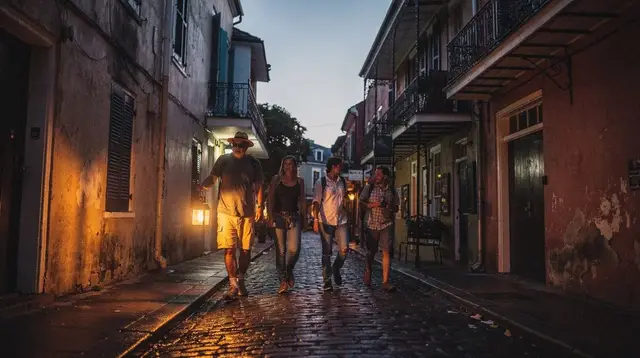
For a first evening in the city, or for a visitor who’d rather have transport and a route sorted rather than improvising, a guided evening removes some of the logistics. The VIP party tour that covers several of the city’s nightlife spots in one organised evening is one option for exactly that. A city tour built around the neighbourhoods and culture behind the nightlife, including the Marigny and Treme is a lower-key way to get geographic bearings before heading out independently later.
Visitors drawn to the ghost-and-voodoo side of the city’s after-dark culture, distinct from the bar scene but often covered on the same nights out, might look at an evening walking tour through the Quarter’s darker history and legends. For simple orientation on arrival, a general day tour covering the French Quarter, Garden District and Treme helps place the Marigny and lower Bourbon within the wider city before an evening out.
Practical basics at a glance
| Detail | What to know |
|---|---|
| Drinking age | 21, ID checked routinely, no exceptions |
| Street drinking | Plastic go-cup only, French Quarter permitted area only |
| Tipping | 18-20% at bars and clubs; cash for performers and rounds |
| Sales tax | Added at the till, not shown on the menu |
| Getting around | RTA streetcars and buses cover the Quarter and Marigny; walking is realistic between the two |
| Safety approach | Same as citywide: lit streets, short rides after dark, extra care late at night on busy strips |
Frequently asked questions about LGBTQ New Orleans
Is New Orleans LGBTQ-friendly?
Yes, New Orleans has one of the oldest and most visible LGBTQ communities in the American South, with a dense cluster of bars, bookstores and community organisations concentrated around the lower French Quarter and the Faubourg Marigny.
Where is the LGBTQ nightlife scene in New Orleans?
It is concentrated on and around the lower end of Bourbon Street, near its junction with St Ann Street, plus a scattering of bars in the Faubourg Marigny near Frenchmen Street. Both are geographic reference points within the wider French Quarter and Marigny nightlife district, not separate districts of their own.
What is the legal drinking age in Louisiana?
21, and identification is checked at bars, clubs and package stores. Carry a passport or another accepted photo ID; door staff in New Orleans check IDs routinely, including for visitors who look well over 21.
Can you drink on the street in New Orleans?
Yes, within the French Quarter, but only from a plastic go-cup, never from a glass or a can, and only within the permitted area. Bars will pour a to-go drink into a plastic cup on request when you leave.
How much should you tip in New Orleans bars and clubs?
Around 18-20% is standard in bars, clubs and restaurants, and a dollar or two per drink at a busy bar is also common practice. Card payment is accepted almost everywhere, but keep some cash for tipping drag performers, drivers and street musicians.
Is it safe to walk around New Orleans at night as an LGBTQ traveller?
The general advice for any visitor applies with particular relevance here: stick to lit, busy streets, take a short ride rather than walk long distances after dark, and stay alert on the quieter fringes of nightlife streets late at night. New Orleans has a higher violent-crime rate than the US average outside the tourist core, so the same ordinary caution that applies citywide applies to a night out here too.
What LGBTQ events happen in New Orleans each year?
Southern Decadence over Labour Day weekend in late August/early September is the best known, alongside a strong LGBTQ presence throughout Carnival season and Mardi Gras, and a visible community role in the city’s second-line and brass-band culture. Exact dates shift year to year, so check current listings before booking.
Do you need a car to enjoy LGBTQ New Orleans?
No. The core area sits inside the walkable French Quarter and adjoining Marigny, both served by the RTA streetcar and bus network, so a rental car adds parking hassle without adding access.
Tours for a first visit on GetYourGuide
Verified deep-linked GetYourGuide tours. Book through these links and we earn a small commission at no cost to you.
GetYourGuide does not provide a product photo for this activity — the image shows the meeting point, photographed by us.