What Jazz Fest Is Actually Like
The first thing that surprises people
I went into my first Jazz Fest expecting something like a slightly bigger French Quarter Festival. It is not that. French Quarter Fest happens earlier in the season, in mid-April, inside the compact grid of the Quarter itself, and it is free. Jazz Fest is a ticketed event held at the Fair Grounds Race Course in Mid-City, spread over two long weekends near the turn of April into May, and it takes over the entire city around it, not just the festival grounds. If someone tells you the two are basically the same thing, they have not been to both. If you want the full breakdown of stages, tickets and logistics before you go, the Jazz Fest guide for visitors covers that ground in more detail than this piece does.
The dates themselves are worth being honest about upfront: this piece is written without pinning them down, because they genuinely move from year to year. Jazz Fest sits across the last weekend of April and the first weekend of May, but the exact days change annually, so check the current calendar before you build a trip around it. That uncertainty is not a small print detail — it changes flights, hotel bookings and everything else, and I would rather say “check the dates” than hand you a wrong one.
It is not really a jazz festival
The name is a hangover from the 1970s. What you actually get on the Fair Grounds infield is a dozen-plus stages running simultaneously from late morning until early evening, covering brass bands, gospel, zydeco, blues, R&B, rock, hip-hop and touring headline acts that have nothing to do with jazz at all. Traditional jazz is one thread among many, not the main event. I spent one afternoon moving between a gospel tent that felt like a church service and a blues stage that felt like a bar band, and never made it near a “jazz” stage in the strict sense. That is normal, and it is the whole point: the programming is deliberately wide.
Food is arguably as big a draw as the music. Dozens of local vendors set up inside the grounds, and a lot of regulars build their day around specific dishes as much as specific sets. Bring cash for some stalls, though card acceptance has improved. If crawfish bread and cochon de lait po-boys leave you wanting the real thing outside festival grounds, gumbo, jambalaya and etouffee explained is a useful primer on what you are actually eating, and the brass bands and second lines guide fills in the local music culture behind half of what plays on the Fair Grounds stages.
Away from the food and the headline stages, the nightly live jazz guide is worth reading even outside Jazz Fest week — it explains where the city’s music actually lives the other 355 days of the year, which helps make sense of why the festival version feels so concentrated.
The city outside the gates
What actually distinguishes Jazz Fest from any other big American music festival is what happens once the gates close for the day. Musicians who played the Fair Grounds turn up for late sets at clubs across town, and the whole live-music circuit runs harder than usual. Frenchmen Street, already the strip locals point visitors toward rather than Bourbon Street, gets an extra layer of energy during Jazz Fest week, with lineups that lean on festival overflow.
Preservation Hall runs its usual short, no-frills sets in the Quarter, and they sell out faster than normal during the festival — the Preservation Hall guide explains how the door policy and sets actually work, which matters more than usual during festival week. On a night when I did not want to gamble on which club had the better lineup, I booked a guided pub crawl along Frenchmen Street instead, which took the guesswork out of hopping between venues. If you only budget energy for the festival grounds and skip the nights, you are missing half of what makes this different from a normal music festival. Frenchmen Street after midnight and Frenchmen Street vs Bourbon Street both go into why locals steer visitors toward Frenchmen rather than the Bourbon Street strip, festival week or not.
I would not try to do both a full festival day and a full night out on the same evening more than once or twice in a stay — the heat and the walking add up faster than you expect, and Fair Grounds days are genuinely long.
What it does to the city, practically
The comparison to Mardi Gras is not casual. Jazz Fest produces the same structural effects on a visit, even though the atmosphere is completely different. Hotel rates across the city climb sharply for the whole stretch, not just the festival weekends themselves. Many properties impose minimum-night stays, so a quick two-night visit can simply be unavailable at any price near the dates. Rooms anywhere convenient to the Quarter, Mid-City or the streetcar line get booked out well in advance, and the city overall feels fuller than a normal week — restaurants harder to walk into, rideshare pricing higher, streets busier at night.
None of that is a reason to avoid it. It is a reason to plan the logistics deliberately rather than assume a normal New Orleans weekend. Book accommodation early, expect to pay more for it, and check whether your dates fall inside a minimum-stay window before you commit to flights. The where to stay in New Orleans guide is worth reading with festival dates in mind rather than a normal weekend, since the neighbourhoods that work well for a quiet trip are not always the ones with rooms left during Jazz Fest.
The comparison to Mardi Gras is not just atmospheric shorthand either. If you have been through a Mardi Gras trip or read the Mardi Gras long weekend itinerary, the same booking discipline applies here almost exactly, just spread across two weekends instead of one.
Getting there and getting around
The Fair Grounds sit in Mid-City, a streetcar-and-rideshare distance from the Quarter rather than a walk. On-site parking is limited and expensive, and traffic around the grounds during arrival and departure windows is genuinely slow. Most people I have talked to who go regularly either take a rideshare to a drop-off point a short walk from the gates, or use one of the shuttle services that run during the festival, rather than driving themselves. Give yourself more time than feels necessary, especially for an afternoon set you do not want to miss.
Sun and heat matter more than most first-timers expect. Late April is usually still comfortable, but by the first May weekend the afternoons can already feel like early summer, and the infield offers only patches of shade. Water, a hat and sunscreen are not optional extras — the what to pack for New Orleans guide has the fuller list for a festival-week trip.
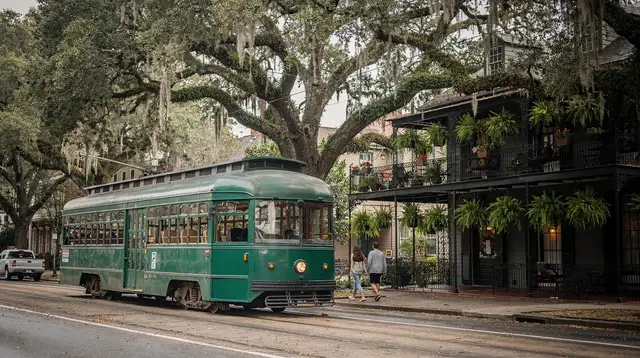
If you are flying in specifically for the festival, the MSY airport to French Quarter guide and the getting from MSY to the French Quarter post both cover the arrival end of the trip, which gets busier and slower during festival week than it would on an ordinary weekend. Once you are settled in, the streetcar guide explains the option most people end up using between the Quarter, Mid-City and the Fair Grounds area, and the driving and parking guide is worth reading before deciding whether a rental car makes sense at all during the festival.
Whether it’s worth building a trip around
For me, yes, but with a clear expectation set. Jazz Fest is not a quiet, contained cultural outing — it is closer to Mardi Gras in scale and disruption, minus the parades, with a music-festival identity layered on top. If big daytime crowds, heat and a citywide price spike do not appeal, French Quarter Fest in mid-April gives a gentler, free alternative that still delivers serious local music without the same logistics. If you want the fuller, louder, more all-consuming version of the city’s music scene, and you are willing to book early and pay the festival premium, Jazz Fest delivers something French Quarter Fest does not: a sense that the entire city, not just one neighbourhood, is playing at once.
If you are still deciding how long to stay, how many days in New Orleans and how many days do you really need in New Orleans both apply here too, though I would lean toward the longer end of whatever they suggest once you factor in a festival’s worth of late nights. The Jazz Fest five days itinerary is built specifically around a festival-length stay, and the new to New Orleans guide is a good companion if this is your first trip to the city as well as your first Jazz Fest.
Taking a day away from the crowds
Ten days of heat, crowds and long Fair Grounds afternoons is a lot, and one thing that helped me more than I expected was building in a day that had nothing to do with the festival at all. The River Road plantations sit roughly 45 minutes to an hour and a half upriver from the city, close enough for a half-day out and back without eating into an evening you wanted for music. I took a half-day tour of Oak Alley Plantation on a day between festival weekends, and the quarter-mile alley of live oaks made for a genuinely different pace after a week of stages and speakers. The Oak Alley plantation tours guide and the River Road plantations day trip guide cover the practical side of picking a tour and getting there; the River Road plantations destination page has the wider picture of what sits along that stretch of river if Oak Alley is not the one that appeals most.
If your trip stretches to cover both festival weekends, a day on the Mississippi Gulf Coast is another way to get out of the city without a long drive — the Mississippi Gulf Coast guide covers the towns along that stretch. On one such trip I took a haunted bayou cruise out of Bay St Louis in the evening, which turned out to be a good way to wind down after a loud festival weekend without heading straight back into the Quarter’s nightlife.
Frequently asked questions about visiting Jazz Fest
Is Jazz Fest the same as French Quarter Festival?
No. French Quarter Festival runs earlier in the season, in mid-April, is free, and is concentrated inside the French Quarter. Jazz Fest is a separate, ticketed event held at the Fair Grounds Race Course roughly two weeks later, spanning the last weekend of April and the first weekend of May, with dates that shift each year.
Is Jazz Fest only jazz music?
No. The programming covers gospel, blues, brass bands, zydeco, R&B, rock, hip-hop and touring headline acts alongside traditional jazz. Jazz is one strand of a much broader lineup, plus a large food program from local vendors.
Do hotel prices really go up that much during Jazz Fest?
Yes. Rates rise sharply across the city for the whole festival stretch, many hotels impose minimum-night stays, and rooms convenient to the centre or the streetcar lines sell out well ahead of time, similar in effect to what happens around Mardi Gras.
Can I combine the festival grounds with nightlife on the same day?
You can, but a full day at the Fair Grounds followed by a full night out is tiring more than once or twice in a trip. Musicians who play daytime sets often turn up at clubs on Frenchmen Street or at Preservation Hall later, so the city’s live scene runs later and harder than usual during the festival.
How do I get to the Fair Grounds without a car?
Rideshare drop-off near the grounds or a festival shuttle is more practical than driving. On-site parking is limited, expensive and slow to get in and out of during peak arrival and departure times.
Is it hot at Jazz Fest?
Often, yes, especially by the first May weekend. The infield has limited shade, so water, a hat and sunscreen matter for a full day on the grounds.
Should I book my trip before the exact dates are announced?
It’s safer to wait for confirmed dates. Because Jazz Fest’s calendar moves within the late April to early May window each year, booking flights or non-refundable hotel stays before the official dates are published risks locking in the wrong week.
Seasonal New Orleans activities on GetYourGuide
Verified deep-linked GetYourGuide tours. Book through these links and we earn a small commission at no cost to you.
GetYourGuide does not provide a product photo for this activity — the image shows the meeting point, photographed by us.