Jazz Fest: Five Days in New Orleans
New Orleans Jazz & Heritage Festival is not a single day out — it is a movable, two-weekend event, falling approximately across the last weekend of April and the first weekend of May, with the exact dates set and published by the festival itself each year. Never book around a fixed date; check the current year’s calendar first. Because the city fills up and hotel prices rise sharply around those weekends, with minimum-night stays common at Quarter and CBD properties, this five-day plan is built to bridge the gap between the two Fair Grounds weekends with a run of days in the French Quarter and the Garden District, so the whole trip works as one block rather than two disconnected weekend visits.
Before you go: booking around a moving festival
Because Jazz Fest dates shift year to year, the sequence below assumes you arrive a day or two before the first festival Thursday or Friday and stay through the second festival weekend, with free days filling the gap in between. Adjust the calendar to whichever year you’re travelling, but keep the structure: festival day, festival day, free day, free day, festival day. Reserve Fair Grounds tickets and your hotel as soon as dates are confirmed — both sell through well before the gates open.
| Day | Focus | Fair Grounds? |
|---|---|---|
| Day 1 | Arrival, French Quarter orientation | No |
| Day 2 | Jazz Fest at the Fair Grounds | Yes |
| Day 3 | Garden District and streetcar day | No |
| Day 4 | French Quarter deep dive, night music | No |
| Day 5 | Jazz Fest at the Fair Grounds, closing night | Yes |
Day 1: Arrival and the French Quarter
Land at MSY, roughly 18 km and 25–40 minutes from the Quarter by taxi, rideshare or the RTA airport bus, and settle in before the festival crowds build. Full transfer options, including what the trip costs and how long each mode actually takes, are covered at getting from MSY to the French Quarter. The French Quarter is compact — about 13 by 6 blocks — and best covered on foot from the start. Walk from Jackson Square and St Louis Cathedral to Royal Street for galleries, then down to Decatur Street and the French Market.
Stop at Cafe du Monde for beignets before the afternoon crowd, and keep cash on hand for tips and street musicians. If you want a fuller sense of the neighbourhood’s layout before committing to a route, the French Quarter walking guide lays out the grid block by block. In the evening, ease into the trip with a first taste of after-dark New Orleans: a ghost and vampire tour suits a first night better than a late one, since tomorrow starts early at the Fair Grounds.
A good option for tonight is a French Quarter haunted pub crawl, which mixes history, a few drinks and an easy introduction to the neighbourhood’s layout before the festival takes over your schedule.
Day 2: Jazz Fest — first festival day
This is your first full day at the Fair Grounds Race Course, where the festival unfolds across multiple stages, food booths representing Louisiana’s regional cooking, and crafts pavilions alongside the music. Arrive when gates open to beat both the heat and the queues, and pace yourself: festival days run long, the New Orleans spring sun is strong, and there is very little shade over open ground.
The food booths are worth building time around rather than treating as an afterthought — many festival regulars say the cooking is as much a draw as the stages, and it’s a fair introduction to the difference between Creole and Cajun cooking laid out at Creole vs Cajun food explained. Between sets, plan a route across the stages rather than committing to one all day. For the evening, resist rushing back to the hotel — many festival-goers head straight from the Fair Grounds to Frenchmen Street or Preservation Hall in the Quarter for a second, later set of live jazz, which is very much part of the Jazz Fest tradition and worth reading up on beforehand at live jazz in New Orleans, a nightly guide.
Day 3: Garden District and the streetcar
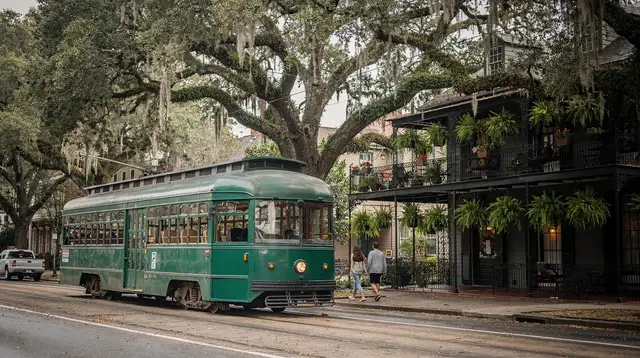
With the first festival weekend behind you, use this free day for the Garden District, reached the classic way: the St Charles streetcar, the oldest continuously operating street railway in the world, running from the CBD along St Charles Avenue past the antebellum mansions. Details on how the line actually works, including where to catch it, are at getting around New Orleans by streetcar. Get off to walk the tree-lined streets, then visit Lafayette Cemetery No. 1, whose above-ground tombs are one of the city’s clearest signatures — a guided visit adds context you won’t get walking past alone; the wider context for the city’s historic cemeteries is at the cemeteries of New Orleans visitor guide.
Consider the Garden District mansions and cemetery walking tour for exactly this combination. Ride the streetcar back toward the CBD in the late afternoon and rest your legs before an evening back in the Quarter, since tomorrow is a full day on foot there. If you’d rather compare formats before booking, Garden District walking tours lays out the options side by side.
For more on why this day looks nothing like the festival days either side of it, see the Garden District and the streetcar guide and the Jazz Fest guide for visitors.
Day 4: French Quarter, deeper, and a night of live music
Your second free day goes deeper into the New Orleans city core. Spend the morning around Treme, just north of the Quarter, where Louis Armstrong Park and Congo Square mark the birthplace of much of the city’s music — a fitting stop mid-trip, given why you’re here, and the neighbourhood’s fuller story is told at Treme and the birth of jazz. In the afternoon, walk south to the Faubourg Marigny and Bywater, and consider a serious look at the city’s other after-dark tradition with a New Orleans Voodoo history tour, which treats the subject as the real religious history it is rather than a novelty act — background on that history is at Voodoo in New Orleans: history and tours.
As evening falls, head to Frenchmen Street, the strip locals actually point visitors toward, rather than Bourbon Street, for a set of live jazz or brass band music — a natural extension of the festival atmosphere on a night when the Fair Grounds itself is dark. Background on the choice between the two streets is at Frenchmen Street vs Bourbon Street, on how Preservation Hall’s shows actually work at Preservation Hall: how it works, and on the tradition of parading brass bands that shapes so much of the city’s live music at second lines and brass bands explained.
If cemeteries and ghost stories appeal more than a second night of music, the Ghosts of the French Quarter walking tour is a solid alternative for this evening, covering the Quarter’s older, darker history at a gentler pace than a festival day.
Day 5: Jazz Fest — closing day
Return to the Fair Grounds for the second festival weekend, ideally on the closing day, when the lineup often builds toward its biggest sets. By now you’ll know the grounds layout, which stages suit your taste, and which food booths are worth a second visit. Treat this as the trip’s finale: stay through the last sets rather than leaving early, since the second weekend’s closing acts are typically the ones the whole festival builds toward. If your flight allows, keep the evening open for one last set on Frenchmen Street or a nightcap tied to the festival’s afterglow before heading back to pack.
Where to stay for this trip
Because both hotel supply and demand spike hardest right around the Quarter and the CBD during festival weekends, where you base yourself matters more here than on an ordinary visit. The general principles at where to stay in New Orleans apply, but during Jazz Fest the priority shifts toward locking in a room early over holding out for the ideal neighbourhood — a well-located but merely good option booked the day dates are announced beats an ideal one found too late. Staying within walking distance of the Quarter also means you don’t need a car for any part of this itinerary, in line with the wider case made at do you need a car in Louisiana: the Fair Grounds is reached by rideshare or festival shuttle, and everything else on this plan is on foot or by streetcar.
Practical notes for a Jazz Fest week
Confirm the current year’s dates before booking anything — see when is Mardi Gras, and can you still visit for why New Orleans festival dates in general should never be assumed fixed, even though that page covers a different festival; the same caution applies here. Book Fair Grounds tickets and your hotel as early as the dates are published, since both sell through ahead of the festival.
Pack for heat, sun and the chance of a spring downpour, wear shoes that can handle standing on grass for hours, and bring cash for tips, vendors and the go-cup drinks sold legally in the French Quarter — one of several local customs that catch first-time visitors off guard, along with the ones rounded up at New Orleans travel mistakes to avoid. It’s also worth knowing before you fly that US price tags rarely include tax, a habit explained at why prices are higher at the till in the US. For a broader read on what the festival itself feels like on the ground, Jazz Fest guide for visitors and what Jazz Fest is actually like are useful companions to this itinerary, and three days in New Orleans shows how a shorter, non-festival visit to the same city looks by comparison.
FAQ: planning a Jazz Fest trip to New Orleans
When exactly is Jazz Fest?
New Orleans Jazz & Heritage Festival runs across the last weekend of April and the first weekend of May, but the precise dates shift every year and should be checked against the festival’s own calendar before booking flights or hotels.
Do I need tickets to the Fair Grounds in advance?
Yes. Daily and multi-day passes for the Fair Grounds sell out, especially for the second weekend, so buying online well ahead of travel is safer than expecting walk-up tickets.
Is this itinerary only useful during Jazz Fest?
It is built specifically around the festival’s dates and its two performance weekends; outside that window the same five days would be organised differently, without the Fair Grounds days at their centre.
How much do hotel prices rise during Jazz Fest?
Rates in and around the French Quarter and CBD typically climb well above normal weekend pricing, and many properties add minimum-night requirements, so booking as soon as dates are confirmed matters more than for an ordinary visit.
What happens on the days that are not festival days?
The plan uses the gap between the two Jazz Fest weekends, and one day before the festival opens, for the French Quarter and Garden District on foot and by streetcar, keeping the live music going at night on Frenchmen Street or at Preservation Hall.
Can you do Jazz Fest without a car?
Yes. The French Quarter, the Garden District and the streetcar network cover the non-festival days, and rideshare or the shuttle services that run during the festival handle the trip to the Fair Grounds.
Is Jazz Fest the same as Mardi Gras?
No. Mardi Gras is a separate, earlier movable feast tied to the church calendar, while Jazz Fest is a ticketed music and heritage festival at the Fair Grounds in spring; this itinerary follows Jazz Fest only.
Seasonal New Orleans activities on GetYourGuide
Verified deep-linked GetYourGuide tours. Book through these links and we earn a small commission at no cost to you.
GetYourGuide does not provide a product photo for this activity — the image shows the meeting point, photographed by us.