New Orleans Museums and Indoor Attractions
What are the best museums and indoor attractions in New Orleans?
The National WWII Museum in the Warehouse Arts District is the largest and most visited, followed by the New Orleans Museum of Art and its Besthoff Sculpture Garden in City Park. Smaller museums cover music, Mardi Gras, pharmacy history and the Ogden's Southern art collection, so the right pick depends on the visitor's interest.
New Orleans is usually pictured outdoors — a brass band on a corner, a carriage on Royal Street, a boat sliding through cypress. But some of the city’s richest storytelling happens indoors, in buildings purpose-built to hold a collection: a global war fought from Louisiana’s shipyards, four centuries of Southern painting, a Mardi Gras float workshop turned museum. This guide gathers things to do in New Orleans that sit under a roof, and organises them by subject rather than by street, so the choice comes down to what actually interests the visitor.
Why treat museums as their own category
Most New Orleans planning splits neatly into outdoor formats: walking tours of the French Quarter, bus and city tours, river cruises on the Mississippi, and the guided, after-dark world of vaudou and cemetery tours. Museums are different: they are climate-controlled, self-paced, and open on the days when a summer thunderstorm or a bout of afternoon heat makes the street unappealing. They are also where the city keeps its harder and more specialised histories — the ones that need context and objects rather than a passing glance from a sidewalk.
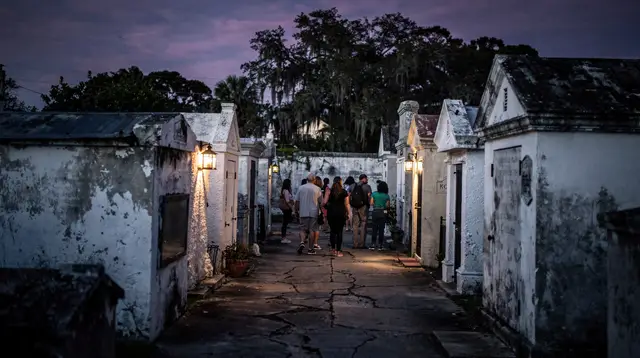
This page deliberately stays inside that lane. It does not cover the plantations along the River Road, which sit forty-five minutes to an hour and a half outside the city and are treated in this guide’s plantation tours coverage and its own plantation comparison as a separate territory. It also does not cover vaudou history or the historic cemeteries, which remain a guided, outdoor, thematic format best explored through cemeteries of New Orleans and vaudou in New Orleans.
The National WWII Museum: the anchor attraction
The National WWII Museum, in the Warehouse Arts District just south of the Central Business District, is the single largest and most visited museum in the city, and for many visitors it is the reason a museum afternoon turns into a museum day. It exists here rather than in Washington because Higgins Industries, the New Orleans company that built the landing craft used at Normandy and across the Pacific, made the city a genuine hub of the war effort.
The museum now spans several connected pavilions covering the European and Pacific campaigns, the American home front, and the personal accounts of veterans recorded on video throughout the galleries. The Beyond All Boundaries 4D film, narrated by Tom Hanks, and the immersive Final Mission: USS Tang submarine experience are ticketed separately from general admission and worth planning for in advance. A visitor with a real interest in the subject should set aside a full day; a shorter visit of three to four hours still covers the main galleries.
| Element | Typical time needed | Notes |
|---|---|---|
| Main pavilions | 3–4 hours | Chronological, dense with objects and film |
| Beyond All Boundaries | 40 minutes | Separate timed ticket |
| Final Mission: USS Tang | 30 minutes | Separate timed ticket, limited capacity |
| On-site restaurants | Extra time | American Sector and Soda Shop, no need to leave the campus |
A timed entry ticket to the National WWII Museum is worth booking ahead of a visit, particularly in the spring weeks around French Quarter Festival and Jazz Fest when the city is at its fullest. For a first visit that combines the museum with other headline sights, an Essentials Pass covering three of the city’s top attractions can bundle it with other paid entries at a lower combined cost, and a Power Pass built around a wider list of attractions suits a longer stay with multiple museum and activity visits planned.
Art and design: NOMA and the Besthoff Sculpture Garden
At the opposite end of the city, in Mid-City’s City Park, the New Orleans Museum of Art (NOMA) holds a broad permanent collection spanning European, American, African, Asian and decorative art, with particular depth in Southern and self-taught art. It is a manageable museum for a visitor who wants a serious collection without the scale commitment of the WWII Museum — two to three hours covers it comfortably.
Directly beside it, the Sydney and Walda Besthoff Sculpture Garden is free to enter and open later than the museum itself, a landscaped, lagoon-crossed park of large-scale sculpture set among live oaks. Many visitors treat NOMA and the sculpture garden as one outing: paid entry to the museum in the morning, a slow walk through the garden afterward, and time left over for the rest of City Park, including its carousel and botanical garden.
Music, Mardi Gras and local identity
New Orleans tells its own cultural history through several smaller, focused museums that reward a visitor with a specific interest rather than a general one:
- The New Orleans Jazz Museum, housed in the Old U.S. Mint on the edge of the French Quarter near Frenchmen Street, holds instruments, recordings and exhibits tracing the birth of jazz in the city, a useful daytime complement to hearing the music live at night — see live jazz in New Orleans for where that happens after dark.
- Mardi Gras World, across the river near Algiers Point, is a working float-building warehouse open for tours, useful for understanding the scale of Carnival even outside its season — background on the season itself is in the Mardi Gras guide for visitors.
- The Presbytere, on Jackson Square, houses a dedicated Mardi Gras collection on its upper floor and a Hurricane Katrina and Louisiana history exhibit on its ground floor, making it one of the few buildings in the city to hold both subjects under one roof.
- The Ogden Museum of Southern Art, also in the Warehouse Arts District near the WWII Museum, focuses specifically on the art of the American South, an easy pairing with a WWII Museum morning given the short walk between them.
Quirkier and specialist collections
A handful of smaller museums round out the picture for visitors with narrower interests. The New Orleans Pharmacy Museum on Chartres Street occupies a nineteenth-century apothecary and covers the stranger end of period medicine. The Historic New Orleans Collection, spread across several French Quarter buildings, holds changing exhibitions on the city’s history alongside a research library. For families, the Louisiana Children’s Museum, relocated to City Park, is built around hands-on exhibits rather than objects behind glass.
Museums for families, teenagers and rainy afternoons
A museum day is one of the easiest ways to reset a New Orleans itinerary when the weather turns or when a group includes both adults and children with different attention spans. The Louisiana Children’s Museum in City Park is built for younger visitors, with hands-on exhibits rather than glass cases, and it sits close enough to NOMA and the Besthoff Sculpture Garden that a family can split a morning between the two without a second car ride. Older children and teenagers tend to respond better to the National WWII Museum, where the personal video testimonies and the immersive Final Mission: USS Tang experience hold attention in a way a purely object-based collection does not; the dedicated guide to New Orleans with teenagers covers how to pace a day around it, and New Orleans with kids does the same for younger ages.
Because every museum on this page is fully indoor, this list doubles as a ready answer to a wet or unbearably hot afternoon. The broader rainy day New Orleans guide treats museums as one option among several, alongside food halls and covered markets, while the free things to do in New Orleans guide is the place to check which of the smaller collections and the Besthoff Sculpture Garden cost nothing to visit, useful for a family trying to control a daily budget without cutting a museum day entirely.
African American history and culture indoors
Several of the museums above connect directly to the city’s African American history, and it is worth reading them together rather than as unrelated stops. The New Orleans Jazz Museum’s collection traces a musical tradition rooted in nearby Treme, one of the oldest African American neighbourhoods in the country and the source of much of the brass band and second line culture still heard on the street today. The Presbytere’s Louisiana history exhibit and the Historic New Orleans Collection’s rotating shows both draw on this history as well, in ways that reward a visitor who has already read the dedicated African American heritage in New Orleans guide, since the museums here fill in objects and detail behind a story that guide introduces at street level.
Accessibility in New Orleans museums
The museums covered here are, as a group, the most accessible indoor format the city offers: level floors, elevators between galleries, and air conditioning throughout, none of the uneven brick sidewalks or narrow historic staircases that complicate some French Quarter buildings. The National WWII Museum and NOMA in particular are built and staffed for large daily visitor numbers and are used to accommodating wheelchairs, strollers and visitors who need to move at a slower pace through the galleries. For a fuller picture of what to expect elsewhere in the city, including transport and outdoor sights, see accessible New Orleans.
Choosing by interest, not by list
Rather than working through every museum in order, most visitors do better picking based on what draws them:
- History and war: the National WWII Museum, full stop, with the Presbytere’s Katrina exhibit as a shorter add-on.
- Art: NOMA and the Besthoff Sculpture Garden, with the Ogden Museum of Southern Art for a deeper regional focus.
- Music and Carnival culture: the New Orleans Jazz Museum and Mardi Gras World.
- Curiosities: the Pharmacy Museum and the Historic New Orleans Collection.
- Travelling with children: the Louisiana Children’s Museum, and the Besthoff Sculpture Garden as a free outdoor stop nearby.
A three-day New Orleans itinerary usually has room for one major museum and one smaller one; a history and memory focused three days can comfortably fit the WWII Museum, the Presbytere and a River Road plantation into a single trip. For visitors weighing museums against the city’s many guided formats, the wider things to do in New Orleans overview and the museums of New Orleans guide both help set expectations before booking.
A general city tour of New Orleans is a reasonable way to get oriented on a first day before choosing which museums are worth returning to on foot, since several of the museums named here sit far enough apart — the Warehouse Arts District, City Park and the French Quarter are each a distinct trip — that a single walking day cannot cover them all.
Practical notes for a museum day
Nearly every museum on this list is a short ride-hailing trip or streetcar ride from the French Quarter or Garden District, and none require a car. The RTA streetcar network reaches City Park via the Canal Street line’s extension and reaches the Warehouse Arts District easily on foot from the CBD.
Because Louisiana summers are long, hot and very humid, a museum day is also a sensible way to spend the hottest hours of a June, July or August afternoon; the same logic applies during the rare stretch of genuinely cold winter weather, when an indoor day is more comfortable than a walking tour. For a full sense of how weather should shape a visit, see best time to visit New Orleans.
Frequently asked questions about New Orleans museums
Which New Orleans museum is worth the most time?
The National WWII Museum needs a half day at minimum, and a full day for visitors who want to see every pavilion and the Beyond All Boundaries film. Most other museums in the city can be seen well in two to three hours.
Are New Orleans museums air-conditioned, and does that matter?
Yes, all the museums covered here are fully indoor and air-conditioned, which makes them a practical choice during the long, hot and humid summer or on a rainy afternoon at any time of year.
Is the New Orleans Museum of Art the same as the Besthoff Sculpture Garden?
No. The New Orleans Museum of Art (NOMA) is the indoor collection inside City Park, while the Besthoff Sculpture Garden is the adjoining outdoor garden of sculpture. A single ticket covers the museum; the sculpture garden is free and separate.
Do I need to book museum tickets in advance?
The National WWII Museum sells timed tickets that are worth booking ahead, especially in spring around French Quarter Festival and Jazz Fest. Smaller museums rarely require advance booking outside major festival weekends.
Are the vaudou and cemetery museums covered here?
No. Vaudou history and the cemeteries are treated as their own guided, outdoor format, since they involve licensed access to a working cemetery rather than a museum building.
Can museums be combined with a plantation visit in one day?
It is possible but tight. The River Road plantations sit forty-five minutes to an hour and a half outside the city and deserve unhurried time, so most visitors treat plantation country and city museums as separate half-days or days.
What is the best museum for visitors interested in music?
The New Orleans Jazz Museum at the Old U.S. Mint, on the edge of the French Quarter, is the dedicated option, alongside smaller collections woven into venues such as Preservation Hall.
Museums and attractions on GetYourGuide
Verified deep-linked GetYourGuide tours. Book through these links and we earn a small commission at no cost to you.
GetYourGuide does not provide a product photo for this activity — the image shows the meeting point, photographed by us.