Three Days for Music Lovers in New Orleans
Why base a trip around New Orleans music instead of a festival
New Orleans plays live music most nights of the year, which is the whole premise of this three-day plan: no festival dates to track, no Mardi Gras calendar to check, just a city that has jazz, brass bands and neighbourhood music running on an ordinary Tuesday as much as a Saturday. That makes it different from a Jazz Fest itinerary or a Mardi Gras-timed trip, both of which only work in a narrow window.
Everything below stays inside New Orleans city and the French Quarter, reached on foot or by streetcar, with no rental car involved — a useful comparison is whether you need a car in Louisiana at all, and for this particular trip the answer is no.
The route leans on Frenchmen Street rather than Bourbon Street, works in Preservation Hall as the Quarter’s own listening room, and spends part of a day in Tremé and at Congo Square, where the city’s music actually began. It leaves out zydeco and Cajun music on purpose: both belong to Acadiana around Lafayette, not to New Orleans, and folding them in would blur two distinct traditions that deserve to be kept separate.
Where to stay for this itinerary
Because everything on this trip sits inside the French Quarter and the rest of New Orleans city, the choice of base matters more than it would on a car-based itinerary. Staying inside or right on the edge of the French Quarter puts Jackson Square, Royal Street and the evening walk to Frenchmen Street within easy reach, which matters most on the nights you want to be back in bed without arranging a ride. The Garden District, reachable by the St Charles streetcar, is a quieter alternative with its own antebellum character, though it adds a streetcar ride each way to and from the music. For a fuller comparison of neighbourhoods, prices and what each one suits, see the guide to where to stay in New Orleans; for this particular itinerary, proximity to Frenchmen Street and the Quarter is the deciding factor, since the plan has you walking back late at least twice.
Day 1: the French Quarter by day, Frenchmen Street by night
Start slow in the French Quarter, which rewards an unhurried morning more than a checklist. Walk the grid around Jackson Square and St Louis Cathedral, then drift down Royal Street for its galleries and the street musicians who often set up there, before crossing to Decatur Street and the French Market. A beignet stop at Café du Monde is the obvious break, and it is worth reading up on whether the queue is worth it before deciding how long to wait.
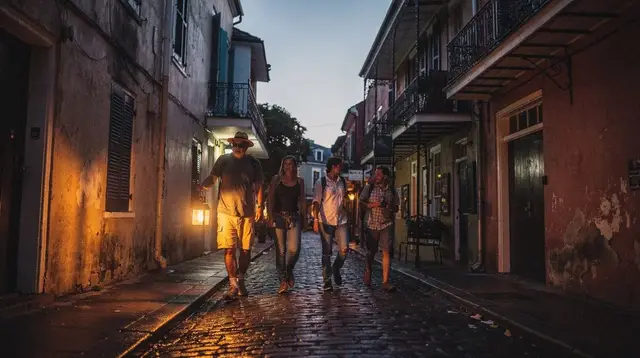
In the afternoon, book a walking tour that gets you oriented in the Quarter’s back streets rather than just its main strip; the Ghosts of the French Quarter Walking Tour covers this ground after dark and doubles as a way to learn the Quarter’s layout before the evening’s music.
Have an early dinner in the Quarter, then head toward Frenchmen Street in the Faubourg Marigny — a five-to-ten-minute walk from the edge of the Quarter — where several small clubs run sets back to back most nights. This is deliberately not Bourbon Street: Frenchmen Street is where residents go to hear a band, and the clubs are small enough that you can move between two or three in an evening. For context on why the two streets serve such different purposes, see the comparison of Frenchmen Street versus Bourbon Street.
| Day 1 stop | Approx. time needed |
|---|---|
| French Quarter walk (Jackson Square, Royal Street, French Market) | 3 hours |
| Café du Monde break | 30–45 minutes |
| Guided French Quarter walking tour | 1.5–2 hours |
| Frenchmen Street clubs | 2–3 hours, evening |
Day 2: Tremé, Congo Square and the roots of the city’s sound
Day two moves north of the Quarter into Tremé, one of the oldest African American neighbourhoods in the country and, by most accounts, the place where the city’s music tradition took shape. Congo Square, inside Louis Armstrong Park, is the specific ground worth standing on: it is where enslaved and free people of colour gathered on Sundays in the eighteenth and nineteenth centuries to play music and dance, a practice that fed directly into what became jazz. A guide who covers Tremé and the birth of jazz will do more with this history than a self-guided walk can, since the neighbourhood’s significance is not obvious from its streets alone.
This is also the right day to understand second lines and brass bands properly, because you may well pass one. A second line is a neighbourhood parade tied to a social aid and pleasure club, not a performance staged for visitors, and if you come across one the right move is to watch respectfully from the sidewalk or join in at the edges rather than treat it as a spectacle. In the afternoon, a guided look at the city’s African American heritage beyond music rounds out the picture; see the African American heritage guide for what else sits within reach.
Round out the day with food, since New Orleans’s music and food traditions grew up together in the same neighbourhoods. The Beyond the French Quarter Food Tour is a useful way to eat well outside the Quarter’s tourist restaurants, and it is worth reading how gumbo, jambalaya and étouffée actually differ before you order.
In the evening, head back toward the Quarter for Preservation Hall — a small, unamplified room built specifically to keep traditional New Orleans jazz alive, with sets running most nights; the practicalities of getting in are covered in how Preservation Hall actually works.
Day 3: jazz history, a second listen on Frenchmen Street, and a slower finish
By day three you have already heard the music; day three is for the history behind it and one more night of it. The National WWII Museum and City Park’s sculpture garden are good options if you want a change of pace, but the more relevant stop for this itinerary is any museum coverage that traces jazz’s early decades — ask at your hotel or a visitor centre for whichever exhibit is currently running, since these change more often than any printed listing can keep up with.
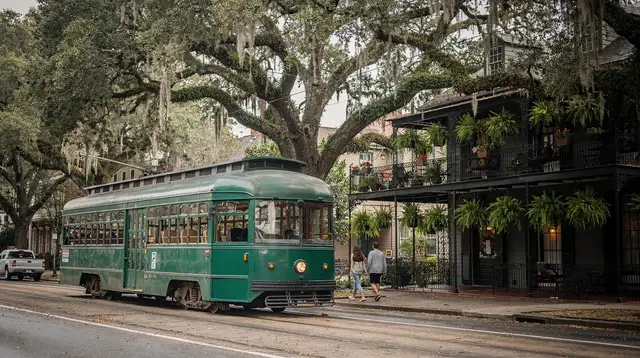
Spend the afternoon in the Garden District as a contrast to the Quarter’s density: the Garden District and the streetcar makes an easy loop on the St Charles line, past antebellum mansions and Lafayette Cemetery No. 1.
Details on visiting the city’s cemeteries generally, including the rule that St Louis Cemetery No. 1 can only be entered with an authorised guide, are covered in the cemeteries of New Orleans guide; if the history of Voodoo in the city interests you as part of this cultural thread, the Voodoo Cemetery Tour pairs the two subjects in one outing, and the background on the religion itself is worth reading first in the Voodoo in New Orleans guide.
For a final evening, go back to Frenchmen Street rather than trying somewhere new — the value of the strip is in returning to a club you liked, or catching a different band in the same room. If you would rather sample the subject from a different angle first, the Voodoo Tour works well as an early-evening stop before the clubs fill up.
Close the trip with a Sazerac or a Hurricane; the city’s own cocktails are covered in the cocktails of New Orleans guide, and getting around by streetcar rather than car for all three days is explained in the guide to getting around New Orleans by streetcar.
| Day | Focus | Evening |
|---|---|---|
| 1 | French Quarter by day | Frenchmen Street clubs |
| 2 | Tremé, Congo Square, African American heritage | Preservation Hall |
| 3 | Jazz history, Garden District | Frenchmen Street, return visit |
Practical notes for three nights of live music
A few habits make this itinerary run smoother. Most Frenchmen Street clubs have a cover charge that goes straight to the band and is usually paid in cash at the door, so it is worth carrying small bills for the evenings rather than relying on a card at every stop. Tipping the band, either by dropping cash in a bucket passed around during the set or by tipping the bar staff, is normal practice on the strip and part of how musicians in this city are actually paid; the broader rules on tipping and sales tax are covered in the guide to tipping and sales tax in New Orleans if you want the fuller picture before you land. If you plan to stay out past midnight, Frenchmen Street after midnight is worth reading beforehand, since the street’s character shifts once the earlier dinner crowd has cleared and the later sets start.
For a broader sense of what “going out for music” means in this city beyond the three nights covered here, the guide to live jazz in New Orleans rounds up venues and neighbourhoods this itinerary does not have time to cover, useful if you decide to extend the trip. And if you do end up near a second line while you are out walking between Day 1 and Day 2, what it is actually like to fall in behind one is worth reading so you know what you are looking at and how to behave around it.
Walking distances stay short throughout: the Quarter itself is compact enough to cross on foot in under twenty minutes, and Frenchmen Street sits just past its downriver edge in the Faubourg Marigny. Tremé, the one neighbourhood on this itinerary that sits further out, is best reached with a guide or a short rideshare rather than on foot, particularly after dark. None of the three days requires a rental car, a taxi beyond the occasional late-night ride, or a rigid schedule — the plan is built to flex around whichever bands happen to be playing on the nights you are actually in town.
Frequently asked questions about a music-focused New Orleans trip
Do I need to plan this trip around a festival?
No. Unlike an itinerary built around Jazz Fest, this three-day plan works on an ordinary week any month of the year, because it follows the city’s nightly live-music scene rather than a single event.
Is this itinerary about Bourbon Street?
No. It favours Frenchmen Street, which is where locals actually go to hear live music, and treats Bourbon Street’s bar strip as a walk-through rather than a destination.
Do I need a car for these three days?
No. Everything covered here sits inside the French Quarter and the rest of New Orleans city, reachable on foot or by the RTA streetcar network.
Can I go to a second line parade as a tourist?
You can watch or join a second line if you come across one, but they are neighbourhood events tied to social aid and pleasure clubs, not shows staged for visitors, so they should be treated with the same respect as any local gathering.
Will I hear zydeco or Cajun music in New Orleans?
Not really, and this itinerary does not chase either. Zydeco and Cajun music are rooted in Acadiana around Lafayette, a couple of hours west, while New Orleans’s own tradition is jazz and brass-band music.
Is Preservation Hall worth booking ahead?
Yes. It is a small room in the French Quarter with limited seating, so arriving early or booking is worth doing rather than assuming a walk-up spot.
tours.3 days
Verified deep-linked GetYourGuide tours. Book through these links and we earn a small commission at no cost to you.
GetYourGuide does not provide a product photo for this activity — the image shows the meeting point, photographed by us.