Vampire Lore and the French Quarter: Fact, Fiction and Legend
Why is New Orleans associated with vampires?
The association comes mainly from fiction, above all the vampire novels of Anne Rice, which are set in the French Quarter, plus a handful of urban legends about historical residents and the Quarter's own Gothic architecture and above-ground cemeteries. It is a reputation built on atmosphere and storytelling, not on any documented history of vampirism.
A reputation built on storytelling, not history
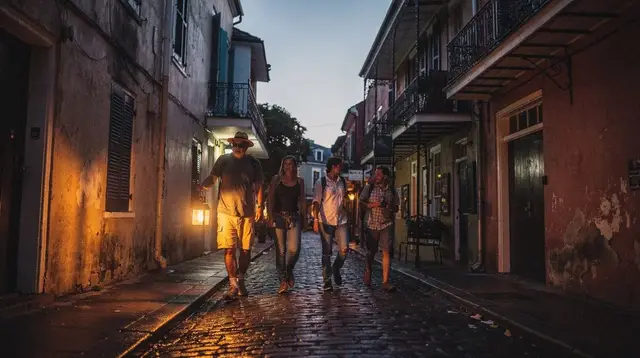
Ask why New Orleans has a “vampire city” reputation, and most people reach for the same answer: it just feels right. Narrow streets in the French Quarter, wrought-iron balconies, gas lamps, humidity that thickens the air after dark, and cemeteries full of above-ground tombs — the setting does a lot of the work on its own. But atmosphere is not the same thing as history, and this page draws that line on purpose.
What follows is an honest account of where the vampire association actually comes from: modern fiction above all, a couple of persistent urban legends, and a city that has, understandably, leaned into a reputation that is good for tourism. It does not cover Voodoo, which is a separate, real religion with its own history, treated with the seriousness it deserves in its own guide rather than folded in here where it would only add to a confusion visitors already arrive with.
Fiction did most of the work
If one thing built the modern vampire association with New Orleans, it is the vampire fiction of Anne Rice. Her novels are set substantially in the French Quarter and the uptown Garden District, and they gave the city’s own visual vocabulary — shuttered townhouses, ironwork galleries, candle-lit interiors, the long humid nights — a starring role in a story about immortal characters who could plausibly haunt exactly these streets for centuries. Whatever a reader makes of the books themselves, their effect on the city’s image is not really in dispute: they took a real place and made it the recognisable backdrop for a specific, popular idea of what a vampire’s world looks like.
That matters for how you should read everything else in this guide. Fiction can borrow a real setting with total accuracy — Rice’s descriptions of Quarter architecture are often precise — while inventing everything about the plot layered onto it. The city did not become associated with vampires because vampires were documented here. It became associated with vampires because a widely read body of fiction chose it as a stage, and the choice made sense: the Quarter already looked like somewhere a Gothic story could happen.
The Jacques Saint Germain legend
Ask a guide in the Quarter for a “real” vampire story and you will likely hear about Jacques Saint Germain, a wealthy man said to have lived in the neighbourhood and to have unsettled acquaintances with strange habits and an aversion to daylight. The version usually told involves a guest at a dinner party noticing that his wine glass, or in some tellings a wound, behaved in a way no ordinary host’s would. It is a good story, and it has been repeated by enough guides and books that it now circulates as though it were settled local history.
It is not. There is no verifiable documentary record establishing the events of the story as fact, and the details shift between tellings in ways that are typical of oral legend rather than history — a strong signal that this belongs in the category of urban legend, not verified biography. That does not make it worthless: urban legends are part of a city’s real cultural life, and this one has clearly had staying power. It just means the honest way to hear it is as folklore that has attached itself to a real address in a real neighbourhood, not as a documented case of anything supernatural.
This is worth dwelling on because it is the pattern behind almost every “true vampire story” told in the Quarter: a kernel of a real person or place, elaborated over repeated tellings, until the elaboration is doing most of the work. Treat any claim along these lines the same way — as legend, clearly labelled, rather than as fact.
Why the setting itself feels the part
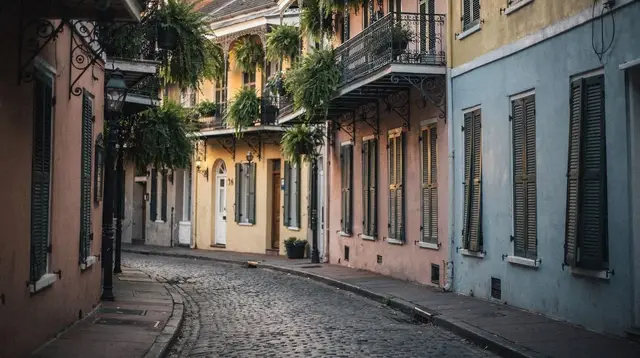
Separately from any specific story, the French Quarter’s own physical character explains a lot of why the vampire association took hold and why it has stuck. The Quarter is a compact historic grid of eighteenth- and nineteenth-century buildings, many with deep balconies, shuttered windows and courtyards hidden behind street-facing facades — an architecture built for heat and privacy that also happens to photograph like a Gothic film set after dark. Narrow streets mean shadows fall early and stay late. Gas lamps, still used on some blocks, give a warmer, less even light than modern street lighting, which changes how a street feels to walk after sunset.
Then there are the cemeteries. New Orleans’ historic burial grounds are known for above-ground tombs and vaults rather than buried headstones, a practice widely attributed to the city’s high water table and its position at or below sea level, hemmed in by the Mississippi River and Lake Pontchartrain. Whatever the precise engineering reasons behind it, the visual effect is striking and genuinely unlike most cemeteries elsewhere in the country: rows of stone vaults, some elaborate, some crumbling, laid out like a miniature city of the dead.
It is easy to see why that image recurs constantly in Gothic fiction and in tour marketing — it looks the part, independent of any specific vampire legend attached to it. For the history and visiting rules of these sites, including the fact that some can only be entered with an authorised guide, see the dedicated cemeteries guide and the wider look at the cities of the dead.
None of this proves anything about vampires, obviously. It explains something more modest and more interesting: why this particular city, out of all the places a novelist or a tour operator could have chosen, was such a natural fit for the idea.
Not the same thing as Voodoo
Visitors frequently arrive expecting vampire lore, Voodoo and general “spooky New Orleans” to be one blended tradition, and it is worth being direct about why that is a mistake. Voodoo, as practised in Louisiana, is a real syncretic religion with African and Catholic roots, still followed today, with its own historical figures, practices and places of worship. It deserves to be understood on its own terms, not as set dressing for a vampire narrative or vice versa.
This guide deliberately does not cover Voodoo for that reason; if that is what you are looking for, the Voodoo history and tours guide covers it properly and separately. Keeping the two apart is not a technicality — conflating a living religion with vampire fiction is exactly the kind of confusion that does a disservice to both.
Ghost tours, vampire tours and the difference between them
New Orleans sells a great many after-dark walking tours, and the branding often blurs ghost stories, vampire lore and general “haunted history” together under one ticket. If you want a broad comparison of operators and formats covering hauntings generally, that comparison lives on a separate page, ghost tours compared; this page is not that comparison. What matters here is simply flagging that the two categories exist and often overlap on a single evening walk, so it is worth checking a tour’s actual description rather than assuming “ghost tour” and “vampire tour” mean the same thing, or that either promises documented history rather than storytelling.
A reasonable rule of thumb: a guide who says plainly “this next part is legend, not documented fact” is giving you useful information, and one worth trusting on the parts they do present as verified. A guide who presents every claim with equal, unqualified certainty is worth a little more scepticism.
Experiencing it for yourself
If the appeal for you is less about verifying a specific claim and more about walking the Quarter after dark with someone who knows its stories, there are several ways to do that. A themed evening walk built specifically around vampire lore is the most direct option:
a two-hour evening walk through the French Quarter built entirely around its vampire legendsFor a broader mix that folds in ghost stories and Voodoo history alongside the vampire material — useful if you only have one evening and want the fuller picture rather than a single narrow theme — there is a combined option:
a single evening tour covering vampire legend, ghost stories and Voodoo history togetherAnd for a shorter, more focused walk that sticks closely to vampire and ghost lore without the wider detour, there is a compact alternative:
a two-hour walking tour focused on the Quarter’s ghost and vampire storiesIf your priority is simply orienting yourself in the city by daylight before deciding whether an evening theme tour is for you, a general orientation option covers the ground first:
a guided city tour that covers the French Quarter and its surrounding neighbourhoods by dayWhichever you choose, this is an evening activity through streets that are also, on any given night, full of residents, bars and ordinary foot traffic. The practical safety advice that applies to the Quarter after dark generally — stick to lit, busy streets, and be more careful toward the edges of the tourist core late at night — applies here too; see is New Orleans safe for tourists for the fuller picture.
Where this fits in a visit
Vampire lore is a good example of something that rewards a little pre-reading: it is far more enjoyable as a themed evening walk once you already know the Quarter by day and can tell which buildings and squares are genuinely historic landmarks and which the story is dressing up for effect. If this is your first visit, walking the neighbourhood in daylight first — say with the French Quarter walking guide or a first afternoon following Jackson Square and St Louis Cathedral — gives the evening tour something real to play against.
It also pairs naturally with the city’s other after-dark identity: live music. Frenchmen Street after midnight and the wider comparison of Frenchmen Street versus Bourbon Street cover the neighbourhood most visitors head to once a themed walk ends, and Preservation Hall and the nightly rundown of live jazz in New Orleans are worth booking around the same evening if music matters to you as much as legend does.
For a first visit generally, New Orleans for first-time visitors and one day of New Orleans essentials help place an evening like this inside a wider trip, and the browsable ghost, vampire and Voodoo tours category shows the full range of themed evening options if you want to compare beyond the four listed above.
The honest summary
New Orleans is not, in any documented sense, a city with a real vampire history. It is a city whose architecture, cemeteries and nighttime atmosphere happened to fit a modern literary imagination perfectly, whose fiction then reinforced that fit until the two became inseparable in the popular mind, and which has a small number of durable urban legends — Jacques Saint Germain chief among them — that get told as though they were settled fact far more often than the evidence supports.
None of that makes the walk less atmospheric or the stories less fun to hear. It just means the honest way to enjoy them is with a clear sense of which parts are legend, which parts are fiction, and which parts are simply a very old, very evocative neighbourhood doing what it always does after dark.
Vampire Lore and the French Quarter FAQ
Is there any real history of vampires in New Orleans?
No. There is no documented, verifiable history of vampirism in New Orleans. What exists is a set of urban legends about specific residents, and a modern literary tradition that chose the city as its setting because the setting fit the mood.
Did Anne Rice invent New Orleans vampire lore?
She did not invent the idea of vampires, but her novels, set largely in the French Quarter and the Garden District, are the single biggest reason the city and vampire fiction are linked in the popular imagination today.
Who was Jacques Saint Germain?
A wealthy man who lived in the French Quarter and, according to a widely repeated local story, was rumoured to be immortal after guests reportedly saw him react oddly to being cut. It is an urban legend passed down through guides and books, not a documented case, and should be treated as folklore.
Are the vampire tours in the French Quarter historically accurate?
They range widely. Some frame themselves honestly as storytelling and popular culture; others present legend as settled fact. Ask a guide directly how they source a claim, and treat anything presented as certain history with caution.
Is vampire lore connected to Voodoo in New Orleans?
No, and the two are frequently confused by visitors. Voodoo is a real, living religion with African and Catholic roots; vampire lore here is a separate strand of fiction and urban legend. This guide covers vampire lore only.
Why do the cemeteries feel connected to the vampire theme?
New Orleans’ above-ground tombs, built that way largely because of the city’s high water table, have a striking, otherworldly look that has made them a recurring backdrop in Gothic fiction and in tour marketing, even though they have no documented connection to vampire legend specifically.
What is the best way to experience this side of the city responsibly?
Go in knowing the difference between atmosphere, legend and fact, choose a guide who is upfront about which is which, and treat the cemeteries and the neighbourhoods you pass through with the respect due to a place people still live in and are buried in.
Ghost and vampire tours on GetYourGuide
Verified deep-linked GetYourGuide tours. Book through these links and we earn a small commission at no cost to you.
GetYourGuide does not provide a product photo for this activity — the image shows the meeting point, photographed by us.