One Day in New Orleans: The French Quarter on Foot
Why the French Quarter is a full day on its own
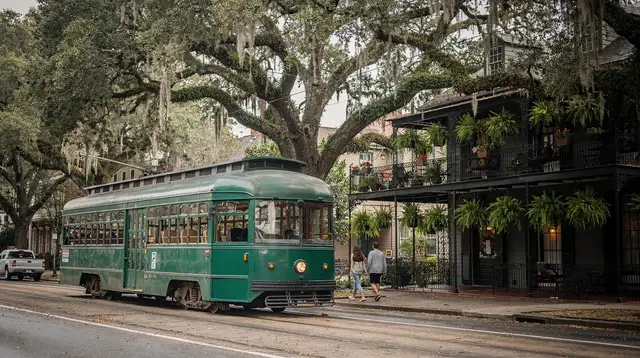
If you have exactly one day in New Orleans, the honest advice is to stay inside the French Quarter and not try to squeeze in anything else. The Garden District’s streetcar and antebellum mansions, the swamps south of the city, the plantations up the River Road — all of these belong to the two-day and three-day versions of this trip, not to a single day. Trying to bolt one of them onto the end of a Quarter day almost always means rushing both and enjoying neither.
The good news is that the Quarter rewards this kind of focus. It is the oldest neighbourhood in the city, laid out as a tight grid roughly 13 blocks by 6, and everything worth seeing on a first day sits inside that grid or a short walk from its edge. No car is useful here, and in practice a car is a liability: parking is scarce, metered and tightly enforced, and the streets are narrow and one-way in places. You will do this entire day on foot, in comfortable shoes, moving at a New Orleans pace rather than a checklist pace.
This itinerary is built for first-time visitors who have exactly one day and want it to go well rather than be rushed. If you are still deciding how many days to set aside for the trip as a whole, the how many days in New Orleans guide walks through the trade-offs, and the common mistakes first-time visitors make are worth a quick read before you land, since most of them cost time rather than money.
Morning: Jackson Square and its landmarks
Start at Jackson Square, the square that gives the whole Quarter its centre of gravity. The white spires of St Louis Cathedral rise directly behind the square, flanked by the Cabildo and the Presbytère — the old seats of Spanish and then American colonial government, both now museums, and both worth a look inside if either has caught your interest before this trip. Early in the day, before the heat and the crowds build, the square itself is at its best: artists set up along the iron fence, and the horse-drawn carriages waiting nearby are already loading their first passengers of the day.
Give this stretch a couple of unhurried hours rather than a quick photo stop. The point of a Quarter day is not to move fast between landmarks; it is to let one neighbourhood’s layers show themselves — colonial architecture, street musicians, church bells, the river a block away.
Late morning: Royal Street and the antique galleries
From Jackson Square, walk the short distance to Royal Street, the Quarter’s gallery-and-antiques spine and a genuinely pleasant street to wander with no destination in mind. Ironwork balconies overhang the sidewalk for block after block, and the shopfronts alternate between serious antique dealers, art galleries and the occasional street performer working the crowd outside. This is also prime territory for cash tips — buskers and living statues along Royal Street and around Jackson Square work for tips, and small bills are the currency that matters here, not a card.
If cemeteries or the darker side of the city’s history interest you, this late-morning window is also a natural moment to note that St Louis Cemetery No. 1, with its above-ground tombs and Marie Laveau’s grave, cannot be visited independently — access is by authorised guide only, on a schedule that changes, so it needs to be booked ahead rather than added on impulse. It sits just outside the Quarter’s northern edge; most visitors fit it into a two-day itinerary rather than a one-day one, precisely because of that booking requirement. The full cemeteries of New Orleans guide covers what to expect and how to plan a visit on a longer trip. Royal Street is also a fair test of whether you would rather wander on your own or follow a guide for the day; the guided versus self-guided French Quarter comparison lays out the case for both.
Midday: Café du Monde and the French Market
Angle back toward the river for lunch. Café du Monde, the open-air café serving beignets and chicory coffee since the nineteenth century, is the one stop on this itinerary that almost everyone recommends, and the queue is part of the experience rather than a reason to skip it — it moves faster than it looks, and there is almost always outdoor seating turning over. Beignets here are eaten with your fingers and a fair amount of powdered sugar; budget for a mess, not a tidy lunch.
Immediately next door is the French Market, a covered market running along Decatur Street that has operated on this site in some form for over two centuries. It is a good place to browse local produce stalls, Louisiana hot sauce and pralines, and pick up a few New Orleans souvenirs that are not the mass-produced Bourbon Street kind. If beignets alone do not make a full lunch, this stretch of Decatur Street has enough po’boy shops and casual restaurants to round it out — a po’boy, a muffuletta or a cup of gumbo are all reasonable, filling choices that will not eat into the afternoon. For a broader rundown of what to order and where, see the guide to beignets, po’boys and gumbo.
Early afternoon: Decatur Street and the river’s edge
After lunch, walk along Decatur Street toward the river. The Moonwalk, the riverside promenade along the Mississippi, gives a rare open view of the river itself — wide, brown and busy with barge traffic — and a break from the enclosed feel of the grid’s interior streets. This is also the point in the day to slow down deliberately: a Quarter day is dense but it should not feel like a forced march, and a fifteen- or twenty-minute pause by the river, watching the boats, is exactly the kind of thing this itinerary has room for.
If you are curious about New Orleans’ spiritual history rather than only its architecture, this stretch of the afternoon is also a natural place to learn more about Voodoo as it is actually practised in Louisiana — a real, syncretic religion with African and Catholic roots, not the theme-park version sold on some souvenir stands. A guided introduction does more justice to the subject than a plaque or a gift shop display. The Voodoo in New Orleans guide goes into more of that history if you want context before booking.
an afternoon Voodoo tour that traces the religion’s real history through the QuarterLate afternoon: back into the grid
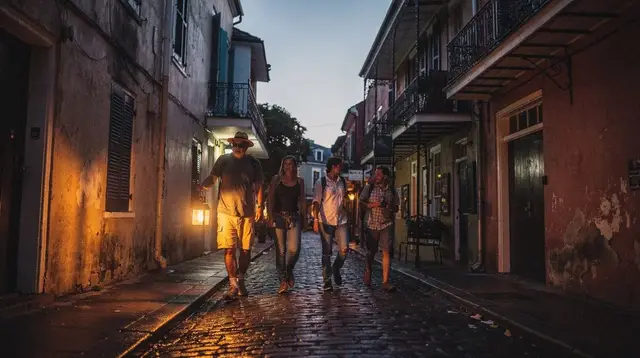
Spend the back half of the afternoon working slowly back into the interior of the Quarter, away from the riverfront crowds. This is when the neighbourhood’s residential side shows itself: shuttered courtyards glimpsed through gates, quieter side streets off the main tourist lines, small galleries that get little foot traffic earlier in the day. There is no fixed route for this part of the day — the Quarter’s grid means you are never more than a few blocks from a landmark you already recognise, so this is a good stretch to simply wander without a map.
For visitors who would rather have context than wander blind, a guided walk covering the Quarter’s architecture, its Creole and Spanish colonial layers, and its ghost stories condenses a lot of this history into a couple of hours and fits naturally into a late-afternoon slot, before the evening’s food and music take over. See the French Quarter history and culture tours guide for how the different options compare.
a combined French Quarter, cemetery and voodoo walking tourEarly evening: dinner and a choice of streets
As the light starts to go, this is the moment to eat properly rather than snack. New Orleans’ food vocabulary is distinctly its own — gumbo, jambalaya, étouffée, red beans and rice — and the Quarter has restaurants covering all of it, from long-standing Creole institutions to casual counters. If you would rather have a local guide the choices than pick blind, a food-focused walk through the neighbourhood’s restaurants and bars is a reasonable way to spend the dinner window and still end the evening with energy left for music.
a guided food walk through the Quarter’s restaurants and barsDinner also raises the evening’s central choice: Bourbon Street or Frenchmen Street. Bourbon Street is the loud, neon, bar-crawl version of New Orleans nightlife, open-container drinks in hand — legally, as long as it is in a plastic go-cup rather than glass, and only within the permitted area. Frenchmen Street, a few blocks away in the Faubourg Marigny just past the Quarter’s edge, is where locals actually go for live jazz, blues and brass, club after club along a short strip. Neither is wrong for a first night, but they are different evenings, and it is worth deciding in advance rather than drifting into whichever crowd is louder. The Frenchmen Street versus Bourbon Street guide goes deeper into what each street actually feels like on a given night.
Evening: live music, or a ghost story
If Frenchmen Street wins, spend the rest of the night moving between two or three clubs rather than committing to one — most charge little or nothing at the door, and the point is to sample the range of what is playing rather than settle in. If Bourbon Street wins, treat it as spectacle rather than as fine dining or fine drinking, and keep an eye on your surroundings as the night goes on, particularly toward its noisier, more crowded fringes. The is New Orleans safe for tourists guide covers the general precautions in more detail. If live music is the draw, the New Orleans jazz guide has a fuller rundown of where to hear it night by night.
For a third option that suits either choice of street, an evening ghost walk is a well-worn New Orleans tradition and a genuinely good way to see the Quarter after dark, when its ironwork balconies and shuttered courtyards take on a different character entirely.
an evening ghost walk through the Quarter’s haunted historyPractical notes for a one-day Quarter visit
| Consideration | What to know |
|---|---|
| Getting around | On foot only; the grid is roughly 13 by 6 blocks and a car adds nothing but a parking problem |
| From the airport | MSY sits about 18 km west of the Quarter; budget for a taxi, rideshare or the slower RTA airport bus, not a quick hop |
| Cash | Keep small bills for street musicians, tips and a few cash-only bars |
| Tipping | Roughly 18–20% in restaurants and bars, plus a tip for any guided tour |
| Drinking outdoors | Legal in the Quarter in a plastic go-cup only, never in glass |
| Cemeteries | St Louis Cemetery No. 1 requires a booked, authorised guide — not a same-day walk-in |
| Heat | Summer afternoons are long, hot and humid; pace the day accordingly and carry water |
For more detail on any of these, see the guides to getting from MSY airport to the French Quarter, tipping and sales tax in New Orleans, and what to pack for New Orleans.
If this single day leaves you wanting more, the natural next step is not to try to add a plantation or a swamp tour onto the end of it, but to come back with an extra day or two. The Garden District and its streetcar line, the plantations along the River Road, and the swamps of Honey Island are all within easy reach of the city, but they are each their own half-day or full day — see the two-day and four-day itineraries for how they fit together.
FAQ: spending one day in the French Quarter
Is one day enough to see the French Quarter?
Yes. The Quarter is a compact grid roughly 13 by 6 blocks, and a single well-paced day on foot comfortably covers Jackson Square, Royal Street, the French Market, Café du Monde and an evening of food or music. Seeing the rest of New Orleans — the Garden District, swamps, plantations — needs additional days.
Do I need a car for a one-day French Quarter visit?
No. A car adds nothing on this itinerary and creates a real parking problem, since Quarter parking is scarce, metered and strictly enforced. Everything on this route is within comfortable walking distance.
Can I visit St Louis Cemetery No. 1 on a one-day trip?
Only with advance planning. Independent entry is not allowed; the cemetery can only be visited with an authorised guide, on tours that need to be booked ahead rather than joined on the spot. Many one-day visitors skip it for this reason and add it on a longer trip instead.
Should I choose Bourbon Street or Frenchmen Street for the evening?
They serve different evenings. Bourbon Street is loud, neon-lit bar-crawl territory with legal open-container drinking in go-cups. Frenchmen Street, just past the Quarter in the Faubourg Marigny, is where locals go for live jazz and brass in a string of small clubs. Neither is a mistake, but it helps to decide in advance.
Is it safe to walk the French Quarter at night?
The Quarter itself is busy and well-policed, and walking between its main streets at night is normal. The general precautions still apply: stick to lit, busy streets, take a short rideshare rather than walk long distances late at night, and be more careful on the noisier fringes of Bourbon Street toward the small hours.
What should I eat during a one-day visit?
Beignets and chicory coffee at Café du Monde are close to unmissable, and the surrounding blocks of Decatur Street have plenty of po’boy and gumbo options for a fuller lunch. Save a proper sit-down dinner of Creole classics like jambalaya or étouffée for the early evening, before the night’s music or bar-hopping begins.
Is drinking on the street actually legal in New Orleans?
Within the French Quarter, yes, as long as the drink is in a plastic go-cup rather than glass, and you stay within the area where it is permitted. It is one of the few places in the United States where this is allowed, and it is a genuine local custom rather than a loophole to be nervous about.
tours.1 days
Verified deep-linked GetYourGuide tours. Book through these links and we earn a small commission at no cost to you.
GetYourGuide does not provide a product photo for this activity — the image shows the meeting point, photographed by us.